
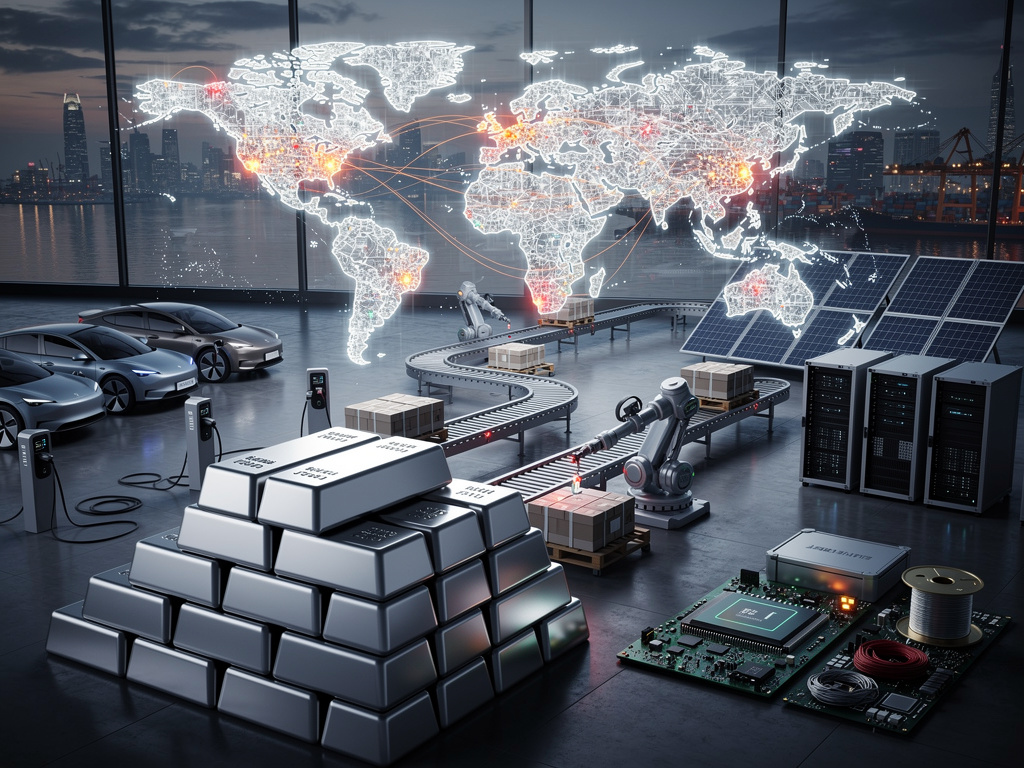
Silver’s Shadow Over Industry: Musk’s Alarm as China Tightens the Reins
Elon Musk, the outspoken CEO of Tesla Inc., has thrust the spotlight onto a brewing crisis in global supply chains with his recent warnings about skyrocketing silver prices and impending export restrictions from China. As the world edges toward 2026, these developments threaten to disrupt key sectors reliant on the metal, from electric vehicles to renewable energy. Musk’s commentary, shared on social media platform X, underscores a vulnerability in industrial dependencies that could ripple through economies worldwide.
In a post on X dated December 27, 2025, Musk responded to a user highlighting China’s new export controls, stating simply, “This is not good. Silver is needed in many industrial processes.” This reaction came amid reports that silver prices have hit record highs, fueled by surging demand and constrained supply. China, a major player in the silver market, announced it would require government licensing for all silver exports starting January 1, 2026, a move poised to tighten global availability.
The implications are profound for industries where silver serves as a critical component. In solar panels, for instance, silver paste is essential for conducting electricity, while in electric vehicle batteries and electronics, the metal’s conductivity and resistance to corrosion make it indispensable. Musk’s Tesla, heavily invested in EV production, stands at the forefront of potential disruptions, but the fallout could extend far beyond automotive manufacturing.
Rising Prices and Supply Pressures
Silver’s price surge has been building momentum throughout 2025, driven by a mismatch between industrial demand and mining output. According to data from commodity markets, prices have climbed over 50% in the past year alone, reaching levels not seen since the early 2010s. This rally is exacerbated by silver’s status as a byproduct of other mining operations, such as copper and zinc, limiting producers’ ability to ramp up output independently.
China’s decision to impose export restrictions adds a geopolitical layer to the equation. As detailed in a report from The Economic Times, the policy aims to secure domestic supplies amid growing internal needs for technology and green energy initiatives. This isn’t China’s first foray into controlling critical materials; similar measures have been applied to rare earth elements in the past, often leading to international trade tensions.
Industry analysts point out that while China isn’t the largest silver producer—Peru and Mexico hold that distinction—it plays a pivotal role in refining and exporting processed silver. The restrictions could force manufacturers to seek alternatives, but substitutions like copper or aluminum often fall short in performance for high-precision applications, potentially increasing costs and reducing efficiency.
Geopolitical Ripples and Market Reactions
The timing of China’s announcement coincides with broader trade frictions, including U.S. tariffs on Chinese goods and reciprocal measures. Musk, known for his vocal stance on free markets, has previously criticized regulatory overreach, and his latest comments echo concerns about how such policies distort global competition. In a separate X post from earlier in 2025, Musk emphasized the importance of refining capabilities for critical materials, drawing parallels to rare earths, though he didn’t directly address silver at the time.
Market reactions have been swift. Silver futures on major exchanges jumped following the news, with investors betting on prolonged shortages. A piece in TheStreet described the situation as a “global supply squeeze,” noting that demand from solar energy alone could consume up to 20% of annual silver production by 2030. This demand spike is largely driven by global pushes toward net-zero emissions, where silver’s role in photovoltaic cells is irreplaceable in the short term.
For companies like Tesla, which relies on silver in battery management systems and electrical contacts, the restrictions could inflate production costs. Musk’s warning highlights a broader industrial anxiety: as nations prioritize domestic security, multinational firms face heightened risks in sourcing essential inputs. This scenario recalls the chip shortages of 2021, which Musk himself navigated by pivoting suppliers, but silver’s unique properties make quick fixes elusive.
Industrial Dependencies Exposed
Delving deeper, silver’s criticality extends to sectors beyond clean energy. In electronics, it’s used in soldering, switches, and conductive inks for printed circuit boards. The medical industry employs it in antimicrobial coatings and imaging equipment, while aerospace relies on its thermal properties for components. A disruption here could cascade, affecting everything from smartphone production to satellite manufacturing.
Recent news coverage, such as an article from The Guardian, quotes Musk warning that manufacturers “could suffer consequences” from the price surge and new rules. This aligns with sentiments on X, where users and experts discuss the potential for innovation in alternatives, though many agree that scaling such technologies will take years.
China’s move may also stem from its own industrial ambitions. As the world’s largest producer of solar panels and EVs, Beijing is safeguarding resources to maintain dominance. According to The Times of India, Musk’s post on X amplified concerns just as prices soared ahead of the deadline, prompting calls for diversified mining investments in regions like Australia and South America.
Strategies for Mitigation and Innovation
In response, companies are exploring hedging strategies and stockpiling. Tesla, for example, has a history of vertical integration to secure supplies, as seen in its lithium deals. Industry insiders suggest that recycling programs could alleviate some pressure; silver recovery from e-waste is on the rise, potentially offsetting 10-15% of demand if incentivized properly.
However, experts warn that without international cooperation, prices could remain elevated. A report in Yahoo Finance details how Musk reacted to a post announcing the restrictions, emphasizing the “bigger deal” this represents for global chains. Substitution research is accelerating—nanomaterials and graphene-based conductors are in development—but commercialization lags.
Geopolitical analysts see this as part of a larger pattern of resource nationalism. The U.S. government, through initiatives like the Inflation Reduction Act, is pushing for domestic critical mineral production, but silver mining in North America remains underdeveloped compared to base metals.
Broader Economic Implications
The silver crunch could influence inflation trends, particularly in tech-heavy economies. With silver comprising a small but vital cost in products like EVs—estimated at $50-100 per vehicle—the multiplied effect across millions of units adds up. Musk’s Tesla, aiming for 20 million annual deliveries by 2030, faces amplified risks if costs spiral.
Sentiment on X reflects a mix of alarm and opportunism; posts from investors highlight silver ETFs as hedges, while others decry protectionism. In a related vein, Musk’s earlier 2025 posts on industrial capacity underscore China’s lead in manufacturing, suggesting that Western firms must adapt swiftly to avoid being outmaneuvered.
Looking ahead, diplomatic efforts might ease tensions. Trade talks between the U.S. and China could address export controls, but with elections and policy shifts looming, uncertainty prevails. As noted in Benzinga, Musk’s stark warning labels the move as detrimental to global progress.
Pathways to Resilience
To build resilience, industries are investing in exploration. New mines in politically stable regions could boost supply by 2028, per mining forecasts. Technological advancements, such as thinner silver layers in solar cells, promise efficiency gains, reducing per-unit consumption by up to 30%.
Musk’s influence amplifies these discussions, turning a niche commodity issue into mainstream news. His platform on X, with millions of followers, shapes public and investor perceptions, as evidenced by the viral spread of his “not good” comment.
Ultimately, this episode highlights the fragility of interconnected supply networks. As demand for sustainable technologies grows, securing materials like silver will test corporate ingenuity and international relations, with figures like Musk at the forefront of the dialogue.
Echoes in Global Trade Dynamics
Expanding on the trade angle, China’s restrictions mirror past actions on gallium and germanium, which disrupted semiconductor supply. This pattern suggests a strategic hoarding of elements vital to high-tech industries, prompting calls for WTO interventions.
For insiders, the key metric is the silver deficit: projections from the Silver Institute indicate a 200-million-ounce shortfall in 2026, exacerbated by export curbs. Companies are now modeling scenarios where prices double, forcing redesigns or price hikes to consumers.
Musk’s broader commentary on X, including critiques of overregulation, ties into this narrative. He has argued that bureaucratic hurdles stifle innovation, a point resonant as firms navigate new export bureaucracies.
Innovative Responses and Future Outlook
Innovation hubs are buzzing with alternatives. Startups are developing silver-free photovoltaics using perovskite materials, though scalability remains a hurdle. In EVs, research into solid-state batteries could minimize silver use, aligning with Tesla’s R&D focus.
Economic models suggest that sustained high prices might accelerate these shifts, potentially reshaping material hierarchies. As reported in Fox Business, Musk’s alarm underscores the hurt to input-dependent industries, with record highs already straining budgets.
The MSN article, aggregating these insights, reinforces that China’s policy could redefine global dependencies, urging diversified strategies.
Navigating Uncertainty
Industry leaders are convening forums to address the crunch, with calls for stockpiling incentives and international pacts. Musk’s voice adds urgency, pushing for proactive measures over reactive complaints.
In the electric era, silver’s role is pivotal yet precarious. As 2026 dawns, the true test will be in adaptation, ensuring that progress in clean tech isn’t derailed by resource rivalries.
This deep dive reveals a multifaceted challenge, where one metal’s scarcity could pivot entire sectors toward new horizons.


 WebProNews is an iEntry Publication