
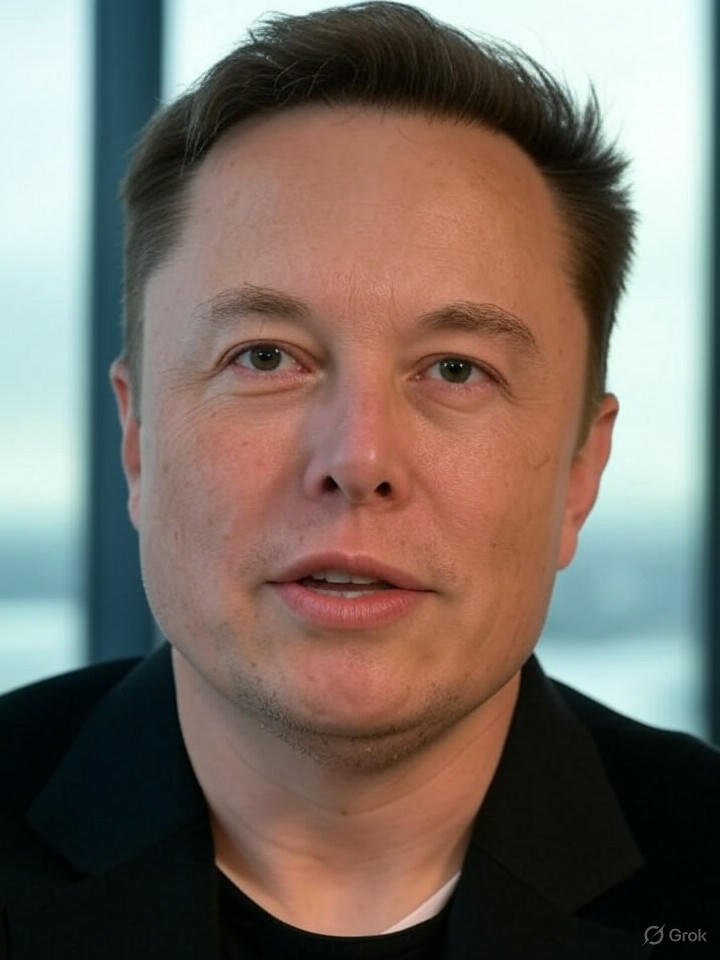
Elon Musk, the CEO of Tesla Inc., has once again set high expectations for the company’s autonomous driving technology, declaring that the upcoming Full Self-Driving (FSD) Version 14 will represent the most significant software upgrade since Version 12. Speaking at the All-In Summit, Musk suggested that by the end of 2025, Tesla vehicles equipped with this update could exhibit behaviors so advanced they “feel like it is sentient.” This bold claim, shared via a post on X by Tesla enthusiast Sawyer Merritt, underscores Musk’s ongoing narrative of pushing the boundaries of artificial intelligence in automotive applications.
The announcement comes amid a flurry of developments in Tesla’s AI-driven features. FSD V14 is anticipated to build on the foundations laid by V12, which introduced end-to-end neural networks for more intuitive decision-making. According to reports from Teslarati, Musk described V14 as arguably the second-biggest update to Tesla’s AI and Autopilot systems, emphasizing its potential to make the driving experience feel “alive.” Industry insiders are watching closely, as this could mark a pivotal step toward unsupervised autonomy, though Tesla continues to stress that current iterations require driver supervision.
Advancements in Parameter Count and Safety Metrics
Musk has teased that FSD V14 will incorporate a 10-fold increase in parameters, a metric that refers to the complexity and learning capacity of the underlying AI models. This enhancement, detailed in a post on X where Musk responded to users, is expected to exponentially improve safety and performance. Sources like Tesla Oracle report that the update is slated for release in the coming weeks, following rigorous internal training and testing phases. Such improvements could reduce the need for driver interventions, with Musk hinting at diminished “nag” alerts that remind drivers to pay attention.
Beyond raw computing power, the update promises to refine how Tesla vehicles perceive and interact with their environment. Early teasers suggest enhancements in handling complex urban scenarios, such as navigating dense traffic or unpredictable pedestrian behavior. As noted in coverage from Not a Tesla App, V14 may substantially lessen the reliance on constant driver monitoring, relying more on cabin cameras and AI-driven attentiveness checks. This shift aligns with Tesla’s broader goal of achieving safety levels that surpass human drivers by factors of two to three, or potentially even tenfold, as Musk elaborated in recent discussions.
Implications for Tesla’s Hardware and Future Rollouts
Tesla’s current AI4 hardware, embedded in vehicles like the Model 3 and Model Y, is poised to support these advancements without immediate upgrades. Musk expressed confidence during the All-In Summit that AI4 chips could enable self-driving safety metrics far superior to humans, with the forthcoming AI5 chips offering up to 40 times better performance in certain areas. Posts on X from Sawyer Merritt highlight Musk’s optimism, including details on AI5’s 8x boost in raw compute and 9x more memory, positioning Tesla ahead in the race for fully autonomous vehicles.
However, skepticism persists among regulators and safety advocates. Wikipedia’s entry on Tesla Autopilot recounts past controversies, including protests against the deployment of FSD in real-world testing, such as a June 2025 demonstration in Austin hosted by groups like The Dawn Project. Critics argue that while Musk’s projections are ambitious, real-world data—such as the estimated 47 million miles driven in Autopilot mode by 2016—must continually prove the technology’s reliability to avoid regulatory hurdles.
Broader Industry Context and Market Reactions
The “sentient” descriptor Musk used has sparked debates about the anthropomorphic framing of AI. In a blog post on Digital Habitats, analyses explore how V14 might mimic human-like decision-making, from adaptive speed control to contextual awareness. This could differentiate Tesla from competitors like Waymo and Cruise, which have faced their own setbacks in scaling autonomous tech.
Market reactions have been swift, with Tesla’s stock fluctuating on the news. As reported in The Times of India, Tesla recently clarified that FSD remains a supervised system, a subtle shift following Musk’s massive compensation package approval. For industry insiders, this update represents not just a software milestone but a litmus test for Tesla’s valuation, heavily tied to its AI ambitions.
Challenges Ahead in Deployment and Ethics
Deploying FSD V14 will involve beta testing with select users, building on patterns seen in prior releases like V12.4, which eliminated steering wheel nags and improved miles per intervention by 5 to 10 times, as per X posts tracking Tesla’s progress. Yet, ethical questions loom: How “sentient” can a car appear without blurring lines between machine and consciousness? Musk’s rhetoric, while motivational, invites scrutiny from ethicists concerned about overhyping AI capabilities.
Ultimately, if V14 delivers on its promises, it could accelerate Tesla’s robotaxi vision, potentially transforming urban mobility. As the year progresses, all eyes will be on real-world performance data to see if Tesla’s cars truly begin to feel alive—or if this is another chapter in Musk’s history of optimistic timelines.


 WebProNews is an iEntry Publication