
Musk’s Bold Davos Pledge: Tesla’s Humanoid Robots Set to Hit the Market
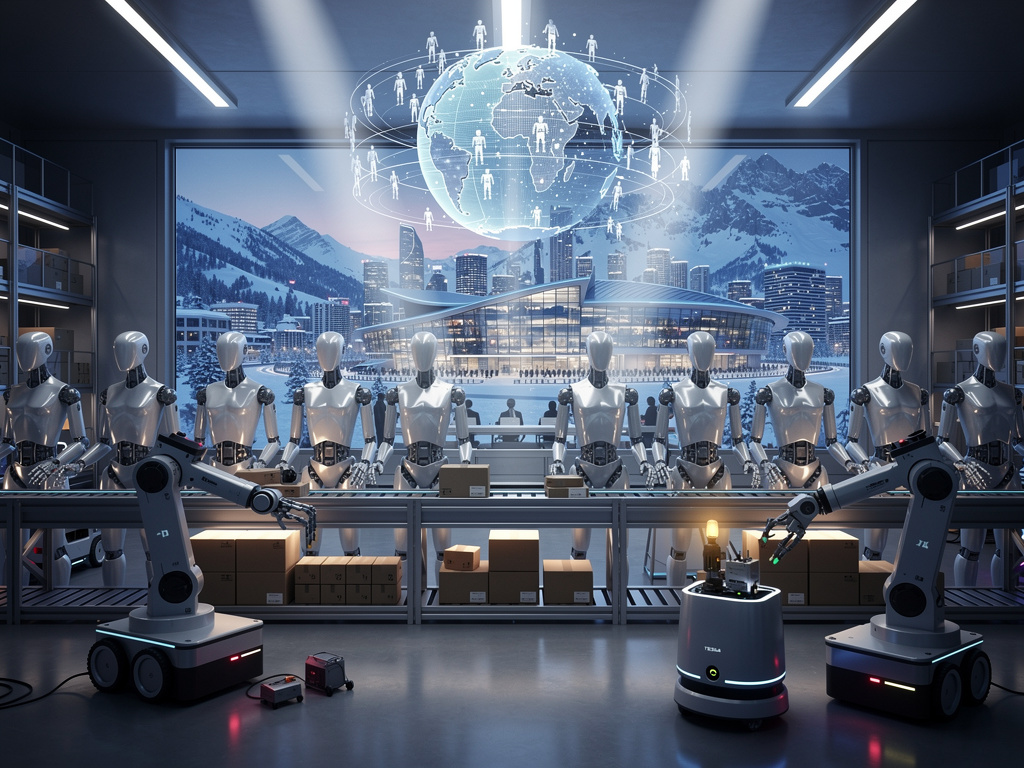
Elon Musk, the enigmatic CEO of Tesla Inc., made waves at the World Economic Forum in Davos, Switzerland, on January 22, 2026, by declaring that his company could begin selling its Optimus humanoid robots as early as next year. This announcement, delivered during Musk’s inaugural appearance at the elite gathering, underscores his vision of a future where robots outnumber humans, potentially reshaping labor markets and daily life. Speaking to a panel of global leaders, Musk painted a picture of ubiquitous AI companions, likening them to personal assistants that could transform industries from manufacturing to household chores.
Skepticism abounds, however, given Musk’s history of ambitious timelines that often slip. The Optimus project, first unveiled in 2021, has seen prototypes folding shirts and sorting batteries, but mass production remains elusive. Musk’s latest claim aligns with Tesla’s push into AI and robotics, yet industry observers note the challenges in scaling humanoid tech, including advanced AI integration and cost-effective manufacturing. According to reports from the event, Musk emphasized that robots would become as commonplace as smartphones, with everyone on Earth potentially owning one.
This isn’t Musk’s first rodeo with bold predictions. Past statements on Tesla’s self-driving capabilities and Mars colonization have frequently been delayed, leading some to view his Davos remarks as more hype than reality. Nonetheless, the announcement sent ripples through financial markets, with Tesla shares ticking up modestly in after-hours trading. Analysts are now dissecting what this means for Tesla’s valuation, which has increasingly hinged on its AI and robotics ambitions rather than just electric vehicles.
The Evolution of Optimus: From Concept to Commercial Promise
Tesla’s journey with Optimus began as an extension of its autonomous driving technology, leveraging similar AI frameworks to enable robots to navigate and interact with the world. Musk has long argued that humanoid forms are ideal for tasks designed for human environments, avoiding the need to redesign factories or homes. In his Davos address, he reiterated that Optimus could start with internal use at Tesla facilities before expanding to public sales by the end of 2027, a timeline that echoes his earlier posts on social media platform X.
Drawing from recent coverage, Euronews reported Musk’s prediction that AI would surpass human intelligence, tying into his broader narrative on technological singularity. He suggested robots would handle mundane jobs, freeing humans for creative pursuits, though he acknowledged risks like job displacement. This vision aligns with Tesla’s investments in AI hardware, including custom chips that could power both vehicles and robots.
Competitors aren’t idle. Companies like Boston Dynamics and Figure AI are advancing their own humanoid models, but Tesla’s scale in manufacturing gives it a potential edge. Musk claimed during the panel that Optimus would be priced affordably, perhaps under $20,000, making it accessible for widespread adoption. However, technical hurdles remain, such as battery life and dexterous manipulation, which have plagued prototypes.
Skepticism and Track Record: Weighing Musk’s Timelines
Industry insiders point to Musk’s pattern of overpromising. For instance, in 2024, he tweeted that Tesla would have useful humanoid robots in low production for internal use by 2025, a goal that has seen incremental progress but not full realization. A post on X from July 2024, where Musk responded to a user query, outlined hopes for high production by 2026, yet current updates suggest delays. This history fuels doubt about the 2027 target.
Engadget captured the sentiment aptly, noting the “extremely optimistic timetable” and referencing Musk’s penchant for swearing by deadlines that slip. The article highlights how previous Optimus demos, while impressive, relied on teleoperation rather than full autonomy, raising questions about readiness for commercial deployment.
Beyond timelines, ethical and regulatory concerns loom. Musk touched on these at Davos, warning of AI’s potential dangers while advocating for safeguards. Governments worldwide are grappling with robotics regulations, particularly in labor and safety. In the U.S., discussions around AI ethics could impact Tesla’s rollout, with unions already voicing fears of automation-driven unemployment.
Technical Underpinnings: AI and Hardware Innovations Driving Optimus
At the heart of Optimus is Tesla’s AI prowess, built on the same neural networks used for Full Self-Driving. Musk detailed in a recent X post how upcoming AI chips, like the AI5, would enhance both vehicles and robots, aiming for superhuman performance. He described AI5 as roughly equivalent to Nvidia’s advanced systems but optimized for Tesla’s needs, with investments exceeding $500 million in computing power.
Reports from CBS News quoted Musk saying robots would outnumber humans, a claim supported by his vision of exponential production ramps. Tesla’s Gigafactories, already churning out vehicles, could pivot to robot assembly, leveraging economies of scale. Yet, experts caution that humanoid robotics demand precise actuators and sensors, areas where Tesla is innovating but not yet leading.
Integration with other Musk ventures adds intrigue. Neuralink’s brain-computer interfaces could eventually link humans and robots, as hinted in a December 2025 X post about high-volume production in 2026. This convergence might enable seamless control, but it raises privacy and augmentation debates.
Market Implications: Reshaping Industries and Economies
If Musk’s timeline holds, Optimus could disrupt sectors like logistics and elder care. Imagine robots stocking shelves or assisting in homes, addressing labor shortages in aging populations. Yahoo Finance covered Musk’s interview, where he stated humanity is in “the most interesting time in history,” emphasizing everyday use cases for humanoid tech.
Financially, this positions Tesla as more than a carmaker. Analysts project robotics could add billions to revenue, with Musk estimating a market where robots provide products and services at scale. A 2025 X post from Musk responded to population estimates, predicting robots would far exceed humans, driven by demand for personal and industrial units.
However, competition is fierce. Sherwood News recently outlined advancements from rivals, noting that while hardware progresses, AI for true utility lags. Tesla’s edge might lie in its data from millions of vehicles, training robots on real-world interactions.
Global Reactions and Future Hurdles
Davos attendees reacted variably, with some praising Musk’s foresight and others questioning feasibility. European leaders, per Euronews, expressed interest in how such tech could bolster economies but stressed equitable distribution. In Asia, where robotics adoption is high, Tesla might find early markets.
Challenges include supply chain vulnerabilities and ethical AI development. Musk’s own warnings about AI surpassing human intelligence, as reported in CBS News, highlight extinction risks if not managed. Tesla is investing in safety protocols, but public trust will be key.
Looking ahead, prototypes must evolve into reliable products. A January 2026 X post from Musk celebrated unmonitored Robotaxi drives, signaling AI maturity that could transfer to Optimus. Yet, scaling to millions of units requires breakthroughs in materials and energy efficiency.
Vision vs. Reality: Assessing the Path Forward
Musk’s Davos appearance, his first despite past criticisms of the forum, marks a strategic pivot. He used the platform to rally support for his robot-majority future, as detailed in MarketScreener, where he specified end-2027 availability.
Critics argue this is marketing to buoy stock prices amid EV market saturation. Tesla’s valuation, once sky-high, now depends on narratives like Optimus. Success hinges on delivering functional units, not just demos.
Broader implications touch on societal shifts. If robots become ubiquitous, as Musk envisions in Yahoo Finance, education and policy must adapt. Workforce retraining programs could mitigate disruptions, turning potential threats into opportunities.
Innovation’s Ripple Effects: Beyond Tesla’s Walls
Tesla’s push could accelerate the entire field. Collaborations or open-sourcing aspects of Optimus tech might spur innovation, though Musk’s companies tend toward proprietary development. A 2024 X post discussed local intelligence in robots exceeding centralized compute, hinting at distributed AI networks.
Economically, affordable humanoids could boost productivity, but income inequality might widen without interventions. Davos discussions, per multiple reports, linked this to global challenges like climate and inequality.
Ultimately, Musk’s announcement invigorates debate on humanity’s tech-infused future. Whether Optimus launches in 2027 or later, it signals accelerating progress toward integrated robotics. As Musk tweeted recently about solving real-world AI for AGI, Tesla’s efforts could redefine possibilities, challenging us to prepare for a world where machines are everyday companions.


 WebProNews is an iEntry Publication