
Elon Musk’s High-Stakes 2026 AI Gambit: Inside Tesla’s Race Against the Clock
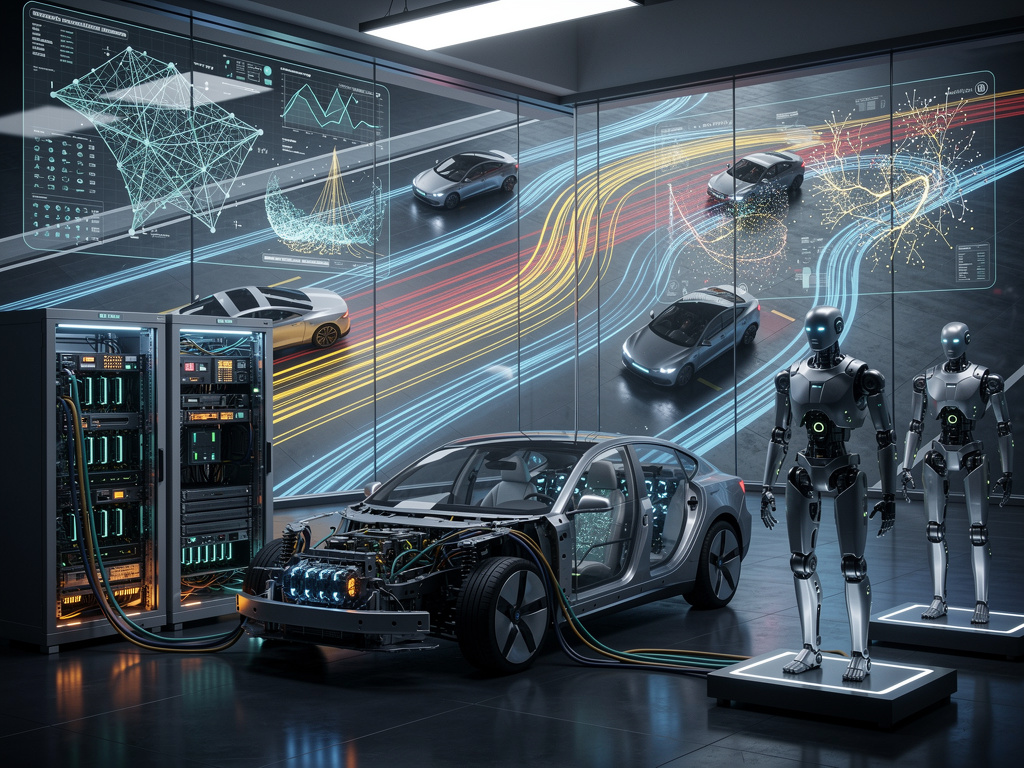
Elon Musk has never shied away from audacious timelines, but his latest directive for Tesla’s artificial intelligence division is testing the limits of innovation and endurance. In a move that has sent ripples through the tech world, Musk has set a firm 2026 deadline for achieving breakthroughs in autonomous driving and humanoid robotics, warning employees that it will be the “hardest year” yet. This push comes amid growing competition from rivals like Google and Waymo, and as Tesla grapples with internal pressures to deliver on promises that could redefine the automotive and AI sectors. Drawing from recent reports, including insights from Success Quarterly, the directive underscores Musk’s vision for Tesla to lead in real-world AI applications, from self-driving cars to factory robots.
At the heart of this initiative is Tesla’s ambitious plan to roll out unsupervised Full Self-Driving (FSD) capabilities and scale production of the Optimus humanoid robot. Musk’s announcements, echoed in posts on X, highlight a “clear path” to doubling AI performance metrics within months, but they also reveal the immense workload ahead. Engineers are being rallied to accelerate development, with Musk emphasizing that the company’s in-house AI chips—already deployed in millions of vehicles and data centers—give Tesla a competitive edge. Yet, this optimism is tempered by warnings from Tesla’s AI chief, who has described 2026 as the most demanding period for the Autopilot and Optimus teams, according to coverage in IndexBox.
The pressure is palpable. Insiders report grueling work schedules as teams scramble to integrate advancements from Tesla’s self-driving technology into Optimus Gen 3, aiming for factory deployment by late 2025 and mass production in 2026. Musk’s public statements on X underscore the engineering challenges, noting that progress hinges on compressing vast amounts of data into predictive models—essentially mimicking human decision-making through AI. This approach, while groundbreaking, demands an unprecedented volume of data collection and processing, pushing hardware and software teams to their brink.
Intensifying Rivalries and Internal Strains
Competition is heating up, adding fuel to Tesla’s internal fire. Musk recently expressed dissatisfaction with former AI head Andrej Karpathy’s comparisons between Tesla’s software and Google’s Waymo, calling Karpathy’s views “dated” in a post on X. According to The Times of India, Musk argued that Tesla’s “intelligence density” per gigabyte surpasses rivals by an order of magnitude, a claim that highlights the company’s focus on efficient, real-time AI processing. This rebuttal came amid broader industry scrutiny, as Tesla faces investigations into vehicle defects and declining sales in Europe, as detailed in GB News.
Within Tesla, the talent war for AI experts is described as the “craziest” Musk has seen, with over 200 engineers driving the autonomy efforts. Posts on X from Musk reveal ongoing refinements to FSD software, where training too heavily on edge cases—like emergency interventions—has sometimes compromised everyday driving smoothness. These insights point to a iterative process fraught with bugs and breakthroughs, where new AI models promise leaps forward but require months of debugging and safety testing. The strain on engineers is evident, as the company balances rapid innovation with the need for reliable, life-saving technology.
Musk’s broader AI ambitions extend beyond Tesla, with his xAI venture predicting artificial general intelligence (AGI) by 2026—a timeline he adjusted from an earlier 2025 forecast, as reported by Gizmodo. This overlap suggests synergies between xAI and Tesla, where advancements in one could propel the other. However, critics question the feasibility, noting Musk’s history of optimistic predictions that serve strategic purposes, such as attracting investment or talent.
Technological Hurdles and Breakthrough Potential
Delving deeper into the technical challenges, Tesla’s path to 2026 success relies on mastering end-to-end AI systems that process photon inputs—raw camera data—and correlate them with actuator outputs, as Musk explained in X posts. This photon-to-action pipeline is central to both FSD and Optimus, enabling robots to perform tasks with enhanced autonomy, speed, and battery efficiency. A report from OpenTools AI outlines plans for producing a million Optimus units annually, positioning it as Tesla’s potentially biggest innovation.
Yet, achieving this requires overcoming data limitations. Musk has stressed that while abundant data exists, the real bottleneck is engineering devices to gather more—echoing sentiments in his X discussions on physics-like compression formulas. Tesla’s strategy involves deploying fleets of vehicles for real-time data collection, feeding into massive training cycles. Recent unoccupied Robotaxi tests, shared by Musk and Tesla’s AI director, hint at rapid progress toward unsupervised operations, as covered in Teslarati.
The human element cannot be overlooked. Engineers face burnout risks amid what Musk calls an “insane amount of work,” with X posts warning that “people will die” if unproven systems are rushed—a stark reminder of the stakes in AI-driven transportation. Balancing speed with safety is paramount, especially as Tesla eyes international expansions, like FSD in the UAE by January 2026, per updates in El-Balad.
Strategic Implications for Tesla’s Future
As 2026 looms, the deadline’s implications ripple outward. Musk’s vision aligns with lucrative AI investments across the tech sector, as chronicled in The Guardian‘s review of 2025’s top stories. Tesla’s push could disrupt industries from manufacturing to logistics, with Optimus robots revolutionizing factories by handling repetitive tasks autonomously.
However, external pressures mount. A Benzinga article, referencing Musk’s comments, notes his assertion that Tesla’s software outpaces competitors, yet acknowledges the dated nature of some critiques (linking back to The Times of India coverage). This defensive posture reflects broader challenges, including regulatory hurdles and market skepticism. Tesla’s stock has fluctuated amid these announcements, with investors weighing the risks of overpromising against the rewards of AI dominance.
Internally, fostering a culture of resilience is key. Musk’s X posts praise the team’s efforts, highlighting accelerations in autonomy progress despite the talent crunch. Recruiting top minds remains critical, as the company competes with giants like Google, where executives have triggered “code red” responses at rivals like OpenAI, according to The Times of India in a separate piece.
Broader Industry Ripples and Ethical Considerations
The 2026 mandate is not isolated; it intersects with global AI trends. Musk’s xAI aims to amass more compute power than all competitors combined within five years, a bold claim from his X feed that underscores the arms race in processing capabilities. This could accelerate AGI, but it raises ethical questions about deployment speed versus safety, especially in critical applications like self-driving vehicles.
Tesla’s engineers, under this pressure, are innovating at a breakneck pace. Insights from X reveal ongoing refinements, such as addressing bugs in advanced AI models that cause regressions in performance. These cycles of improvement are essential for meeting milestones, yet they demand sustained focus amid distractions like vehicle recalls and sales dips noted in GB News.
Looking ahead, success in 2026 could cement Tesla’s leadership, but failure risks reputational damage. Musk’s history of adjusting timelines—AGI from 2025 to 2026, as per Gizmodo—suggests flexibility, but the human cost on engineers is a growing concern. Industry observers, drawing from Success Quarterly and IndexBox reports, warn that while the goals are transformative, the path is fraught with obstacles.
Pioneering Paths Amid Uncertainty
In the grand scheme, Musk’s directive embodies the relentless pursuit of progress that defines Tesla. By leveraging in-house AI expertise and vast data resources, the company is poised to tackle complex challenges, from Robotaxi expansions to Optimus integrations. Recent executive insights post-Robotaxi trials, as shared in Teslarati, signal confidence in unsupervised capabilities.
Yet, the journey demands addressing fundamental limits, like data acquisition and model training, themes recurrent in Musk’s X commentary. As rivals advance, Tesla’s edge lies in its integrated approach, compressing real-world intelligence into efficient systems.
Ultimately, 2026 will test whether Musk’s vision translates into reality, shaping not just Tesla’s trajectory but the future of AI in everyday life. With engineers at the forefront, the outcome hinges on innovation, resilience, and a bit of that signature Musk audacity.


 WebProNews is an iEntry Publication