
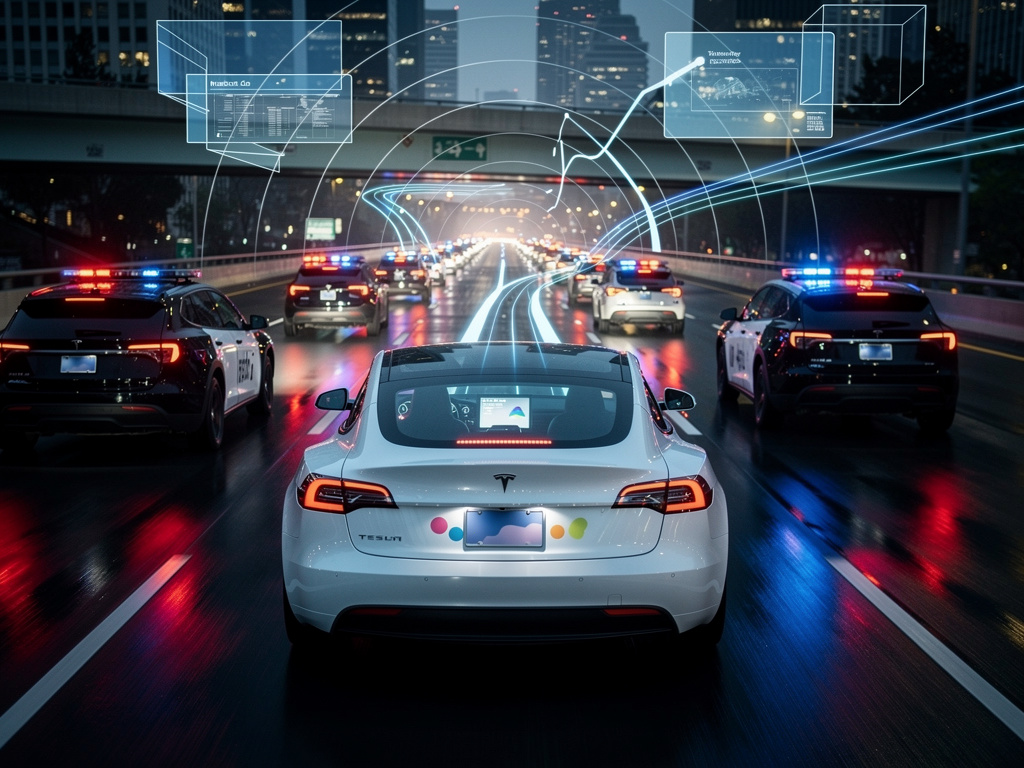
Elon Musk, the outspoken CEO of Tesla Inc., has once again stirred controversy with his bold assertions about the company’s autonomous driving technology. In a recent post on X, formerly known as Twitter, Musk claimed that Tesla’s Full Self-Driving (FSD) software now permits drivers to text while behind the wheel under specific conditions, such as heavy traffic. This statement quickly drew sharp rebuke from law enforcement officials, who emphasized that such actions remain illegal regardless of technological advancements. The incident highlights the ongoing tension between Tesla’s aggressive push for self-driving features and the regulatory frameworks governing road safety.
The claim originated from a discussion on X where Musk responded to a user’s query about using mobile devices while the FSD system is engaged. According to reports, Musk stated that in scenarios like stop-and-go traffic, the software’s latest version allows for brief distractions like texting, provided the driver remains attentive. This isn’t the first time Musk has touted FSD’s capabilities in ways that blur the lines between supervised autonomy and full independence. Tesla’s FSD, which is still classified as a Level 2 system by industry standards, requires constant driver supervision, yet Musk’s rhetoric often suggests otherwise.
Police departments across the U.S. were quick to respond, underscoring the dangers and legal implications. For instance, representatives from various state highway patrols issued statements reminding the public that distracted driving laws apply universally, even with advanced driver-assistance systems. “It is still illegal,” one official was quoted as saying in a piece from The Cool Down, emphasizing that no vehicle technology overrides statutes prohibiting phone use while operating a car.
Musk’s Pattern of Provocative Statements on Autonomy
This backlash isn’t isolated; it fits into a broader pattern of Musk’s promotional style, which has repeatedly clashed with safety advocates and regulators. Tesla has faced scrutiny from bodies like the National Highway Traffic Safety Administration (NHTSA) over incidents involving FSD, including crashes where driver inattention was a factor. In one notable case, investigations revealed that some accidents occurred while users were engaged in non-driving activities, prompting recalls and software updates.
Industry experts argue that Musk’s comments could encourage risky behavior among Tesla owners, who might misinterpret FSD as fully autonomous. “The technology is impressive, but it’s not a license to disregard the law,” noted a traffic safety analyst in discussions on automotive forums. This sentiment echoes findings from independent tests, where FSD has shown strengths in highway navigation but vulnerabilities in complex urban environments.
Moreover, the timing of Musk’s claim coincides with Tesla’s efforts to expand FSD adoption. The company recently rolled out version 12.5 of the software, which includes enhancements like improved object detection and smoother handling of intersections. However, critics point out that these updates don’t change the fundamental requirement for human oversight, as mandated by most state laws.
Regulatory Hurdles and Tesla’s Ambitious Roadmap
Tesla’s pursuit of advanced autonomy operates within a patchwork of state and federal regulations that vary widely. In California, home to Tesla’s engineering headquarters, the Department of Motor Vehicles has strict rules on testing and deploying self-driving vehicles, often requiring permits for unsupervised operation. Musk has publicly criticized such oversight, once threatening legal action against regulators he deemed overly restrictive.
Drawing from recent news, a report in Business Insider detailed how police officials nationwide are advising against following Musk’s suggestion, citing data from the Centers for Disease Control and Prevention that links distracted driving to thousands of annual fatalities. This advisory comes amid growing concerns over Tesla’s marketing of FSD, which some lawsuits allege misleads consumers about its readiness.
On the innovation front, Tesla continues to invest heavily in AI-driven features, with Musk envisioning a future where vehicles operate as robotaxis. Yet, competitors like Waymo and Cruise have taken more cautious approaches, securing permissions for fully driverless operations in limited areas after extensive testing. Tesla’s strategy, by contrast, relies on over-the-air updates and real-world data from its fleet, a method that has accelerated development but invited regulatory pushback.
Public Reaction and Broader Industry Implications
Public sentiment, as gauged from posts on X, reveals a divide: Tesla enthusiasts praise Musk’s forward-thinking vision, while skeptics decry the potential for increased road hazards. One viral thread highlighted user experiences with FSD, where drivers admitted to multitasking, only to be jolted back by sudden system disengagements. Such anecdotes fuel debates on whether Tesla’s beta-testing model endangers the public.
Law enforcement’s response has been amplified through media channels, with outlets reporting on official statements that reinforce anti-distraction campaigns. For example, the American Automobile Association (AAA) has long warned against over-reliance on semi-autonomous systems, data that aligns with police concerns in this case.
Beyond safety, this controversy touches on ethical questions in tech development. Musk’s influence extends to policy, given his advisory role in recent administrations, where he’s advocated for lighter regulations on emerging technologies. Critics argue this could prioritize innovation over public welfare, especially as Tesla navigates sales slumps attributed partly to controversies surrounding its CEO.
Tesla’s Sales Challenges Amid Controversies
Recent financial reports indicate Tesla’s sales have dipped, with analysts linking the decline to both market competition and backlash against Musk’s public persona. A piece from BBC News noted a plunge in deliveries, attributing it to factors including executive controversies and intensifying rivalry from electric vehicle makers like BYD and Ford.
In Europe, Tesla recently introduced a lower-priced Model 3 variant to boost demand, as covered in The Guardian. This move comes against a backdrop of protests and even vandalism at Tesla facilities, stemming from discontent with Musk’s political involvements.
Industry insiders speculate that such incidents could accelerate calls for stricter oversight of autonomous tech claims. The NHTSA is already investigating multiple Tesla crashes, and Musk’s latest statement might prompt further probes into how the company communicates FSD limitations.
Evolving Debates on Distracted Driving Laws
The core issue revolves around evolving definitions of distracted driving in an era of smart vehicles. While some states have updated laws to address hands-free technologies, texting remains a prohibited activity for drivers. Police organizations, including the International Association of Chiefs of Police, have issued guidelines stressing that autonomy levels don’t exempt users from responsibility.
Insights from Electrek suggest Musk’s claim was meant to highlight FSD’s progress in low-speed scenarios, but it overlooked the legal nuances. Experts recommend Tesla incorporate clearer in-car warnings to mitigate misuse.
As autonomous driving advances, collaborations between tech firms and regulators could shape future standards. Initiatives like the European Union’s AI Act aim to classify high-risk systems, potentially influencing U.S. policies.
Musk’s Broader Influence and Tesla’s Future
Musk’s penchant for provocative statements extends beyond Tesla, as seen in his X posts challenging authorities on various fronts. For instance, he’s threatened responses against EU officials over fines imposed on X, reflecting a combative stance toward regulation.
For Tesla, this could mean navigating heightened scrutiny while pushing boundaries. The company’s valuation, still lofty despite recent dips, hinges on delivering on autonomy promises. Analysts from firms like Morgan Stanley predict that successful FSD deployment could revolutionize transportation, but only if safety concerns are addressed.
Looking ahead, the industry watches closely as Tesla refines its technology. Partnerships with mapping services and AI enhancements might bolster FSD’s reliability, potentially aligning it more closely with legal expectations.
Balancing Innovation with Safety Priorities
Ultimately, the uproar over Musk’s texting claim underscores a pivotal tension in automotive tech: the race to innovate versus the imperative to protect lives. Safety advocates call for transparent testing data, something Tesla has been reluctant to share fully.
In light of recent violence against Tesla properties, as reported in CBS News, the company’s image is under strain, complicating its growth narrative.
Stakeholders, from investors to policymakers, must weigh these dynamics as Tesla charts its course. While Musk’s vision inspires, ensuring it doesn’t compromise road safety remains paramount.
Lessons from Past Tesla Controversies
Reflecting on prior incidents, such as the 2021 Texas crash involving a Tesla on Autopilot, reveals patterns in how the company responds to criticism. Tesla often attributes mishaps to user error, a stance that has drawn lawsuits alleging defective design.
Current news from The New York Times indicates ongoing protests against Tesla, fueled by broader discontent with Musk’s influence.
As debates intensify, the path forward may involve third-party validations of FSD, fostering trust among regulators and the public alike.
The Road Ahead for Autonomous Tech
In the realm of self-driving vehicles, Tesla’s experiences offer valuable insights for peers. Companies like General Motors’ Cruise unit have paused operations after incidents, prioritizing safety recalibrations.
Musk’s recent X activity, including criticisms of government overreach, suggests he views such backlashes as obstacles to progress. Yet, constructive dialogue could bridge gaps.
For industry insiders, this episode serves as a reminder that technological leaps must harmonize with societal norms, ensuring advancements benefit all road users.


 WebProNews is an iEntry Publication