
China’s Power Surge: How Electricity Could Catapult It to AI Supremacy by 2026
Elon Musk, the visionary behind Tesla and SpaceX, has issued a stark prediction that could reshape global technology dynamics. In a recent podcast appearance, Musk asserted that China is poised to “far exceed the rest of the world in AI compute” thanks to its unparalleled ability to ramp up electricity production. This claim, made during an episode of “Moonshots with Peter Diamandis,” underscores a growing concern among tech leaders about the energy demands of artificial intelligence and how access to power might determine future dominance in the field.
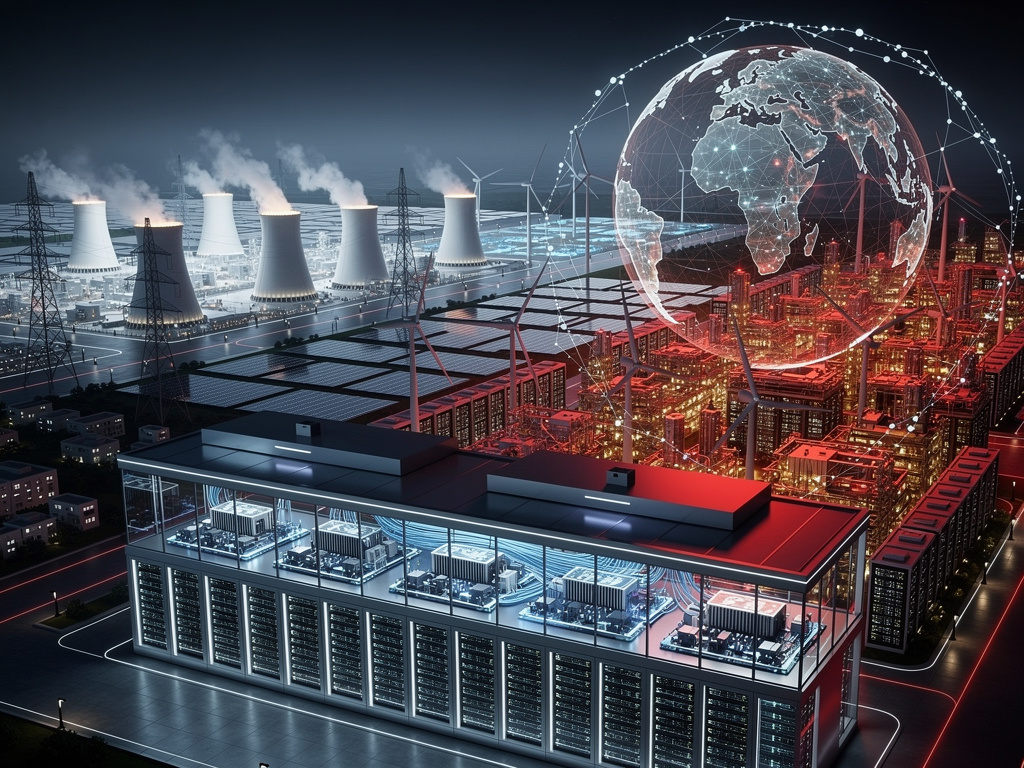
Musk’s comments highlight a critical bottleneck in AI development: electricity. As AI models grow more complex, they require massive computing resources, which in turn consume enormous amounts of energy. China, with its aggressive infrastructure investments, is expected to triple its electricity output compared to the United States by 2026, according to Musk. This surge would enable the country to support sprawling data centers essential for training advanced AI systems, potentially leaving Western competitors struggling to keep pace.
The prediction isn’t mere speculation. Musk points to China’s track record in scaling up energy production, particularly in renewables and nuclear power, as a key advantage. While the U.S. grapples with regulatory hurdles and grid limitations, China has been building power plants at a breakneck speed, positioning itself as the frontrunner in the race for AI superiority.
Electricity as the Ultimate AI Enabler
Industry experts echo Musk’s concerns, noting that the limiting factor for AI scaling has shifted from chip availability to energy supply. In the Business Insider report detailing Musk’s podcast remarks, he emphasized that “electricity generation is the limiting factor to scaling AI systems.” This view aligns with broader trends, where data centers are projected to consume up to 8% of global electricity by 2030, driven largely by AI workloads.
China’s edge stems from its state-directed economy, which allows for rapid deployment of energy infrastructure. For instance, the country added more solar capacity in 2023 alone than the entire world did in 2022, according to reports from energy analysts. This capability not only supports domestic AI ambitions but also attracts international tech firms seeking reliable power for their operations.
Musk’s own ventures illustrate the challenge. His AI startup, xAI, recently acquired five 380 MW natural gas turbines to power its supercomputing expansion, as reported in TechTimes. Yet, even with such moves, Musk warns that without a similar focus on energy scaling in the U.S., American firms could fall behind.
The Geopolitical Stakes in AI Power Plays
Beyond raw power generation, China’s strategy involves integrating AI with its manufacturing prowess. Musk noted in the podcast that China could have “more power than anyone else and probably will have more chips,” a nod to its dominance in semiconductor production despite U.S. export restrictions. This is further explored in an article from DNyuz, which quotes Musk on China’s potential to outstrip global rivals.
The implications extend to national security and economic competitiveness. U.S. policymakers have imposed curbs on exporting advanced chips to China, aiming to slow its AI progress. However, as Musk suggests, these measures may be undermined if China leverages its energy advantages to build domestic alternatives or optimize existing hardware.
Recent developments in the U.S. highlight the contrast. Data centers are rushing to install onsite generators to bypass grid constraints, with companies like Meta and xAI turning to gas turbines, as detailed in Tom’s Hardware. This patchwork approach underscores the fragmented nature of American energy policy compared to China’s centralized planning.
China’s Energy Blueprint for AI Dominance
Delving deeper, China’s electricity projections are staggering. By 2026, its output could reach levels three times that of the U.S., enabling the deployment of AI data centers on an unprecedented scale. Musk elaborated that many underestimate the difficulties in ramping up power production, a point reinforced in coverage from Business Insider Africa, which highlights China’s track to outpace every other nation in AI computing power.
This isn’t just about quantity; it’s about strategic integration. China’s investments in clean energy, including vast solar farms and hydroelectric projects, align with global sustainability goals while fueling tech growth. In contrast, the U.S. faces challenges like aging infrastructure and debates over nuclear expansion, limiting its ability to match this pace.
Musk’s admiration for China’s responsiveness is evident. He quipped that China “listens to everything he says” in the context of electric vehicles and solar power, as reported in The Economic Times. This reflects how Beijing has rapidly adopted technologies Musk has championed, now applying similar agility to AI.
Challenges and Counterstrategies in the West
Yet, China’s path isn’t without hurdles. Environmental concerns, such as pollution from coal-dependent power, and international tensions could complicate its ascent. Musk himself has called for U.S. leadership to prioritize energy innovation, suggesting solutions like battery storage to optimize grid usage, drawing from posts on X where he discusses power constraints for AI.
In the U.S., tech giants are innovating around limitations. For example, proposals for space-based solar-powered AI satellites could circumvent earthly power issues, with Musk estimating Starship could deliver up to 500 GW per year of such capacity, as mentioned in his X interactions. This futuristic approach, covered in various tech analyses, represents one way to challenge China’s terrestrial advantages.
Moreover, collaborations and policy shifts are emerging. The Biden administration’s infrastructure bill includes funds for grid modernization, but experts argue it’s insufficient for AI’s voracious demands. As per a CNBC piece on AI’s impact on American terrain, Big Tech is amassing debt to build kingdom-scale data centers, betting on future power availability.
Global Ramifications of an AI Power Shift
The broader ramifications of Musk’s prediction touch on everything from job markets to clean energy transitions. In a podcast discussion referenced in Digital Habitats, Musk envisions AI transforming economies, with China’s lead potentially accelerating global abundance through advanced robotics and energy solutions.
Critics, however, warn of risks like overreliance on centralized power, which could lead to vulnerabilities in cyberattacks or supply chain disruptions. Musk’s X posts emphasize the need for diversified energy sources, such as harnessing solar power at scale, to avoid such pitfalls.
Internationally, this dynamic is spurring alliances. European nations are investing in green energy to bolster their AI capabilities, while countries like Vietnam note China’s advantages in reports from Vietnam.vn, signaling a worldwide recognition of energy as AI’s new battleground.
Industry Responses and Future Trajectories
Tech insiders are responding with urgency. xAI’s recent purchase of a third building to expand compute power to nearly 2 gigawatts, as per Reuters, shows Musk putting his money where his mouth is. Similarly, Tesla’s massive investments in Nvidia hardware for AI training, totaling around $10 billion by year’s end, underscore the scale required.
Looking ahead, the convergence of AI and energy will likely drive innovations like advanced batteries and fusion power. Musk’s X commentary on capturing even a fraction of the sun’s energy highlights the potential for breakthroughs that could level the playing field.
Ultimately, Musk’s forecast serves as a wake-up call. If China indeed surges ahead by 2026, it could redefine technological leadership, prompting a reevaluation of global strategies in power and AI. As the world watches, the interplay between electricity and intelligence may well decide the next era of innovation.


 WebProNews is an iEntry Publication