
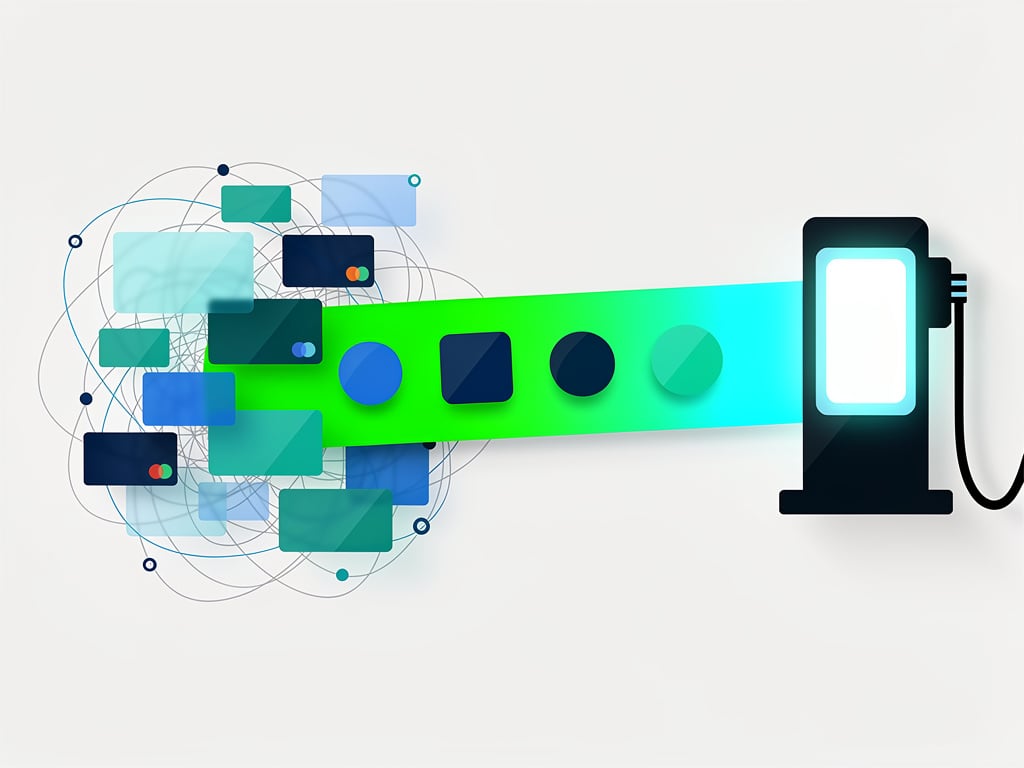
Electrify America has moved to scrap its prepaid account balance system. The largest open DC fast-charging network in the United States will now bill drivers directly to their credit or debit cards for each session. The shift eliminates a longstanding source of customer frustration. And it brings the company closer to the simpler model already used by Tesla Superchargers.
Announced this week, the change rolls out over the coming weeks. Drivers with leftover funds in their accounts will see that money applied first to their next charge. Any remainder gets billed to the card on file. No more topping up. No more wondering what happens to unused cash.
The old system required users to preload money through the app, set auto-reload thresholds, and sometimes chase refunds for small remaining balances. Occasional users found it annoying. Business fleets disliked the accounting hassle. Electrify America listened.
Under the new approach a temporary authorization hold of $20 appears on the card when a session starts. The company then charges only for the actual energy delivered. Banks release the unused portion of the hold on their own schedule. The process mirrors practices common at gas stations yet feels fresh in the EV world.
Frustration Points That Finally Disappear
Prepaid balances once created odd edge cases. A driver might add $50 but use $47. The leftover $3 sat in digital limbo until the next visit or a refund request. Frequent users shrugged it off. Everyone else complained on forums and social media. The new direct-charge model removes those headaches entirely.
Subscriptions remain untouched. Pass and Pass+ members still receive their discounted rates. Those plans continue to deliver about 25 percent savings compared with guest pricing. The membership structure itself does not change. Only the payment mechanics do. (CNET)
Electrify America delivered more than 20 million charging sessions in 2025. That figure marked a 21 percent jump from the year before. Energy throughput exceeded 750 gigawatt-hours, up 26 percent. The network now operates more than 5,600 DC fast chargers across 1,080 locations in 47 states and the District of Columbia. It also upgraded over 1,100 units to next-generation hardware. (Electrify America)
Those numbers reflect real momentum. Yet reliability complaints and complicated payments have slowed broader adoption. The prepaid model dated back to the network’s early days after Volkswagen created Electrify America as part of its Dieselgate settlement. The company poured billions into stations to meet zero-emission vehicle mandates. Early infrastructure carried legacy decisions that no longer fit today’s market.
Direct card billing aligns Electrify America with industry leaders. Tesla drivers simply plug in and go. The car knows the account. Billing happens automatically. Rivals such as EVgo and ChargePoint already offer tap-to-pay or app-based card options without mandatory preload. Electrify America’s move catches it up.
But. Not every driver will cheer. Some liked the discipline of a prepaid wallet. Others worry about higher authorization holds on business cards or foreign-issued plastic. Banks sometimes flag repeated $20 holds as suspicious. Those details will sort themselves in practice. Most users should notice only that charging now feels simpler.
Idle fees stay in place. They discourage drivers from lingering after their battery fills. Pricing still varies by location, vehicle capability, and membership tier. Real-time rates appear in the app or on the charger screen. The fundamentals of cost calculation have not shifted. Only the funding mechanism has.
Recent industry data shows fast-charging demand continues to climb as more long-range EVs hit the road. Electrify America’s 2025 recap highlighted new large-format stations in California with 20 or more chargers. Those sites address queuing problems at popular stops. The payment simplification complements those physical upgrades. Together they attack two pain points at once: finding an open stall and paying without friction.
Industry observers note the timing. EV sales growth has moderated in some segments yet infrastructure investment keeps accelerating. Federal and state programs pour money into chargers. Networks that reduce barriers stand to capture more market share. Electrify America, once criticized for spotty uptime, has spent recent years improving station reliability and adding battery storage to ease grid strain. Payment reform forms the latest piece of that effort.
Drivers on X reacted quickly to the news. One EV advocate posted, “Kudos to Electrify America for simplifying payments. They’re removing account balances and auto-reload, and all sessions will now bill directly to the card on file. Any remaining balance is applied first. You’re only charged for the actual session cost.” The short message captured the prevailing sentiment. (X post by @evAdvocate_org)
Plenty of questions remain. How will the transition handle accounts with very small balances? What happens at chargers that still rely on older software? Will the app update automatically or require user action? Electrify America has not released a full technical FAQ yet. Early indications suggest the mobile app will guide users through the switch.
The move also carries accounting implications for the company. Prepaid balances once sat on the balance sheet as deferred revenue. Direct charging should simplify cash flow and reduce customer service volume tied to refund requests. Those operational savings matter as the network scales to serve millions more sessions each year.
Competitors will watch closely. If the change boosts utilization rates, others may follow. Already the industry drifts toward contactless, subscription-optional models. The days of mandatory prepaid accounts appear numbered across multiple networks.
Electrify America still faces challenges. Charger uptime, peak-time congestion, and pricing perception continue to draw criticism in certain markets. Yet stripping away payment complexity signals a focus on user experience that has sometimes lagged behind hardware deployment. The company invested more than $2 billion under its zero-emission vehicle commitment. Much of that money built stations. Now it invests in making those stations easier to use.
Drivers who charge infrequently stand to benefit most. Road-trippers, rental customers, and new EV owners often balked at creating accounts and loading money for a single session. Direct card payment lowers that barrier. It invites more people to try public fast charging without commitment.
Frequent users may see little practical difference beyond one fewer app screen. Their saved card already handled most transactions. The authorization hold replaces the balance check. The end result feels similar. The experience just got cleaner.
So the prepaid era ends quietly. What began as a way to guarantee revenue and control costs has given way to a model that trusts drivers and their payment cards. Electrify America bet that convenience would outweigh any short-term accounting complications. Early reaction suggests the wager will pay off.


 WebProNews is an iEntry Publication