
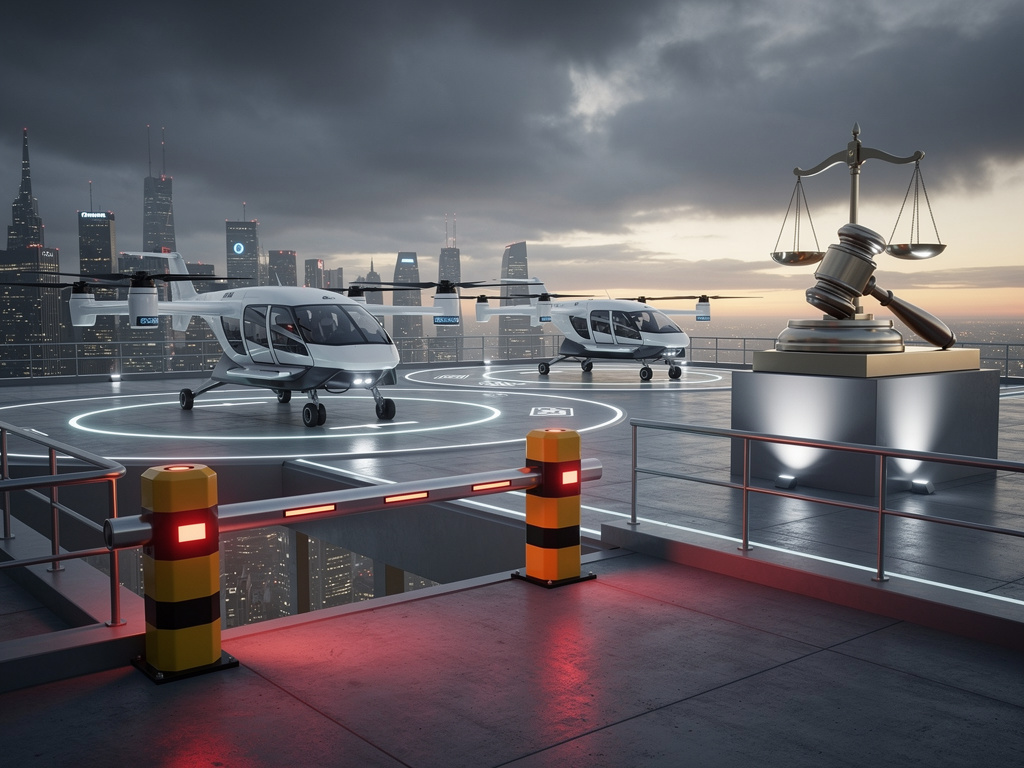
The promise of electric air taxis has captured imaginations for years, with companies pitching visions of skies filled with quiet, battery-powered vehicles whisking passengers above traffic jams. Yet behind the sleek prototypes and bold timelines lies a messier reality of regulatory battles, safety questions, and mounting legal disputes. A recent column from The Verge highlights how these conflicts are testing the foundations of an industry that once seemed destined for rapid takeoff.
Joby Aviation stands out as one of the more visible players in this sector. The California-based company has poured resources into developing a vertical takeoff and landing craft designed to carry passengers on short urban hops. Joby secured a major partnership with Delta Air Lines and completed several high-profile test flights, including demonstrations for the U.S. military. Its vehicles feature tilting propellers and a design that aims to balance efficiency with noise reduction, two factors seen as essential for winning over both regulators and nearby communities.
Despite these advances, Joby and its competitors face growing pushback from residents, environmental groups, and even some local governments. Lawsuits have started to pile up, targeting everything from noise pollution concerns to the adequacy of environmental reviews. In California, where many of these test programs operate, community organizations have filed complaints arguing that authorities approved flight operations without sufficient study of potential impacts on wildlife, air quality, and quality of life for people living near vertiports.
The Federal Aviation Administration finds itself at the center of many of these disagreements. Tasked with certifying both the aircraft and the operational rules for commercial service, the agency has taken a measured approach. Critics contend that the FAA has moved too slowly, creating uncertainty that deters investment. Others worry the agency is rushing key safety approvals to meet political pressure for visible progress on advanced air mobility. Either way, the resulting friction has produced a steady stream of court filings.
One prominent case involves Archer Aviation, another company developing similar electric vertical takeoff aircraft. Archer has positioned itself as a faster mover than some rivals, securing deals with United Airlines and Stellantis for manufacturing support. Yet its plans to begin commercial operations in Los Angeles and Miami have drawn legal challenges from neighborhood associations. Plaintiffs argue that the noise profiles of these aircraft, even if quieter than traditional helicopters, would still disrupt residential areas and depress property values. Expert testimony submitted in these suits questions whether current sound measurement standards adequately capture the unique acoustic signatures of distributed electric propulsion systems.
The legal arguments extend beyond noise. Environmental organizations have raised alarms about the energy sources required to charge large fleets of air taxis. While marketed as zero-emission vehicles at the point of flight, the broader carbon footprint depends heavily on the electricity grid. In regions still reliant on natural gas or coal, scaling up air taxi operations could indirectly increase emissions. Lawsuits have asked courts to compel more comprehensive lifecycle analyses before permits are granted for large-scale infrastructure.
Infrastructure itself represents another flashpoint. Vertiports, the dedicated takeoff and landing pads needed for these services, require significant real estate and often sit near dense urban zones or existing airports. Securing zoning approvals has proven difficult. In some cities, proposed sites have sparked disputes with nearby businesses or residents who fear increased traffic, both on the ground and in the air. Legal teams for community groups have successfully delayed projects by pointing to gaps in municipal planning documents that fail to address cumulative effects of multiple operators competing for the same airspace.
Joby has attempted to get ahead of these issues by conducting extensive community outreach and investing in noise mitigation research. Company executives have emphasized their vehicles’ ability to operate at sound levels comparable to a dishwasher from several hundred feet away. Still, skepticism persists. Independent acoustic studies commissioned by opponents have produced differing results, leading to conflicting claims that judges must now weigh. The situation illustrates how technical disagreements can quickly transform into protracted courtroom battles when public trust is low.
Safety certification adds another layer of complexity. The FAA’s type certification process for these novel aircraft involves proving reliability across thousands of test hours. Because electric air taxis use propulsion systems unlike anything previously certified for commercial passenger service, regulators demand extensive validation of battery performance, redundancy systems, and software controls. Delays in this process have frustrated company leaders who argue that overly conservative standards could hand market advantages to foreign competitors, particularly those based in China where regulatory pathways appear more streamlined.
The financial stakes are enormous. Billions of dollars have already flowed into the sector from venture capital, automakers, and aerospace giants. Investors expect returns within a defined window, yet repeated postponements of commercial launch dates have tested patience. Joby pushed its target entry-into-service date several times, citing both technical refinements and regulatory timelines. Each shift prompted questions from shareholders and, in some cases, class-action complaints alleging inadequate disclosure of risks.
Meanwhile, the insurance industry watches developments closely. Underwriters remain uncertain about appropriate premiums for operations that combine elements of aviation, urban transit, and emerging technology. Without clear liability frameworks, companies struggle to secure coverage at reasonable rates. This uncertainty has itself become grounds for litigation, with some early investors claiming that firms overstated their readiness to manage risk.
Public perception plays a decisive role in how these legal fights unfold. Polls show mixed enthusiasm for air taxis. While many urban professionals express interest in avoiding gridlock, others view the concept as an elitist solution that benefits high-income travelers at the expense of broader transportation needs. This perception fuels arguments in court that public resources should not support projects with limited accessibility. Attorneys for cities and community groups have cited equity concerns when challenging tax incentives or federal grants awarded to air taxi developers.
International coordination presents yet another hurdle. Companies hoping to operate across borders must contend with differing certification standards and air traffic management philosophies. The European Union Aviation Safety Agency has taken its own approach to electric vertical takeoff aircraft, sometimes diverging from FAA positions on key technical points. These discrepancies create complications for manufacturers seeking global certification, occasionally leading to disputes over intellectual property and data sharing that spill into legal territory.
Despite the obstacles, some progress continues. The U.S. Department of Transportation has funded several pilot programs aimed at integrating air taxis with existing ground transit networks. These initiatives include partnerships with cities to study multimodal ticketing and vertiport placement near rail stations. Early data from these trials could help address some criticisms by demonstrating concrete benefits for commuters. However, even these government-backed projects have faced legal challenges from groups demanding more transparency in how test routes were selected.
The Verge column correctly observes that lawsuits have become a central feature rather than a temporary distraction for the electric air taxi sector. Each filing forces companies to divert resources from engineering to discovery and defense. Courtroom losses can delay timelines by months or years while appeals wind their way through the system. Even victories rarely come without conditions that increase operational costs or limit initial service areas.
Looking forward, the industry appears headed toward greater consolidation. Smaller startups lacking deep financial reserves may struggle to weather extended legal campaigns. Larger players with established aerospace partnerships, such as Joby and Archer, stand better positioned to absorb costs and influence regulatory outcomes through sustained lobbying. Yet this concentration of power raises new questions about competition and whether a handful of companies will ultimately control urban airspace in major metropolitan regions.
Regulatory agencies may eventually adapt by creating specialized certification pathways that balance innovation with public protection. Some experts suggest the FAA could implement phased approvals that allow limited commercial operations in less populated corridors while gathering real-world performance data. Such an approach might reduce the grounds for litigation by demonstrating a commitment to evidence-based decision making rather than blanket approvals.
Community engagement strategies will likely evolve as well. Companies that treat lawsuits as opportunities to improve designs and address genuine concerns may fare better than those adopting defensive postures. Transparent sharing of test data, independent verification of noise and emissions claims, and meaningful investment in local benefits could help rebuild trust. Without these steps, legal opposition seems likely to intensify as more cities consider hosting these services.
The coming years will test whether electric air taxis can transition from concept to commonplace transportation or remain a niche experiment. The lawsuits accumulating today will shape not only individual company fortunes but the broader question of how society chooses to allocate airspace in an increasingly crowded world. Outcomes in courtrooms and hearing rooms will determine if the vision of effortless aerial mobility survives contact with practical, legal, and political realities. As these cases proceed, they reveal the distance still to cover between promotional renderings and operational systems that can earn broad acceptance. The industry must now prove its technology can satisfy regulators, reassure neighbors, and deliver on promises without creating new problems that outweigh the benefits. Success will depend on patience, adaptability, and a willingness to engage seriously with critics rather than simply outlasting them.


 WebProNews is an iEntry Publication