
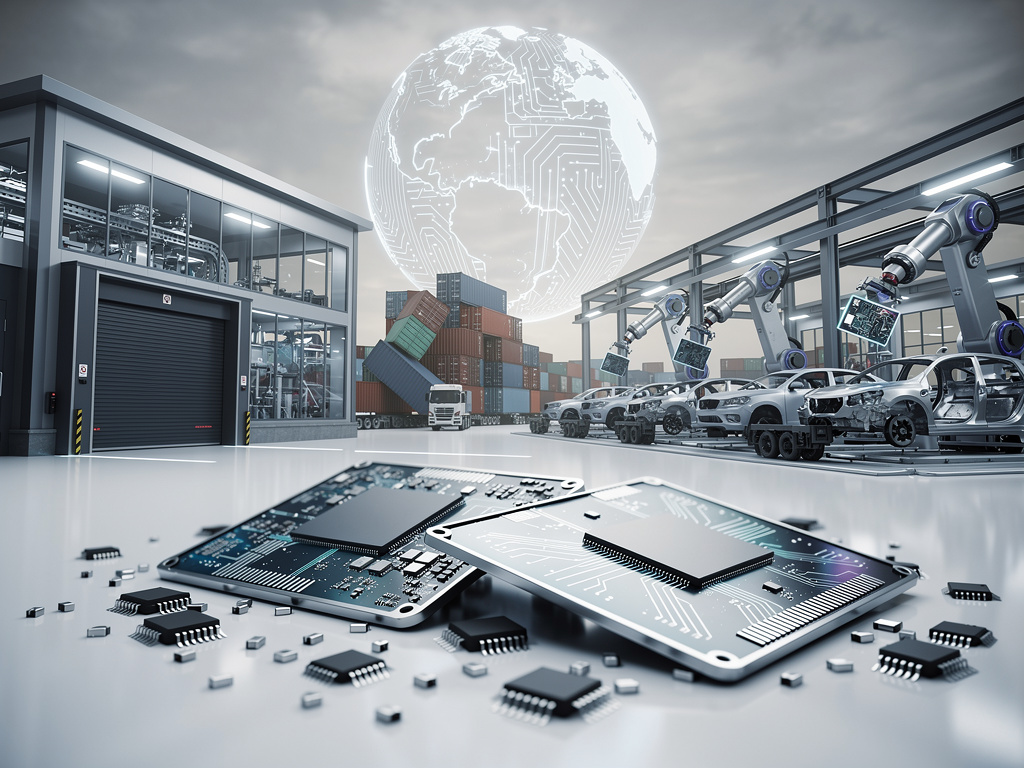
Chips in the Balance: The Dutch Seizure Sparking a Global Auto Meltdown
The escalating standoff between China and the Netherlands over the seizure of chipmaker Nexperia has thrust the global semiconductor supply chain into turmoil, with ripple effects now crippling the automotive industry. In late 2025, the Dutch government took the unprecedented step of assuming control of Nexperia, a company owned by China’s Wingtech Technology, citing national security concerns amid growing U.S.-China tech tensions. This move, intended to safeguard critical technology, has instead triggered a cascade of disruptions, halting chip exports from China and forcing automakers worldwide to idle production lines.
Nexperia, a key player in producing discrete semiconductors essential for vehicles, manufactures over 100 billion chips annually, with a significant portion packaged in China. The Dutch intervention, detailed in a Reuters report, followed U.S. pressure and highlighted the firm’s entanglement in broader geopolitical battles over intellectual property and supply chain dominance. Beijing responded by suspending exports of these chips, accusing the Netherlands of unjust interference that endangers global stability.
As the dispute drags on into 2026, the auto sector is bearing the brunt. Factories from Europe to North America have furloughed workers and scaled back output, underscoring the fragility of interconnected global manufacturing networks. Industry insiders warn that without a swift resolution, the crunch could extend well beyond cars, affecting electronics and other sectors reliant on these components.
Geopolitical Gambits and Supply Chain Vulnerabilities
The roots of this crisis trace back to October 2025, when the Dutch government, under Economy Minister Vincent Karremans, seized control of Nexperia. According to a BBC article, the action aimed to protect technology supplies amid fears of Chinese influence. Nexperia, acquired by Wingtech in 2018 for $3.5 billion, operates facilities in Europe but relies heavily on Chinese operations for packaging and assembly.
China’s foreign ministry swiftly condemned the move, labeling it a “mistake” that disrupts international trade. In a statement covered by The Guardian, Beijing urged the Netherlands to cease interference, warning of prolonged impacts on car factories. The suspension of chip shipments has led to immediate shortages, with European automakers reporting production halts.
This isn’t just a bilateral spat; it’s a symptom of wider U.S.-led efforts to curb China’s tech ambitions. A separate Reuters piece revealed that the seizure followed U.S. pressure over Nexperia’s Chinese CEO, illustrating how allied nations are aligning against perceived threats from Beijing.
Automotive Fallout and Industry Ripples
The auto industry’s dependence on Nexperia’s chips—used in everything from power management to sensors—has made it particularly vulnerable. Honda, for instance, halted production at its Mexico plant in late October 2025, as noted in posts on X that highlighted the global reach of the disruption. Volkswagen and other majors have followed suit, with furloughs affecting thousands of workers.
Analysts estimate that the monthly packaging of 6 billion chips in China represents a critical bottleneck. Without these exports, stockpiles are depleting rapidly, pushing companies to seek alternatives. However, qualifying new suppliers can take months, as emphasized in a Tom’s Hardware report from December 2025, which detailed ongoing suspensions and undersupply issues.
Beyond autos, the crisis exposes broader vulnerabilities in semiconductor ecosystems. Nexperia’s plea to its Chinese unit for restored operations, reported by CNBC, underscores internal corporate fractures amid external pressures. As one industry executive anonymously shared, “This is what happens when politics overrides production logic.”
Diplomatic Deadlocks and Economic Pressures
Diplomatic efforts have so far yielded little. Minister Karremans indicated plans for talks with Chinese officials in October 2025, per a Reuters update, but progress stalled as accusations flew. China has ramped up rhetoric, with a December 31, 2025, statement urging the Netherlands to “correct its mistakes” and stabilize supply chains, as covered in multiple outlets including Al Jazeera.
Beijing’s response includes domestic mandates, such as requiring 50% local equipment for chipmakers, revealed in a Reuters exclusive. This push for self-reliance could further isolate global chains, forcing Western firms to rethink partnerships.
On X, sentiment reflects frustration, with users like automotive experts pointing to China’s manufacturing leverage. Posts describe the seizure as a “perfect own goal” for Europe, amplifying concerns over increased dependence and halted productions.
Corporate Maneuvers and Legal Battles
Nexperia’s Chinese arm, facing wafer shortages, is scouting new suppliers, a process that could take up to six months, according to Tom’s Hardware. This legal standoff, potentially heading to court, pits Dutch control against Chinese ownership, with Wingtech challenging the takeover in forums like BitcoinEthereumNews.
The U.S. role looms large, with the seizure tied to export controls and IP concerns. As Reuters noted earlier, Nexperia is negotiating with both Washington and Beijing, caught in a vise of competing interests.
For automakers, contingency plans are underway. Some, like those sourcing from NXP, are shifting to renminbi-based contracts with Chinese entities, as highlighted in X discussions. Yet, these workarounds come at a cost, inflating prices and complicating logistics.
Long-Term Implications for Global Trade
Looking ahead, this episode could redefine international tech relations. Europe’s push for semiconductor sovereignty, echoed in the Nexperia case, risks alienating key suppliers. China, holding sway over vast manufacturing capacity, demonstrates its ability to retaliate effectively.
Industry insiders predict a reconfiguration of supply networks, with diversification efforts accelerating. However, as The Guardian reported, the ongoing “chip war” threatens to prolong factory halts, potentially leading to higher consumer prices and economic slowdowns.
Beijing’s accusations of Dutch indifference, per recent CNBC coverage, signal no quick end. With auto production already disrupted, the pressure mounts for a resolution that balances security with economic realities.
Strategic Shifts and Future Horizons
In response to the crunch, companies are exploring alternatives, but the scale of Nexperia’s output makes substitution challenging. A Forbes piece by Jill Goldenziel argues that the case reveals how swiftly PRC-linked firms can adapt to splits, while Western businesses lag in decoupling preparations.
China’s call for corrections, reiterated in Al Jazeera on December 31, 2025, emphasizes the need for dialogue. Yet, as tensions simmer, the auto sector’s suffering underscores the high stakes.
Ultimately, this crisis serves as a stark reminder of globalization’s double-edged sword. What began as a security measure has evolved into a multifaceted debacle, testing the resilience of industries and nations alike. As 2026 unfolds, the path to recovery hinges on diplomatic breakthroughs and adaptive strategies, with the world watching closely for signs of thaw.


 WebProNews is an iEntry Publication