
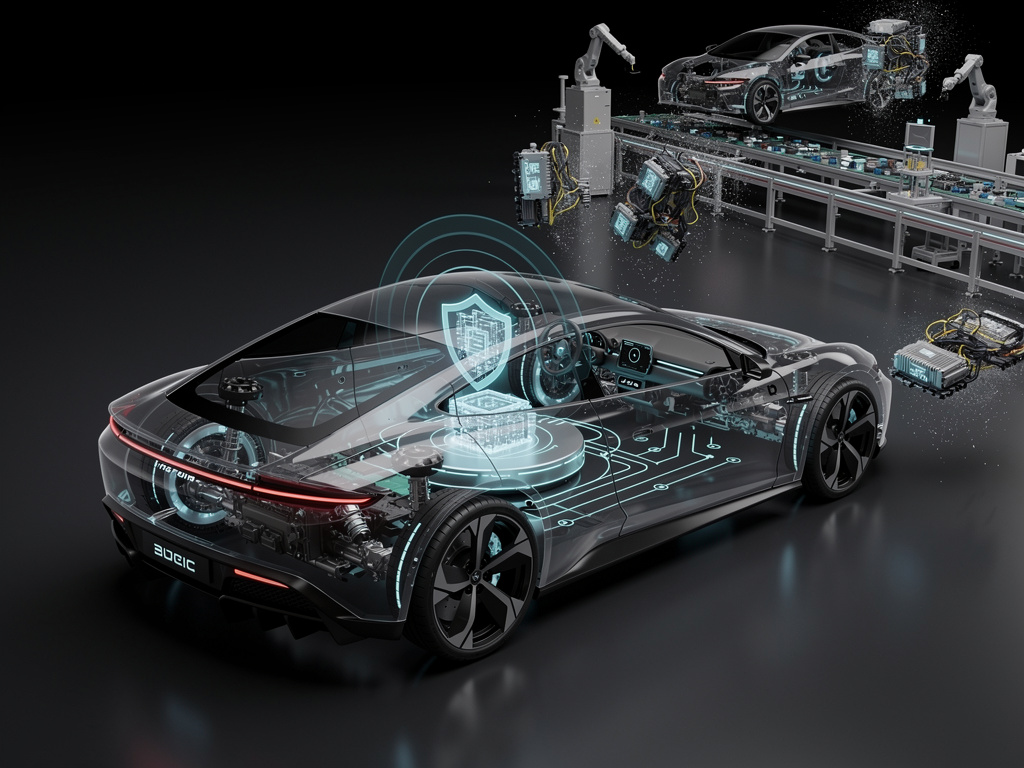
In the high-stakes world of automotive engineering, where hypercars push the boundaries of speed and technology, a small California-based company is quietly developing a system that could reshape vehicle manufacturing from the ground up. Drako Motors, known for its ultra-exclusive Dragon hypercar, has unveiled DriveOS—a sophisticated software platform described as the “brain” of the vehicle. This isn’t just another infotainment system; it’s a centralized computing architecture that integrates everything from powertrain control to cybersecurity, potentially slashing costs and complexity for carmakers across the board. According to a recent report from MotorTrend, DriveOS could enable features typically reserved for million-dollar machines to trickle down to everyday sedans and crossovers, revolutionizing how affordable cars are built.
At its core, DriveOS represents a shift toward software-defined vehicles, where a single, powerful computer handles multiple functions that traditionally required dozens of separate electronic control units (ECUs). In conventional cars, these ECUs—scattered throughout the vehicle—manage everything from engine timing to brake assist, leading to wiring harnesses that can weigh as much as 100 pounds and cost thousands to assemble. Drako’s approach consolidates this into one high-performance unit, reducing hardware needs by up to 80% and simplifying assembly lines. Industry insiders point out that this mirrors trends in consumer electronics, where smartphones integrate myriad functions into compact chips, but applying it to cars introduces unique challenges like real-time safety requirements and regulatory hurdles.
The Dragon hypercar, priced at over $1.2 million and limited to just 99 units, serves as the proving ground for DriveOS. Equipped with a quad-motor electric powertrain delivering 2,000 horsepower, the vehicle uses this brain to orchestrate torque vectoring, adaptive suspension, and even predictive maintenance. But the real game-changer, as highlighted in MotorTrend’s analysis, is its scalability. Drako executives claim the system can be adapted for mass-market vehicles without losing its cybersecure foundation, which employs advanced encryption to thwart hacking attempts—a growing concern as cars become more connected.
Revolutionizing Assembly Lines with Centralized Intelligence
This innovation arrives at a pivotal moment for the auto industry, as manufacturers grapple with the transition to electric vehicles (EVs) and autonomous driving. Tesla, for instance, has long championed simplified architectures, with its unboxed manufacturing process aiming to produce cars like the Cybercab at unprecedented speeds—one every few seconds, according to posts on X from industry observers. Drawing from such examples, DriveOS could accelerate production by minimizing the labor-intensive wiring and testing phases. A report from Supercar Blondie notes that luxury brands like Ferrari and Lamborghini are already investing in hybrid and EV tech, but Drako’s software could democratize these advancements.
Cost savings are a major draw. By replacing multiple ECUs with a single brain, automakers could cut material expenses by 30% or more, per estimates in a EV Magazine article projecting the hypercar market’s growth to $84.28 billion by 2029, fueled by AI and tech integration. For affordable cars, this means features like over-the-air updates and advanced driver aids could become standard without inflating sticker prices. Imagine a $25,000 compact EV with the responsiveness of a hypercar, thanks to software that optimizes battery efficiency in real time.
Yet, challenges abound. Integrating such a system requires rethinking supply chains and worker training. Traditional automakers, bound by legacy designs, might resist the overhaul. As one X post from a Tesla analyst emphasized, radical design-for-manufacturing (DFM) like this takes years and isn’t easily replicated, echoing sentiments in a 2023 thread that praised Tesla’s margins through innovative casting and battery integration.
From Track to Mainstream: Hypercar Tech’s Broader Impact
The hypercar segment, often seen as a playground for the ultra-wealthy, is increasingly a lab for mainstream innovation. Publications like Car and Driver have spotlighted upcoming models through 2030, including electric hypercars that blend performance with efficiency. Drako’s DriveOS fits this narrative, potentially enabling econocars to adopt “fancy-car features,” as MotorTrend puts it, such as seamless integration with smart cities or AI-driven personalization.
Take the example of emerging players like BYD, whose 2026 YangWang U9 Xtreme electric hypercar, detailed in a Tom Ford Law review, showcases extreme performance through advanced materials and software. Posts on X highlight how 3D printing and additive manufacturing, as used in the U9’s structure, complement software brains like DriveOS to reduce weight and costs. This synergy could filter down to affordable models, where manufacturers like Tesla aim for sub-$30,000 EVs with 300-mile ranges, as noted in multiple X discussions.
Moreover, the push for cybersecurity in DriveOS addresses a critical vulnerability. With vehicles increasingly resembling rolling computers, hacks could have dire consequences. Drako’s platform uses military-grade protocols, a feature that could become essential as regulations tighten. A Autoraiders piece on hypercar tech in motorsport underscores how such innovations ensure future-proofing, extending to everyday driving where data privacy is paramount.
Scaling Innovation Amid Market Pressures
As the industry eyes 2026 and beyond, prototypes like the Kosmera hypercar, set to debut at CES 2026 according to Laotian Times, emphasize intelligent mobility. These vehicles integrate AI for predictive behaviors, much like DriveOS, potentially lowering barriers for affordable car production. X users have buzzed about Tesla’s Cybercab prototypes spotted in testing, with claims of operating costs as low as $0.20 per mile, illustrating how software-defined architectures enable rapid scaling.
Economically, the hypercar market’s projected surge—crossing $18.7 billion by 2035, as per a GlobeNewswire report from Transparency Market Research—highlights demand for high-performance engineering. Yet, for affordable segments, the trickle-down effect could be transformative. Drako’s system might inspire partnerships, allowing legacy automakers to license tech rather than develop it in-house, accelerating adoption.
Critics, however, warn of overhyping. Not every hypercar innovation scales seamlessly; compatibility with existing factories remains a hurdle. As Car and Driver’s 2025 image roundup reflects on game-changing EVs, the real test will be in implementation, where DriveOS could either redefine efficiency or face integration snags.
Cybersecurity and the Road Ahead for Vehicle Brains
Delving deeper into DriveOS’s cybersecurity, it’s designed to counter threats like remote takeovers, a risk amplified in connected fleets. MotorTrend reports that Drako’s platform isolates critical systems, ensuring that a breach in infotainment doesn’t compromise brakes or steering. This is vital as autonomous features proliferate, with X posts debating the merits of sensor-heavy designs versus software-centric ones, like Tesla’s vision-based approach.
In manufacturing terms, centralized brains streamline innovation cycles. Automakers could roll out updates post-production, extending vehicle lifespans and reducing waste—a boon for sustainability. EV Magazine’s market forecast ties this to AI-driven growth, where hypercars lead but affordable models follow suit.
Looking globally, startups like India’s Thunder electric supercar prototype, built on a shoestring budget as shared on X, demonstrate how low-cost innovation can intersect with advanced software. Priced at around $50,000 in production, it hints at a future where hypercar-derived tech makes high performance accessible.
Pushing Boundaries in a Competitive Arena
The competitive dynamics are intensifying. Hennessey’s 2026 F5 Venom GT, profiled in Tom Ford Law, aims to shatter speed records with massive power, but software like DriveOS could enhance its brains for smarter performance. Similarly, Times Live recaps 2025’s standout vehicles, from supercars to value buys, underscoring a blurring line between luxury and affordability.
For industry insiders, the implications extend to labor and economics. Simplified assembly could reshape jobs, favoring software engineers over traditional mechanics. X threads from analysts like Nic Cruz Patane praise Tesla’s 50% parts reduction in models like the Cybercab, a model Drako might emulate.
Ultimately, as hypercar brains like DriveOS evolve, they promise a more integrated, efficient automotive future. While hurdles remain, the potential to equip affordable cars with elite capabilities could mark a new era in mobility, blending speed, smarts, and savings in ways once confined to the elite.


 WebProNews is an iEntry Publication