
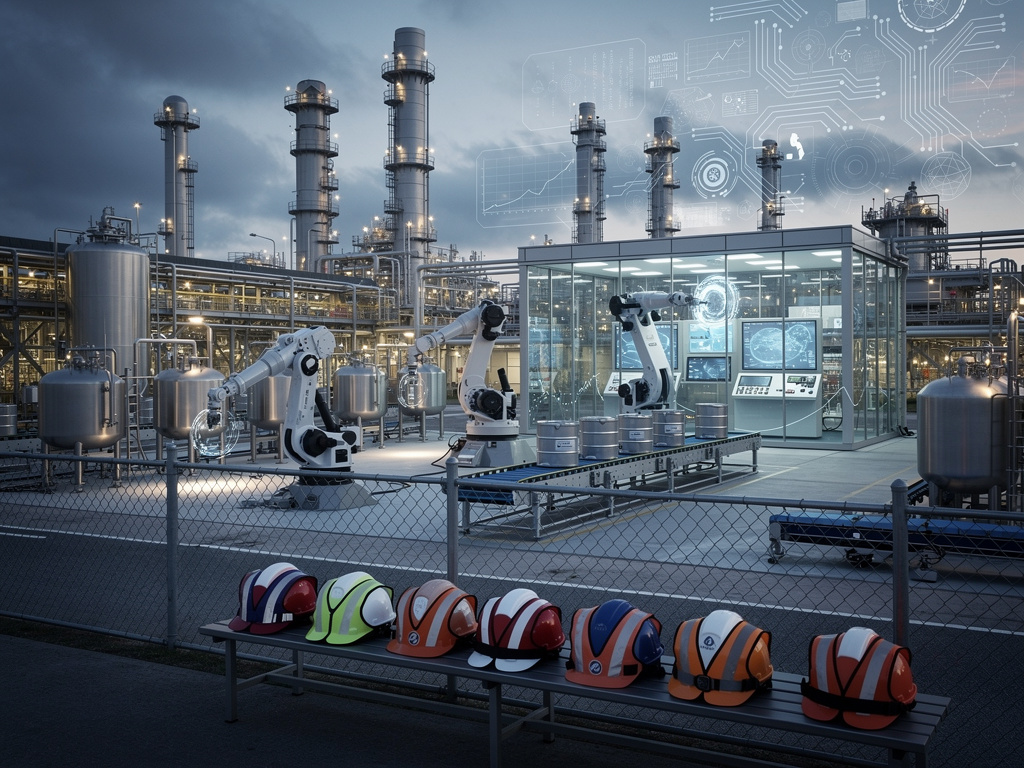
Dow Inc., one of the world’s largest chemical manufacturers, announced plans to eliminate approximately 4,500 positions globally as part of a sweeping restructuring initiative that places artificial intelligence and automation at the center of its operational strategy. The move, which represents roughly 12% of the company’s workforce, underscores a fundamental transformation sweeping through industrial manufacturing as companies race to integrate advanced technologies while managing persistent economic pressures.
According to Houston Public Media, the Michigan-based company expects the restructuring to generate approximately $1 billion in annual cost savings once fully implemented. The initiative marks one of the most significant workforce reductions in Dow’s recent history and signals a broader industry shift toward technology-enabled operations that promise greater efficiency but raise questions about the future of traditional manufacturing employment.
The announcement comes as Dow grapples with softening demand in key markets and increasing pressure from investors to improve profitability margins. The chemical sector has faced headwinds from global economic uncertainty, fluctuating energy costs, and increased competition from international producers, particularly in Asia. By embracing AI and automation, Dow aims to maintain its competitive position while reducing operational expenses in an increasingly challenging business environment.
Strategic Realignment Beyond Simple Cost-Cutting
Dow’s restructuring initiative extends beyond conventional workforce reductions, representing a fundamental reimagining of how the company approaches manufacturing, supply chain management, and customer service. The integration of artificial intelligence technologies will enable predictive maintenance of production equipment, optimize chemical formulation processes, and enhance quality control measures across its global operations. These technological investments are expected to reduce downtime, minimize waste, and accelerate product development cycles.
The company has indicated that automation will be deployed across multiple operational areas, including production facilities, logistics operations, and administrative functions. Advanced robotics and machine learning algorithms will handle tasks previously performed by human workers, from monitoring chemical reactions in real-time to managing inventory systems and processing customer orders. This technological transformation reflects broader trends in industrial automation, where companies are leveraging digital tools to achieve operational excellence.
Industry analysts suggest that Dow’s move may establish a template for other chemical manufacturers facing similar market pressures. The chemical sector has historically been slower to adopt cutting-edge technologies compared to industries like automotive manufacturing or electronics, but rising labor costs and competitive pressures are accelerating the adoption curve. Companies that successfully integrate AI and automation stand to gain significant advantages in efficiency, safety, and responsiveness to market demands.
Workforce Impact and Geographic Implications
The planned job eliminations will affect Dow’s operations across multiple continents, though specific details about which facilities and regions will bear the brunt of the reductions remain limited. Houston, where Dow maintains a significant operational presence, is expected to experience notable impacts given the company’s substantial footprint in the Texas Gulf Coast region. The area has long served as a hub for petrochemical manufacturing, and workforce changes at major employers like Dow ripple through local economies.
Employee groups and labor advocates have expressed concerns about the social costs of aggressive automation strategies, particularly in communities where chemical manufacturing provides well-paying middle-class employment. The transition to AI-driven operations raises questions about workforce retraining, the creation of new job categories, and the long-term viability of manufacturing careers for workers without advanced technical skills. While Dow has not publicly detailed its plans for affected employees, the scale of the restructuring suggests that many workers will face difficult transitions.
The company’s emphasis on technology also highlights a growing skills gap in industrial manufacturing. As traditional operational roles diminish, demand increases for workers with expertise in data science, software engineering, robotics maintenance, and AI system management. This shift presents challenges for existing employees whose skills may not align with emerging job requirements, even as it creates opportunities for workers with technical training in digital technologies.
Financial Pressures Driving Transformation
Dow’s restructuring announcement reflects mounting pressure from financial markets for improved performance metrics. The company has faced criticism from investors concerned about profit margins and return on capital in recent quarters. Chemical manufacturers operate in a capital-intensive industry with significant fixed costs, making operational efficiency critical to financial performance. By reducing workforce expenses and improving productivity through technology, Dow aims to demonstrate its ability to adapt to changing market conditions.
The $1 billion in projected annual savings represents a substantial improvement to Dow’s cost structure, potentially flowing directly to operating income and enhancing earnings per share. In an era where investors increasingly scrutinize corporate efficiency and capital allocation, such cost reduction initiatives often receive positive reception in financial markets. However, the company must balance short-term cost savings against the substantial capital investments required to implement advanced AI and automation systems across its global operations.
The restructuring also occurs against a backdrop of evolving customer demands and competitive dynamics. Chemical customers increasingly expect faster delivery times, more customized products, and greater supply chain transparency. AI-enabled systems can provide the agility and responsiveness required to meet these expectations while maintaining cost competitiveness. For Dow, the technology investments represent not just defensive cost-cutting but a strategic repositioning to capture future growth opportunities.
Technology Integration Challenges and Opportunities
Implementing AI and automation across a complex global manufacturing operation presents significant technical and organizational challenges. Chemical production involves intricate processes with stringent safety requirements, regulatory compliance obligations, and quality standards. Successfully integrating advanced technologies requires not only substantial capital investment but also careful change management, employee training, and system integration across legacy infrastructure.
Dow’s technology strategy likely encompasses multiple AI applications, from machine learning models that optimize production parameters to computer vision systems that monitor equipment conditions and detect anomalies before failures occur. Natural language processing could enhance customer service operations, while advanced analytics might improve demand forecasting and inventory management. The breadth of potential applications demonstrates both the transformative potential of AI in manufacturing and the complexity of executing a comprehensive digital transformation.
The company’s success in this transition will depend heavily on its ability to manage the human dimensions of technological change. Resistance from employees, disruptions during implementation, and unexpected technical challenges could delay benefits or increase costs beyond initial projections. Moreover, cybersecurity considerations become increasingly critical as manufacturing systems become more interconnected and dependent on digital infrastructure, creating potential vulnerabilities that must be carefully managed.
Industry-Wide Implications and Competitive Dynamics
Dow’s restructuring initiative arrives as the global chemical industry confronts multiple simultaneous pressures. Trade tensions, environmental regulations, sustainability requirements, and shifting energy markets all influence strategic decision-making. Companies that can leverage technology to navigate these challenges while maintaining cost competitiveness will likely gain market share at the expense of slower-moving competitors.
Other major chemical manufacturers are watching Dow’s approach closely, potentially accelerating their own digital transformation initiatives. The industry has seen increasing investment in smart manufacturing, digital twins, and AI-powered process optimization in recent years. As early adopters demonstrate tangible benefits from these technologies, competitive pressure will likely drive broader adoption across the sector, potentially leading to additional workforce restructuring throughout the industry.
The shift toward AI and automation also has implications for the geographical distribution of chemical manufacturing. Historically, labor cost differentials influenced facility location decisions, with companies establishing operations in regions offering lower wages. As automation reduces labor intensity, other factors such as energy costs, regulatory environment, market proximity, and infrastructure quality may become more decisive in determining where companies locate production facilities.
Regulatory and Social Considerations
The workforce reductions at Dow raise broader questions about the social implications of AI-driven automation and the role of policy in managing technological transitions. As companies across industries embrace automation to improve efficiency and reduce costs, the cumulative impact on employment, income distribution, and community stability becomes a matter of public concern. Policymakers face difficult questions about how to support workers displaced by technological change while encouraging innovation and competitiveness.
Chemical manufacturing has traditionally provided stable, well-compensated employment for workers without college degrees, contributing to middle-class prosperity in industrial regions. The erosion of such opportunities through automation could exacerbate economic inequality and social tensions, particularly in communities heavily dependent on manufacturing employment. Some economists and policy experts advocate for enhanced education and training programs, stronger social safety nets, and potentially new approaches to taxation and wealth distribution to address these challenges.
From a regulatory perspective, the increasing use of AI in chemical manufacturing may also attract scrutiny from safety and environmental authorities. As decision-making authority shifts from human operators to algorithmic systems, questions arise about accountability, transparency, and the ability to ensure compliance with safety standards. Regulators may need to develop new frameworks for overseeing AI-enabled operations, balancing the potential safety benefits of advanced monitoring and control systems against risks associated with system failures or algorithmic errors.
The Path Forward for Industrial Manufacturing
Dow’s restructuring represents a pivotal moment in the evolution of industrial manufacturing, illustrating both the promise and challenges of AI-driven transformation. The company’s ability to successfully execute this transition while managing workforce impacts, maintaining operational excellence, and delivering financial results will provide important lessons for the broader industrial sector. Success could validate the business case for aggressive technology adoption, while significant difficulties might prompt more cautious approaches.
For the chemical industry specifically, the coming years will likely see continued experimentation with AI applications, refinement of automation strategies, and ongoing workforce adjustments. Companies that can effectively combine technological capabilities with human expertise, maintaining safety and quality while improving efficiency, will be best positioned for long-term success. The transition will require not only technical innovation but also thoughtful leadership, stakeholder engagement, and attention to the human dimensions of organizational change.
As Dow moves forward with its restructuring plans, the company faces the complex task of maintaining operational continuity while fundamentally transforming how work gets done. The $1 billion in projected savings provides a compelling financial rationale, but the true measure of success will be whether the company emerges more competitive, more innovative, and better positioned to meet future challenges. For the thousands of employees affected by the job eliminations, the restructuring represents a difficult personal transition, underscoring the very real human costs that accompany technological progress in the modern economy.


 WebProNews is an iEntry Publication