
DoorDash, the company that made its name delivering burritos and bubble tea, is now in the business of delivering something else entirely: human intelligence for artificial intelligence training. The company quietly launched a new standalone app called DoorDash Tasks, which pays gig workers to complete small jobs that help train AI models. It’s a move that reveals just how desperate the AI industry has become for high-quality human-generated data — and how gig economy platforms are positioning themselves as the middlemen in that feeding frenzy.
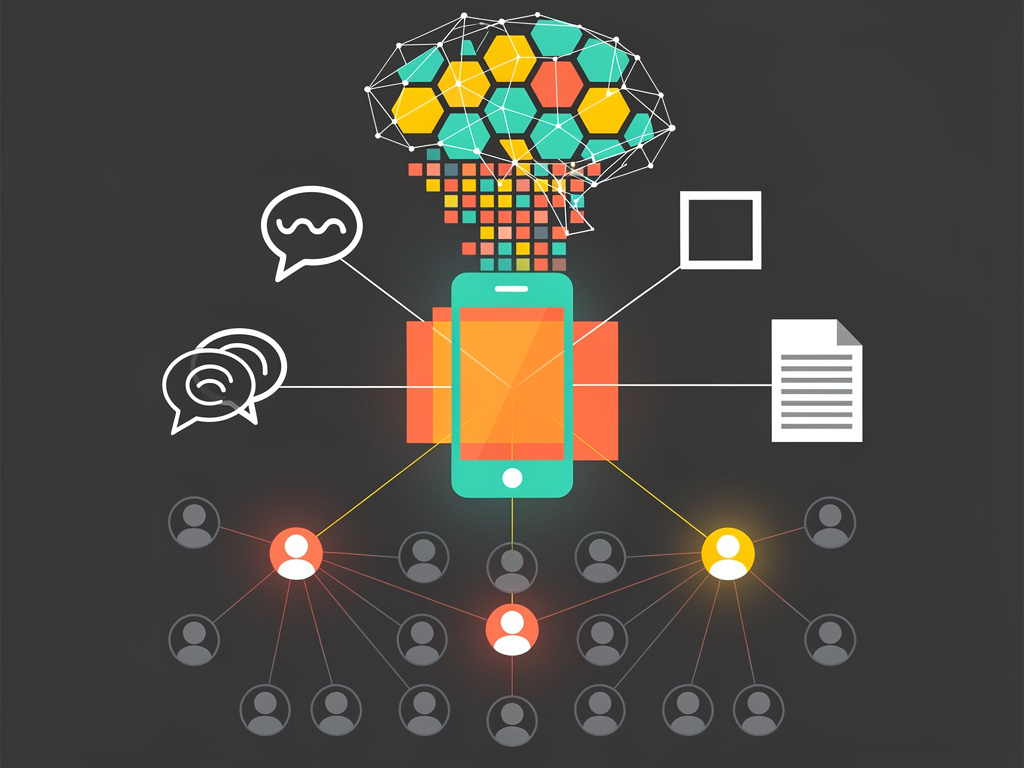
The app, first reported by CNET, invites existing DoorDash Dashers to complete what the company describes as “simple tasks” from their phones. These include writing short text samples, recording audio clips, capturing images and videos, and providing feedback on AI-generated content. Workers get paid per task, with rates varying depending on complexity. No food. No driving. Just feeding the machine.
This isn’t a pivot. DoorDash is careful to frame Tasks as a supplement, not a replacement, for its core delivery business. But the implications extend far beyond a side hustle for delivery drivers.
The AI industry’s appetite for training data has become voracious. Large language models and multimodal AI systems require staggering quantities of human-labeled, human-generated, and human-verified data to improve. OpenAI, Google, Meta, Anthropic — all of them need this fuel. And they’re running into a wall. The easy data, the stuff scraped from the open internet, has been largely consumed. What remains is the harder, more expensive kind: original human output, carefully produced and annotated. Companies like Scale AI and Surge AI have built entire businesses around providing this labor. Now DoorDash wants a piece of that market, armed with something its competitors don’t have — a massive, pre-existing workforce already comfortable with app-based gig work.
DoorDash reported more than 37 million monthly active consumers in its most recent quarterly earnings, and the company has roughly two million Dashers in the United States alone. That’s an enormous labor pool. Many of these workers already toggle between deliveries during slow periods, and DoorDash is betting they’ll happily fill dead time by completing AI training microtasks instead of sitting idle in a parking lot waiting for the next order ping.
According to CNET, the Tasks app is currently available in limited markets, though DoorDash has signaled plans to expand it. The company told CNET that the tasks are sourced from business clients who need human input for their AI projects, effectively making DoorDash a labor marketplace for data work. That’s a significant strategic expansion — from logistics platform to AI services broker.
The timing is not accidental.
The data labeling market is projected to reach $17.1 billion by 2030, according to estimates from Grand View Research. That’s up from roughly $2.6 billion in 2023. The growth is driven almost entirely by the explosion in generative AI development, which requires not just more data but better data — diverse voices, varied accents, images captured in different lighting conditions, text written by people with different expertise levels. Scale matters, but so does variety. And DoorDash’s workforce, spread across hundreds of U.S. cities and representing a wide demographic cross-section, offers both.
But there’s a tension here that DoorDash will have to manage carefully. Gig workers have spent years fighting for better pay, benefits, and working conditions in the delivery space. AI data work introduces a new set of concerns. How much are workers actually being paid per task? Is the compensation fair relative to the value the data generates for AI companies? Are workers being told exactly how their contributions will be used? And what happens to the data they create — does it live forever inside a model, training systems that might eventually replace other workers?
These aren’t hypothetical questions. They’re already being asked loudly.
The Alphabet Workers Union and other labor advocates have raised alarms about the conditions faced by data labeling workers at companies like Google and Meta. Reports from TIME revealed that Kenyan workers labeling data for OpenAI’s ChatGPT were paid less than $2 per hour. And a growing body of investigative journalism has documented how the AI training pipeline relies on a global underclass of annotators working long hours for minimal pay with little transparency about the end use of their labor.
DoorDash appears to be positioning its Tasks offering as a more premium, U.S.-based alternative. The company’s existing payment infrastructure, dispute resolution systems, and brand recognition give it structural advantages over fly-by-night annotation shops. But the fundamental economic question persists: will the per-task rates be high enough to constitute meaningful income, or will this become another example of gig platforms extracting value from workers while advertising flexibility?
So far, DoorDash hasn’t published a detailed rate card for Tasks. The company has said compensation varies by task type and complexity, which is standard language in the microtask industry. Workers on platforms like Amazon Mechanical Turk and Clickworker have long complained about opaque pricing and rates that, when calculated hourly, fall well below minimum wage. DoorDash will face immediate scrutiny on this front, particularly from labor researchers and advocacy groups who have been tracking gig economy compensation for years.
There’s another dimension worth watching. Quality control. AI training data is only useful if it’s accurate, consistent, and produced according to specific guidelines. Professional data labeling companies invest heavily in quality assurance — multiple rounds of review, inter-annotator agreement metrics, detailed rubrics. Can DoorDash replicate that rigor with a workforce primarily trained to pick up food orders? The company will need to build or acquire significant expertise in data quality management if it wants enterprise AI clients to take it seriously as a vendor.
And the competition is stiff. Scale AI, valued at over $13 billion, has deep relationships with the U.S. Department of Defense and major tech companies. Labelbox, Appen, and Toloka all operate in this space with years of specialization. DoorDash’s advantage isn’t expertise in AI — it’s distribution. The company can onboard workers faster and at greater scale than almost anyone else because it already has the app infrastructure, the payment rails, and the worker relationships in place.
That distribution advantage could prove decisive if the market shifts toward needing massive bursts of human data generation quickly. Imagine a scenario where an AI company needs 100,000 audio recordings of American English speakers within a week. Traditional annotation firms would struggle to mobilize that fast. DoorDash could theoretically push a notification to its Dasher fleet and start collecting within hours. Speed and scale, the same things that made it dominant in food delivery, could translate directly.
But let’s not get ahead of ourselves. The Tasks app is still early. Its market availability is limited, and DoorDash hasn’t disclosed how many Dashers have signed up or how many tasks have been completed. The company also hasn’t named any of its enterprise clients, though it has confirmed that the tasks come from external businesses rather than DoorDash’s own AI efforts. That distinction matters — it means DoorDash is acting as a marketplace, taking a cut of the transaction between AI companies and workers, rather than building its own models.
This marketplace model mirrors what DoorDash does in food delivery, where it connects consumers with restaurants and takes a commission. The parallel is almost too neat. In one version, you’re the middleman between someone who wants pad thai and the restaurant that makes it. In the other, you’re the middleman between an AI company that needs labeled images and the human who labels them. Same platform economics. Different product.
The strategic logic for DoorDash is clear. The company’s core delivery business faces intense competition from Uber Eats, Grubhub, and Instacart. Margins are thin. Growth in food delivery is decelerating as the post-pandemic surge normalizes. DoorDash needs new revenue streams, and AI data services represent a fast-growing market with relatively low capital requirements. The company doesn’t need to build data centers or train models. It just needs to connect supply with demand — something it already knows how to do.
Wall Street will be watching closely. DoorDash’s stock has been volatile, and investors are eager for signs that the company can diversify beyond delivery. If Tasks gains traction and starts contributing meaningful revenue, it could change how analysts model the company’s long-term value. But if it remains a small experiment that pays workers pennies per task, it risks becoming a PR liability rather than a growth engine.
There’s a broader philosophical question embedded in all of this, too. We are now in a period where AI companies need humans to make AI smarter — and potentially smart enough to displace those same humans from other kinds of work. DoorDash delivery drivers training AI systems that could one day power autonomous delivery robots. Writers producing text samples that improve the language models threatening to automate writing jobs. Audio recorders voicing clips that train speech synthesis tools. The irony isn’t lost on labor advocates, and it won’t be lost on the workers themselves.
For now, though, the immediate reality is more mundane. A delivery driver in Phoenix finishes a lunch rush, opens a second app, records a few sentences into their phone, and earns a few extra dollars. Multiply that by two million potential workers, and you’ve got something that could reshape how AI gets built in America. Or you’ve got another gig economy sideshow that burns bright and fades fast.
DoorDash is betting on the former. The AI industry is hoping they’re right. And the workers caught in the middle will, as always, be the ones who determine whether the math actually works.


 WebProNews is an iEntry Publication