
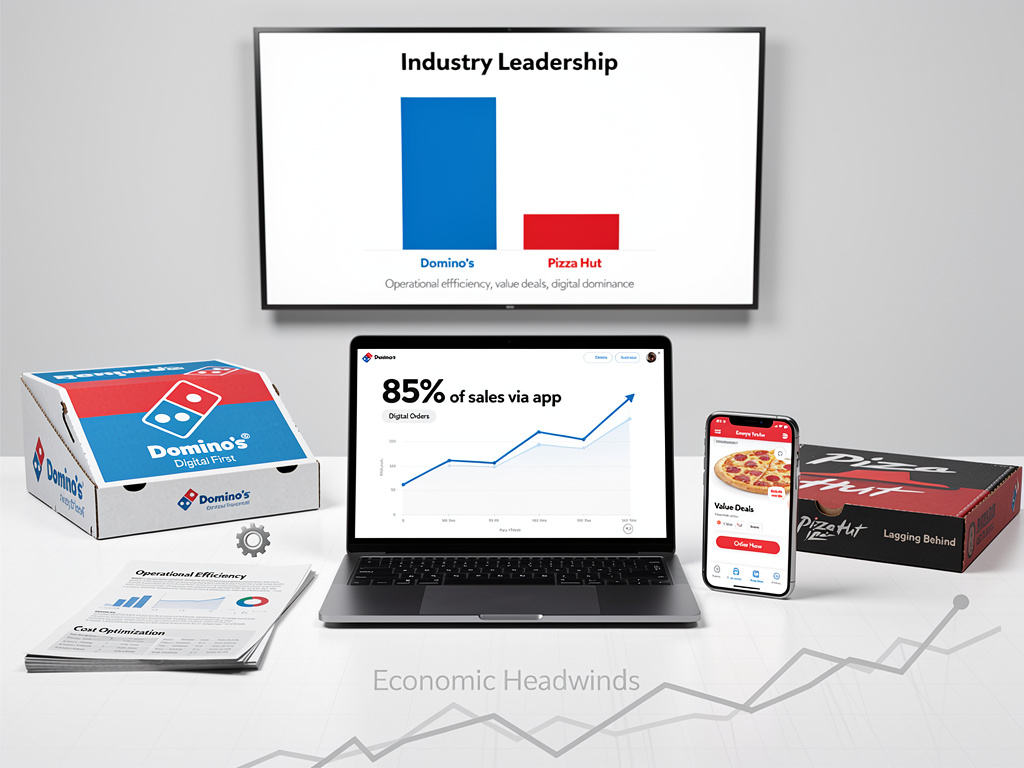
Domino’s Pizza Inc. has surged back to the forefront of the quick-service pizza sector, leveraging digital innovation, aggressive pricing, and customer loyalty initiatives to widen its lead over competitors. Recent financial results underscore this resurgence, with same-store sales growth outpacing rivals amid economic pressures on consumers.
In its latest quarterly earnings, Domino’s reported U.S. same-store sales up 5.6%, driving global retail sales to a record $4.5 billion for the quarter ended September 2025. The chain now commands over 25% of the U.S. pizza delivery market, according to industry trackers. This turnaround follows years of intense competition from Pizza Hut, Papa John’s, and regional players.
Digital Backbone Fuels Orders
At the core of Domino’s revival is its pioneering investment in technology. The company’s app and online platform now account for 85% of U.S. sales, a figure unmatched by peers. Features like real-time tracking, voice ordering, and AI-driven personalization have locked in customers.
“Domino’s has turned its digital ecosystem into a moat,” said industry analyst Restaurant Business Online. Innovations such as the ‘Carside Delivery’ and integration with delivery apps like DoorDash have boosted convenience without eroding margins.
Value Wars Intensify
Domino’s “Perfect Combo” deal—medium two-topping pizzas, oven-baked pasta, and a two-liter soda for under $20—has become a staple, drawing budget-conscious families. This strategy, refined through data analytics, has lifted order volumes by 8% year-over-year. Competitors’ responses, like Pizza Hut’s $10 Tastemaker, have failed to match Domino’s execution.
Loyalty program enhancements, including tiered rewards and personalized offers via the Piece of the Pie Rewards, boast 30 million members. Engagement rates exceed 40%, per company filings, fueling repeat business.
Operational Overhauls Drive Efficiency
Behind the scenes, Domino’s has streamlined supply chains and store designs. New “fortress” prototypes feature automated kitchens and high-volume ovens, cutting labor costs by 15%. Franchisees, who operate 98% of locations, benefit from centralized dough production hubs now numbering over 200 worldwide.
CEO Russell Weiner emphasized supply chain dominance in a recent earnings call: “Our network delivers fresh ingredients at scale, giving us pricing power.” This infrastructure, built over decades, insulates Domino’s from inflation spikes that hammered independents.
Competitive Pressures Mount
Yet challenges persist. Papa John’s push into delivery and Little Caesars’ value menu erode edges in select markets. Rising cheese prices, up 12% in 2025, squeeze margins across the board. Domino’s counters with menu diversification, including chicken wings and sandwiches now comprising 20% of sales.
International expansion accelerates, with stores in India surpassing 2,000 and Asia-Pacific growth at 10% annually. This offsets maturing U.S. demand, where pizza consumption has plateaued at 3 billion units yearly.
Leadership Shifts Reshape Strategy
In the UK, CEO Andrew Rennie departed in November 2025 amid a pivot from chicken-heavy menus back to core pizzas, as reported by The Guardian. The move signals renewed focus on profitability over experimentation.
Domino’s U.S. performance drew praise in a Fox Business analysis: “Through superior value, technology, and loyalty programs,” the chain outpaced rivals, per Fox Business. Posts on X from Fox Business amplified the narrative, garnering thousands of views.
Tech Innovations Accelerate
Domino’s continues to invest $100 million annually in R&D. The DOM platform, its proprietary ordering system, now powers third-party integrations seamlessly. A 2025 study in SAGE Journals credits these strides for boosting brand value through personalization.
Voice AI pilots in select markets have lifted order completion rates by 25%. Partnerships with Amazon for Alexa ordering and Google for search prominence further embed Domino’s in daily routines.
Franchise Model Under Scrutiny
With 20,000 stores globally, franchisee relations are pivotal. Recent incentives, including zero royalty fees for high-performers, spurred 500 new openings in 2025. However, labor shortages persist, prompting automation like robotic dough presses.
The Food Institute highlighted Domino’s edge: “Tech innovation and value-driven promotions” set it apart, per The Food Institute. Historical turnarounds, like the 2010 recipe overhaul chronicled by Dennis Food Service, inform today’s playbook.
Future Growth Vectors
Looking ahead, Domino’s eyes $20 billion in annual system sales by 2030. Acquisitions of smaller chains and entry into ghost kitchens bolster delivery-only channels. Sustainability efforts, like electric delivery fleets, appeal to younger demographics.
Analysts project 12% EPS growth in 2026, buoyed by these moves. As pizza remains America’s favorite comfort food, Domino’s grip tightens, proving adaptability trumps tradition in a fiercely contested arena.


 WebProNews is an iEntry Publication