
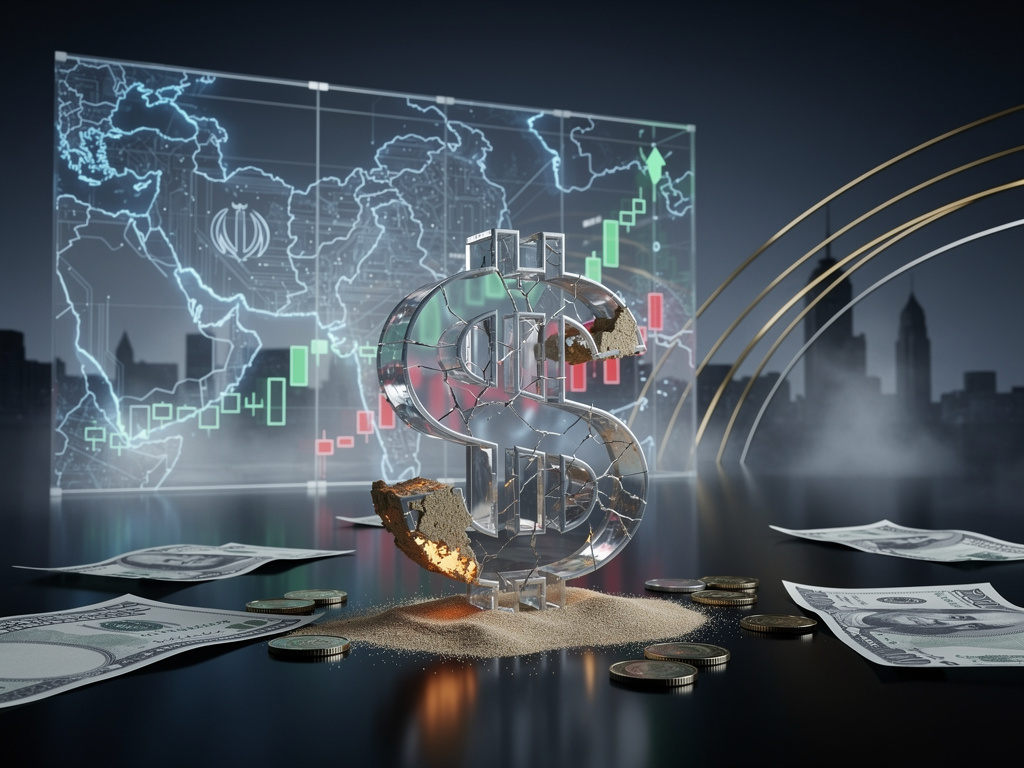
The U.S. dollar index hovers around 98.24, down sharply from its 2025 peak. Traders watch closely. Geopolitical tensions in Iran buoyed it briefly as a safe haven. Now, hopes for peace talks erode that support. Reuters reports the DXY shed 0.01% to 98.06 amid ceasefire extensions and Islamabad negotiations.
But deeper forces gnaw at the greenback’s strength. Cumulative inflation since Jerome Powell took the Fed helm in 2018 tops 31%, per Consumer Price Index data. The Fed’s 2% target? It means deliberate annual debasement. Over an average American lifespan, that’s nearly 80% loss in purchasing power. Judy Shelton warns in the Wall Street Journal: Congress outsourced its constitutional duty to coin money of stable value, handing reins to unelected technocrats.
Fed’s Steady Hand Masks Mounting Pressures
The Federal Open Market Committee held rates at 3.5%-3.75% in March, as minutes confirm. Next meeting: April 28-29. Markets price in no change, per Polymarket odds over 99%. Yet J.P. Morgan sees 35% recession odds by year-end. Debt balloons past $38.7 trillion, over 120% of GDP. Interest payments alone exceed $1.2 trillion yearly. Deficits? Projected $22 trillion over a decade.
Kathy Jones of Schwab Center for Financial Research dismisses collapse talk. “While the dollar has declined … it remains close to a 10-year high versus currencies of countries with which the U.S. trades,” she told LendEDU. Still, global reserve share slipped from 72% in 1999 to 57% in 2025. Central banks hoard gold; BRICS pushes alternatives.
And positioning shifts. Big money bets on weakness. MUFG eyes another 5% DXY drop in 2026. Goldman Sachs flags persistent downside from fading U.S. asset appeal. The index fell 9% in 2025 alone—the worst first-half since 1973 in some measures. $100 from 2021 buys $80 today.
Iran war premium unwinds fast. Failed talks spiked the dollar; ceasefires send it sliding. Reuters notes eight straight losses, longest since December. Cleveland Fed’s Loretta Mester sees no rate urgency. ECB peers eye energy shocks from Hormuz disruptions.
Overvaluation Signals Long-Term Reckoning
Harvard’s Kenneth Rogoff calls the dollar 20% overvalued. Markets naive on war resolution, he says—corrections span five to six years historically (Bloomberg). Kevin Warsh, eyed for Fed chair, stresses trustworthy institutions: “Granting boundless power to government agencies … does not square with my disposition.”
Emerging markets feel the strain. Stablecoins—98% dollar-pegged in a $315 billion market—accelerate dollarization, per Bank for International Settlements warnings on X. Central bankers fear illicit flows and policy control loss.
Short bursts of haven demand. Then fades. DXY neutral positioning leaves two-way risk, says RBC Capital Markets. Fed on hold removes carry appeal. Hedging costs drop as rates eye neutral by 2027.
Fiscal woes amplify. Mitch Daniels warns of “fiscal apocalypse.” Gayle Allard notes rate hikes to defend the dollar could tank growth worldwide.
The slide continues. Eight weeks of war volatility masked structural cracks. Peace prospects lift risk appetite—euro, yen gain. Recession whispers grow. Debt spirals. Inflation grinds.
Dollar dominance endures, for now. But erosion accelerates. Investors reposition. Congress watches. Warsh’s confirmation hearing looms. Change brews.


 WebProNews is an iEntry Publication