
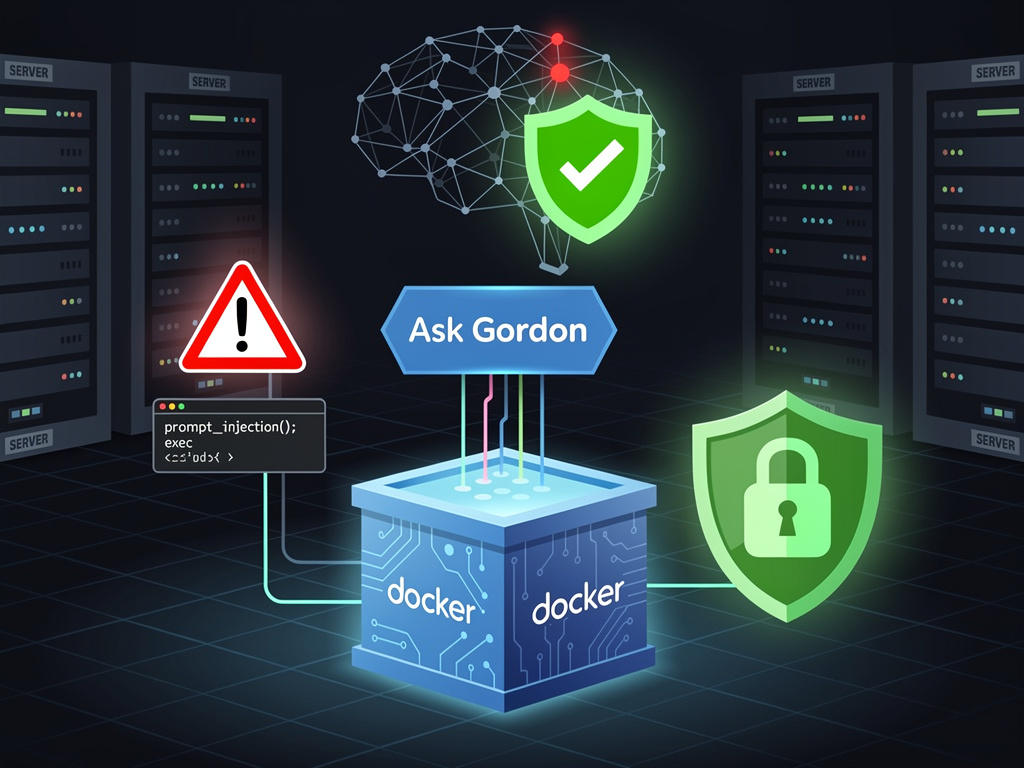
Docker has patched a critical security vulnerability in its AI-powered assistant tool, Ask Gordon, that could have allowed attackers to execute arbitrary code and potentially compromise containerized environments. The flaw, discovered in early 2025, underscores growing concerns about the security implications of integrating artificial intelligence features into enterprise infrastructure tools without adequate safeguards.
According to The Hacker News, the vulnerability carried a CVSS score of 9.8, placing it in the critical severity category. The security issue stemmed from improper input validation in the Ask Gordon AI assistant, which Docker introduced to help developers troubleshoot containerization issues and optimize their Docker workflows. The vulnerability could have been exploited by malicious actors to inject commands through carefully crafted prompts, potentially gaining unauthorized access to sensitive container configurations and underlying host systems.
The discovery highlights a broader challenge facing the technology industry as companies rush to integrate large language models and AI capabilities into their core products. While these features promise enhanced productivity and user experience, they also introduce new attack vectors that traditional security frameworks may not adequately address. Docker’s rapid response to patch the vulnerability demonstrates the company’s commitment to security, but it also raises questions about the testing and validation processes for AI-enhanced features before they reach production environments.
The Technical Architecture Behind the Vulnerability
The Ask Gordon AI assistant was designed to interpret natural language queries from developers and translate them into actionable Docker commands and recommendations. This functionality required the system to parse user input, process it through AI models, and generate responses that could include executable code snippets. The vulnerability emerged from insufficient sanitization of user inputs before they were processed by the AI system, creating an opportunity for prompt injection attacks.
Security researchers who analyzed the flaw found that attackers could craft specific prompts that would cause the AI assistant to generate malicious commands disguised as legitimate Docker operations. These commands could then be executed within the Docker environment, potentially allowing attackers to access container images, manipulate running containers, or extract sensitive environment variables and secrets. The attack vector was particularly concerning because it could be exploited remotely without requiring authenticated access to the Docker host in certain configurations.
The vulnerability’s critical severity rating reflected both the ease of exploitation and the potential impact on affected systems. Docker environments often serve as the foundation for microservices architectures and cloud-native applications, making them attractive targets for sophisticated threat actors. A successful exploit could provide attackers with a foothold in enterprise environments, enabling lateral movement across containerized workloads and potentially compromising entire application stacks.
Industry-Wide Implications for AI Security
The Docker vulnerability arrives at a pivotal moment for the software industry, as organizations increasingly embed AI capabilities into mission-critical systems. Similar security concerns have emerged across various platforms that leverage large language models for code generation, system administration, and automated decision-making. The incident serves as a cautionary tale about the risks of deploying AI features without comprehensive security testing and robust input validation mechanisms.
Cybersecurity experts have long warned about the potential for prompt injection attacks in AI systems, but the Docker case represents one of the first high-profile instances where such a vulnerability could directly impact production infrastructure. The attack technique exploits the way AI models process and respond to user inputs, bypassing traditional security controls that focus on preventing SQL injection or cross-site scripting. This new class of vulnerabilities requires developers to rethink their approach to input validation and implement AI-specific security measures.
The broader implications extend beyond Docker to any organization integrating AI assistants into their development tools and operational platforms. Companies must now consider how AI-generated outputs could be manipulated to execute unintended actions, particularly when these systems have the ability to interact with underlying infrastructure. This challenge is compounded by the black-box nature of many AI models, which can make it difficult to predict all possible outputs for a given set of inputs.
Docker’s Response and Remediation Strategy
Docker moved swiftly to address the vulnerability once it was identified, releasing a security patch within days of the discovery. The company issued a security advisory urging all users of the Ask Gordon feature to update to the latest version immediately. The patch implemented enhanced input validation and sanitization routines designed to detect and block potentially malicious prompts before they could be processed by the AI system.
In addition to the technical fixes, Docker announced plans to conduct a comprehensive security audit of all AI-powered features within its platform. This review will examine not only the Ask Gordon assistant but also other areas where machine learning and natural language processing capabilities have been integrated. The company has committed to implementing additional security controls, including rate limiting for AI queries, enhanced logging and monitoring of AI interactions, and stricter sandboxing of AI-generated code execution.
The incident has prompted Docker to revisit its development practices for AI-enhanced features, with plans to incorporate security testing earlier in the development lifecycle. This includes adversarial testing specifically designed to identify prompt injection vulnerabilities and other AI-specific attack vectors. The company has also indicated it will provide more detailed documentation to users about the security considerations when using AI assistants in production environments.
Best Practices for Securing AI-Enhanced Development Tools
Security professionals recommend that organizations using Docker and similar platforms implement multiple layers of defense to protect against AI-related vulnerabilities. This includes maintaining strict access controls for AI-powered features, limiting their use to trusted users, and implementing comprehensive logging to detect suspicious activities. Organizations should also consider deploying AI assistants in isolated environments where they cannot directly access production systems or sensitive data.
The principle of least privilege becomes even more critical when AI systems are involved, as these tools may have broad capabilities that could be exploited if compromised. Administrators should carefully review the permissions granted to AI assistants and ensure they cannot perform actions that could compromise system security. Regular security assessments should specifically test for prompt injection vulnerabilities and other AI-specific attack vectors that may not be covered by traditional penetration testing methodologies.
As the industry continues to embrace AI-powered development tools, the Docker incident serves as an important reminder that innovation must be balanced with security considerations. Organizations must remain vigilant about the new risks introduced by AI capabilities while still leveraging these technologies to improve productivity and developer experience. The key lies in implementing robust security frameworks that can adapt to the unique challenges posed by artificial intelligence systems.
The Future of AI Security in Enterprise Software
The Docker vulnerability represents just the beginning of what security experts predict will be an ongoing challenge as AI becomes more deeply integrated into enterprise software. As these systems become more sophisticated and autonomous, the potential attack surface will continue to expand. Organizations will need to invest in new security tools and expertise specifically designed to protect against AI-related threats.
Industry analysts suggest that we may see the emergence of specialized security solutions focused exclusively on protecting AI systems from prompt injection and other novel attack vectors. These tools would complement traditional security measures by providing AI-specific threat detection and prevention capabilities. Additionally, regulatory frameworks may evolve to address the unique risks posed by AI systems, potentially requiring organizations to meet specific security standards before deploying AI-powered features in production environments.
The Docker incident ultimately highlights the need for a more mature approach to AI security across the technology industry. As organizations continue to innovate with artificial intelligence, they must also develop the security practices and technologies necessary to protect these systems from exploitation. The lessons learned from this vulnerability will likely shape how companies approach AI security for years to come, driving the development of more robust and resilient AI-powered tools that can deliver innovation without compromising security.


 WebProNews is an iEntry Publication