
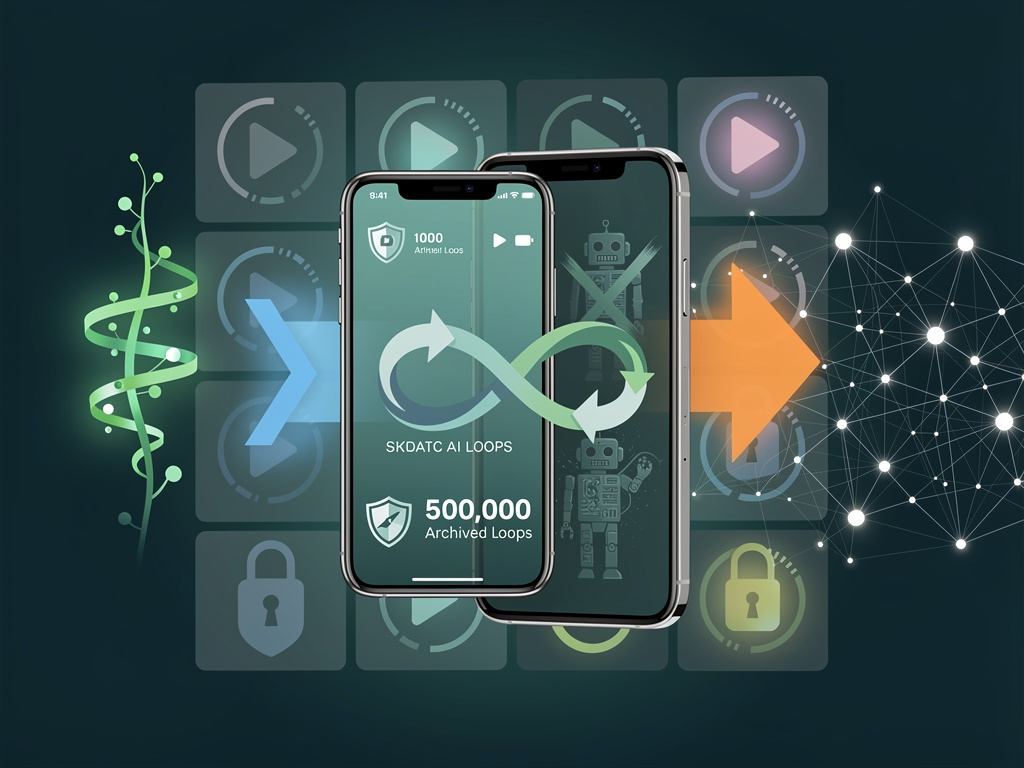
Jack Dorsey just handed social media a six-second blast from the past. Divine, his latest project, resurrects Vine’s looping videos on a decentralized backbone. The app hit app stores Tuesday, packing 500,000 restored clips from the original service. Download it free on Google Play or the App Store. But it’s invite-only for now—waitlist users first, then codes trickle out.
Remember Vine? Launched in 2013 under Dorsey’s Twitter watch, it birthed stars like Logan Paul and Lele Pons. Twitter killed it in 2017, unable to nail a business model. Fast-forward. Dorsey’s nonprofit, and Other Stuff, formed in May 2025, bankrolls this reboot. No equity chase here. Just open-source experiments on protocols like Nostr. As Dorsey put it in a press release, “By bringing back Vine on a decentralized network, they are finally correcting every mistake. It is no secret that we didn’t find a business model for Vine. A founding principle for Divine is that creators will always be in full control of their content and followers, enabling them to create and grow their own revenue streams.”
Evan Henshaw-Plath, aka Rabble, built it. Early Twitter engineer. And Other Stuff member. He pored over Archive Team’s 40-50 GB binary dumps, scripting data back to life—views, likes, comments. Not everything survived. Beta kicked off November 2025 with 100,000-200,000 videos, per TechCrunch’s initial report. Now? Half a million from 100,000 creators. Early adopters like Lele Pons jumped in. “Many of us came from Vine, and it was the beginning of everything. An iconic app. It was such a key moment in my own personal journey, and in internet culture, it makes me so happy to see these early classics brought back to life, and to have the chance to make new ones,” she told TechCrunch today. Check her profile at lelepons.divine.video.
Divine fights AI slop head-on. Rabble: “I decided that I was going to filter out AI content because I personally don’t like seeing AI content. I don’t like feeling tricked. I don’t like the idea that tons of content can be made very quickly and with little humanity or thought.” Uploads demand in-app recording or C2PA verification—tech from the Guardian Project ensures smartphone origins. No gen-AI tricks.
And decentralization? Nostr powers it. Users pick feed algorithms. Anyone runs relays or servers. Open-source code invites forks, AT Protocol tests, even ActivityPub ties. Revenue? Creators handle it—Patreons, deals, Pro tiers. Public benefit corp structure skips ads.
Timing stings Elon Musk. Last August, he tweeted, “Grok Imagine is AI Vine! Btw, we recently found the Vine video archive (thought it had been deleted) and are working on restoring user access.” X Premium+ users got AI video gen. But no app yet. Divine beat him. Gizmodo nailed it: Dorsey “beats Elon Musk to the punch.” Musk’s vision? Centralized AI loops. Dorsey’s? Human-first, distributed authenticity.
Original Vine pioneered short-form. TikTok, Reels followed. Yet it flopped on monetization. Divine learns. Beta waitlists maxed fast—10,000 iOS signups in hours back then, 145,000 tries per Rolling Stone in December 2025. Nostalgia pulls. But Rabble sees deeper: users crave control amid Big Tech grip.
Challenges loom. Full archive? Partial. DMCA requests honored—creators own copyrights. Scale? Invite gates slow growth. Competition rages—TikTok’s billions, Reels’ polish. Still, X chatter buzzes. Posts hail the launch. One quipped: anti-AI nostalgia as marketing gold.
Divine web lives at divine.video. Browse top clips. Compilation mode chains loops—#cats autoplay bliss. Repost. Like. Simple. Dorsey, midwest-raised tech vet who cut teeth on early machines, dogs his constant companions, now fixes old wounds. Vine 2.0. Human-powered. Watch it loop.


 WebProNews is an iEntry Publication