
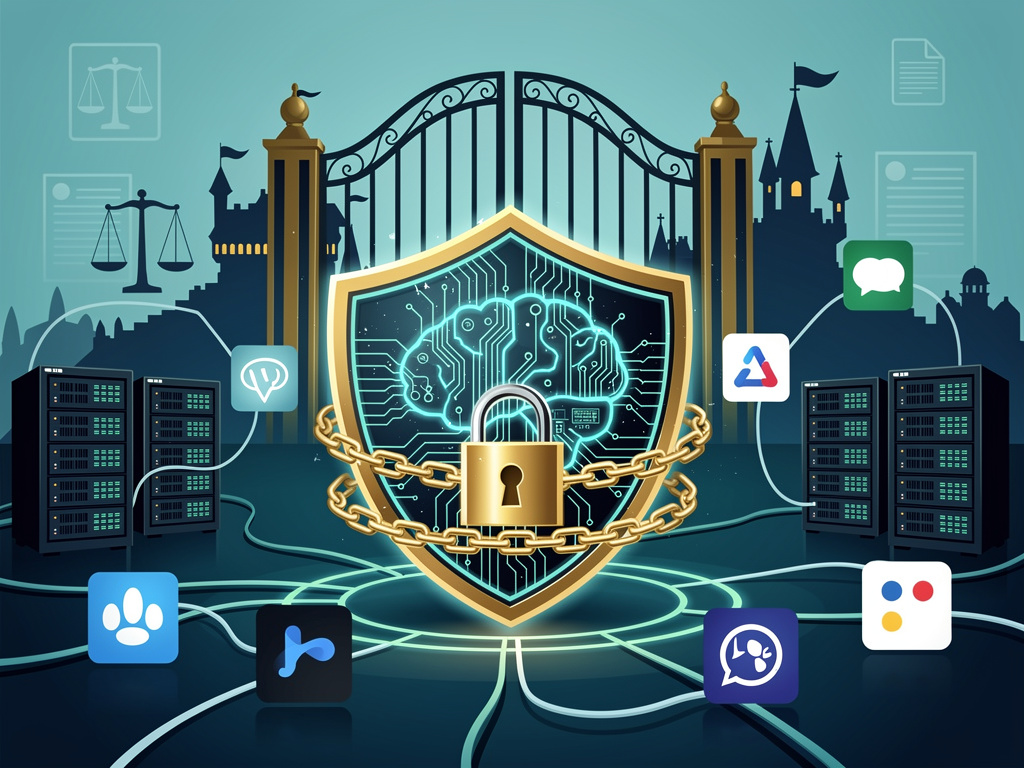
The Walt Disney Company, one of the most fiercely protective intellectual property holders on the planet, has quietly but decisively moved to block artificial intelligence platforms from generating images of its iconic characters — a step that industry observers say could signal the beginning of the end for the freewheeling, largely unregulated era of AI-generated imagery.
The crackdown, first widely reported by TechRadar, has seen major AI image generation platforms — including those powered by OpenAI, Google, and others — begin refusing prompts that request depictions of Disney characters such as Mickey Mouse, Elsa from Frozen, and characters from the Marvel and Star Wars franchises. Where users once could type a simple prompt and receive a convincing AI-rendered image of Buzz Lightyear in a business suit or Spider-Man eating pizza, those same requests now return refusals or generic alternatives.
The Mouse That Roared: Disney’s IP Empire Flexes Its Muscle
Disney’s move is not entirely surprising to those who have followed the company’s century-long history of aggressive intellectual property enforcement. The Burbank, California-based entertainment conglomerate controls one of the most valuable portfolios of characters and franchises in the world, spanning Disney Animation, Pixar, Marvel, Lucasfilm, and 20th Century Studios. The company has historically pursued legal action against even small-scale infringers, from daycare centers painting murals of its characters to unauthorized merchandise sellers on e-commerce platforms.
What makes this particular intervention notable, however, is the mechanism. Rather than relying solely on after-the-fact litigation, Disney appears to have worked directly with AI platform operators to implement upstream restrictions — essentially building walls around its characters at the point of generation rather than chasing down violations after the fact. As TechRadar noted, this approach represents a significant shift in how rights holders are engaging with the AI industry, moving from reactive enforcement to proactive prevention.
A Tipping Point for AI Image Generation Platforms
The implications extend well beyond Disney’s own character roster. If one of the world’s largest and most powerful entertainment companies can successfully negotiate or compel AI platforms to restrict the generation of its copyrighted characters, it establishes a template that other major rights holders — from Warner Bros. Discovery to Universal Studios to Japanese anime powerhouses like Toei Animation — could follow. The precedent is especially significant given that the legal framework governing AI-generated images of copyrighted characters remains murky at best.
Courts in the United States and Europe have yet to deliver definitive rulings on whether AI-generated images that closely resemble copyrighted characters constitute infringement, or whether the training of AI models on copyrighted material is itself a violation. Several high-profile lawsuits are winding through the courts, including cases brought by visual artists, photographers, and stock image companies against AI firms like Stability AI, Midjourney, and others. But Disney’s approach sidesteps the legal ambiguity entirely, opting for a commercial and technological solution rather than waiting for judges to catch up with the technology.
The Technical Architecture of Restriction
Understanding how these blocks work requires a brief look at the architecture of modern AI image generators. Platforms like OpenAI’s DALL-E, Google’s Imagen, and Midjourney use diffusion models trained on vast datasets of images scraped from the internet. When a user submits a text prompt, the model generates an image based on patterns it learned during training. To restrict certain outputs, platform operators can implement filters at multiple levels: keyword-based prompt filters that catch character names, classifier models that evaluate generated images before they are shown to users, and fine-tuning adjustments that reduce the model’s ability to produce recognizable likenesses of specific characters.
The effectiveness of these measures varies. Determined users have historically found workarounds — describing characters by their visual attributes rather than by name, for example, or using open-source models that lack such restrictions. But the fact that mainstream, commercially operated platforms are now implementing these guardrails at Disney’s behest represents a meaningful shift in the default behavior of the most widely used tools. For the vast majority of casual users, the Disney characters are now effectively off-limits.
Why Now? The Convergence of Legal Pressure and Corporate Strategy
Several factors appear to have converged to prompt Disney’s action at this particular moment. First, the viral popularity of AI-generated images in the style of Studio Ghibli — which swept social media platforms in early 2025 after OpenAI’s GPT-4o model made it trivially easy to render any photo in the Japanese animation studio’s distinctive aesthetic — served as a wake-up call for the entire entertainment industry. Studio Ghibli co-founder Hayao Miyazaki had previously expressed deep discomfort with AI-generated art, and the widespread, unauthorized use of the studio’s visual style sparked a global conversation about the ethics and legality of AI image generation.
Disney, watching the Ghibli situation unfold, appears to have accelerated its own efforts to establish control over how its characters appear in AI-generated content. The company’s leadership, under CEO Bob Iger, has been increasingly vocal about the need to protect Disney’s creative assets in the age of generative AI. Iger has spoken publicly about the company’s investments in AI for internal production workflows while simultaneously emphasizing the importance of safeguarding Disney’s IP from unauthorized external use.
The Broader Industry Response and the Question of Open-Source Models
The AI industry’s response to Disney’s demands has been largely cooperative, at least among the major commercial players. OpenAI, Google, and Microsoft — all of which have significant business relationships with entertainment companies and strong incentives to avoid costly litigation — have shown willingness to implement content restrictions when confronted with clear IP concerns from major rights holders. This cooperative posture stands in contrast to the more combative stance some AI companies initially adopted when artists and photographers first raised copyright concerns.
The open-source AI community presents a more complex challenge. Models like Stable Diffusion, which can be downloaded and run locally without any centralized content moderation, are far more difficult to restrict. Users of these models can generate images of any character without encountering the guardrails that commercial platforms now enforce. This bifurcation — between a regulated commercial tier and an unregulated open-source tier — is likely to become one of the defining tensions in the AI-generated content space in the years ahead.
What This Means for Creators, Fans, and the Future of AI Art
For fan artists and casual creators who have used AI tools to generate Disney-themed images for social media posts, personal projects, or simple amusement, the restrictions represent a tangible loss of capability. Fan art has long existed in a legal gray zone — technically infringing in many cases but generally tolerated by rights holders as a form of community engagement. AI-generated fan art, however, appears to have crossed a threshold that traditional fan art did not, perhaps because of the sheer volume and ease of production, or because the commercial AI platforms generating the images are themselves profiting from the use of copyrighted training data.
For professional artists and illustrators, the development is more ambiguous. On one hand, restrictions on AI-generated character images could help protect the market for licensed, human-created artwork. On the other hand, the same AI tools that are now being restricted have also been used by professional artists as part of their creative workflows, and overly broad restrictions could limit legitimate creative uses.
A New Era of Negotiated Boundaries Between AI and Entertainment
Perhaps the most significant takeaway from Disney’s intervention is what it reveals about the emerging power dynamics between the entertainment industry and the AI sector. Rather than a single decisive legal ruling or piece of legislation, the boundaries of AI-generated content are being drawn through a series of bilateral negotiations between the largest rights holders and the largest platform operators. This is, in many ways, a replay of the dynamics that shaped the early internet — where the rules around digital content were established not by courts or legislatures in the first instance, but by the commercial agreements and technological architectures that major companies put in place.
As TechRadar suggested, Disney’s move may well mark the end of the “wild west” era of AI image creation — at least for the most recognizable characters in global entertainment. What comes next will be a more structured, more contested, and more commercially negotiated environment in which the ability to generate AI images of beloved characters is no longer a free-for-all but a carefully managed privilege, subject to the same licensing and control regimes that have long governed the use of intellectual property in every other medium.
For the AI industry, the message from Burbank is clear: the Magic Kingdom’s borders are not open, and the cost of crossing them — whether legal, commercial, or reputational — is one that no major platform operator appears willing to pay.


 WebProNews is an iEntry Publication