
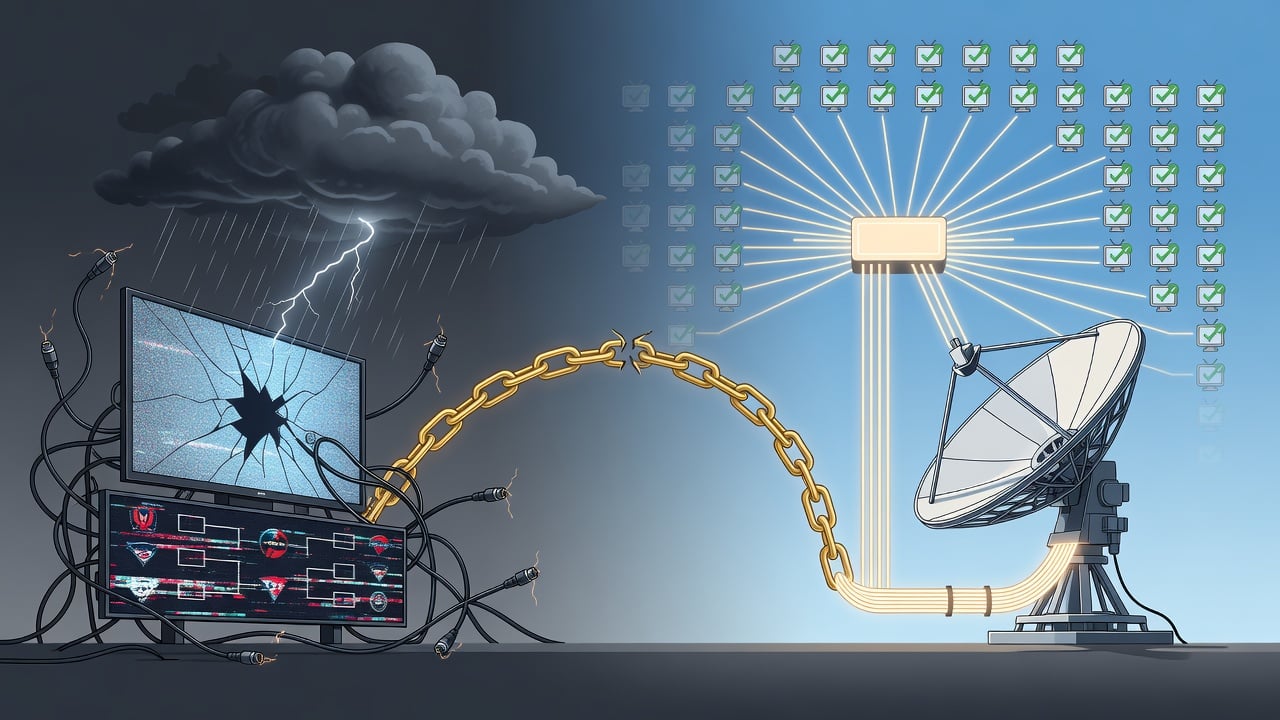
DirecTV customers in dozens of major markets can once again tune into their local ABC, NBC and other Scripps-owned stations. The two sides announced a multiyear carriage agreement late Friday, July 10, 2026, ending a contentious standoff that began May 31.
But the resolution comes after real damage. Viewers missed key local news, weather alerts, emergency updates and high-stakes playoff games. Executives traded sharp public accusations. And the episode highlights a persistent tension in the pay-TV business: broadcasters want more money for signals once considered free over the air. Distributors push back against rising costs they say get passed to subscribers.
Five Weeks of Darkness
The blackout hit hard and fast. At 7 p.m. ET on Sunday, May 31, programming from Scripps Local Media’s 54 broadcast stations vanished from DirecTV’s satellite, streaming and U-verse platforms. The stations reached 36 Nielsen-designated market areas. Major cities affected included Baltimore, Buffalo, Cincinnati, Cleveland, Denver, Detroit, Kansas City, Las Vegas, Milwaukee, Nashville, Phoenix, Salt Lake City and Tampa-St. Petersburg. Others hit were Boise, Lexington, Miami, Omaha, West Palm Beach and more.
Sports fans felt it immediately. Scripps operates 17 ABC affiliates. Those carried NHL Stanley Cup Final games and NBA Finals matchups. In Las Vegas, KTNV viewers lost access to hometown Golden Knights coverage. NBA title games between the Knicks and Spurs also went unseen for many DirecTV households. Elections loomed too. Primaries in several states lost local coverage.
Both companies pointed fingers. Deadline reported DirecTV’s blunt statement. Scripps demanded “the highest rates DIRECTV has ever received from a station group.” That would “dramatically raise costs for consumers and businesses already struggling with affordability.” The company added that broadcasters gain “exclusive control over local sports teams or other civic content, only to then deny viewers access at times of peak demand.”
Rob Thun, chief content officer at DirecTV, spoke directly. “We understand customers are frustrated by temporarily losing their usual access to Scripps stations and the local news, network programming, and live sports they provide. Unfortunately, Scripps is demanding the highest rates we have ever seen for programming that remains available for free over-the-air and through many station, network, and third-party streaming apps. We remain committed to protecting customers from indiscriminate and unnecessary cost increases for less popular programming while still working to restore the stations that many viewers rely on.”
Scripps fired back. The company said it negotiated “in good faith” for an “equitable agreement that serves both companies and, most importantly, consumers.” It accused DirecTV of “heavy-handed tactics that have become synonymous with pay-TV operators who hurt their own subscribers by using them as bargaining chips in contractual disputes.” And it noted its stations “have gone dark only twice since we began broadcasting in the 1940s.”
The first blackout this year came against Comcast. Scripps pulled 40 stations from Xfinity in 19 markets starting April 1. That fight lasted more than a month before settlement. Patterns like this frustrate consumers. Comments on forums and social media showed anger aimed at both sides. “Enough is enough,” one viewer wrote. Others threatened to drop service or switch to antenna.
Yet alternatives existed. Hulu + Live TV, Fubo, YouTube TV and others kept the Scripps channels. Over-the-air antennas worked for those in range. DirecTV directed customers to tvpromise.com for workarounds. Still, millions felt the pinch. Local journalism suffered. Trusted voices on weather and emergencies went silent on one of the largest pay-TV providers.
This wasn’t the first clash for DirecTV. The company settled a months-long dispute with Tegna in early 2024 after a six-week blackout. Similar fights with Cox Media Group and others have dotted recent years. Each time rates rise. Each time customers pay more or lose access. Broadcasters argue they invest heavily in newsrooms and sports rights. Distributors counter that linear TV audiences shrink while streaming options multiply.
Financial pressure mounts on both. Scripps, with a market value around $277 million as of late 2025, faces industry consolidation talks. Sinclair revealed merger discussions with the company in November 2025. Nexstar and others navigate similar deals and regulatory fights. DirecTV, now under new ownership structures post-AT&T, competes against cord-cutters and cheaper virtual providers.
The fresh agreement ends this round. Terms stay confidential. No rate details emerged. But the multiyear pact suggests compromise. Stations returned quickly after the announcement. Viewers in Cleveland regained News 5. Detroit saw WXYZ back. Las Vegas got its ABC affiliate in time for any lingering summer events.
Yet questions linger. How much did rates increase? Will future fights shorten or lengthen? Consumer frustration builds with each outage. Some analysts see retransmission consent as broken. Stations hold local monopoly power on certain sports and news. Pay-TV providers pass costs along or risk losing subscribers. Streaming services often pay less or structure deals differently.
Public officials have noticed. Regulatory concern over “escalating television and other day-to-day costs” appears in company statements. Bills in Congress have tried to curb blackouts or force arbitration. None have fully passed. So these disputes continue.
Scripps emphasized its commitment in the final statement. “At stake is our viewers’ fundamental access to trusted local journalism, critical weather alerts, emergency information and live sports programming that strengthens community bonds — all essential public interest content in which Scripps invests substantially every day.”
DirecTV echoed the desire for resolution but held its line on costs. The companies issued a joint note confirming the deal without further detail. For now, service resumes. But the underlying economics remain tense. Another contract will expire someday. Customers hope it won’t end the same way.
And the broader picture? Local TV still matters. Even as streaming dominates national viewing, people turn to affiliates for tornado warnings, election results and high school scores. When those signals disappear from paid platforms, trust erodes. Both sides know it. That’s why deals eventually get done. The question is at what price to the viewer.


 WebProNews is an iEntry Publication