
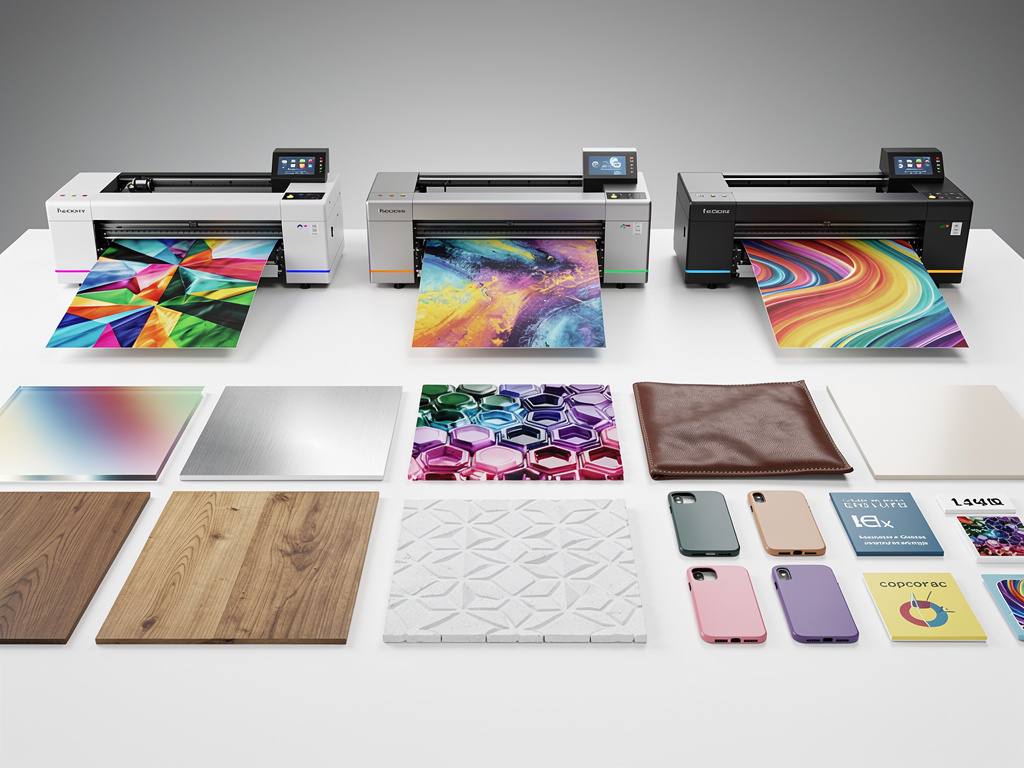
UV flatbed printing once demanded warehouse space, six-figure machines and trained operators. Not anymore. Compact models from established names and new entrants now sit on a standard desk. They deliver vivid colors, raised textures and direct-to-object output on hundreds of materials.
But the shift carries trade-offs. Ink costs add up fast. Printheads need careful maintenance. And the results, while impressive, still favor users who treat the hardware as a business tool rather than a weekend toy.
From Industrial to Desk-Sized Reality
Industry veterans remember when UV printers filled rooms. They handled signage runs or large-format work. Setup required ventilation systems, specialized RIP software and days of training. Output justified the hassle for high-volume shops. Smaller operations stayed away.
That barrier has dropped. Roland DGA’s VersaStudio BD-8, for instance, prints at up to 1,440 dpi on objects as thick as four inches. Its print area measures roughly 8 by 6 inches. The machine weighs under 140 pounds and fits against a wall thanks to front-access maintenance. Roland DGA positions it for home businesses, retail counters and classrooms. Optional rotary attachments handle tumblers. Built-in fume extraction and GREENGUARD Gold certified ECO-UV inks address safety concerns.
Epson takes a similar tack with its SureColor V1070. The A4 desktop unit targets promotional products and direct printing on wood or acrylic. It uses UltraChrome UV inks, including white and varnish options, for durability and texture. The company stresses affordability without quality loss. MicroPiezo print heads and variable droplet technology produce smooth gradients. Epson highlights its compact footprint for users who once outsourced customization.
Then there is the eufyMake E1. Reviewed in detail by MakeUseOf on May 31, 2026, this machine stands out for its 3D texture capability. It reaches 5mm of raised effect through Amass3D technology. CMYKWG ink set hits 1,440 dpi. An 8MP camera and dual lasers automate alignment even on irregular or transparent items. Modular attachments add rotary printing for mugs or UV DTF film output.
Setup takes minutes. Plug it in. Load cartridges. Connect via the app. The reviewer printed textured magnets, coasters and artwork on wood and metal with vivid results. Yet ink consumption proved higher than expected for textured jobs. White and gloss cartridges emptied quickly. The unit requires ventilation. Smell lingers during runs.
And costs matter. The base E1 bundle lists for $2,499. Deluxe version reaches $3,299. Individual 100ml cartridges sell for $42.99 each. A full set runs nearly $300. Printhead replacement costs $599 with only a three-month warranty. The reviewer calculated roughly $0.43 per milliliter of ink used. Canvas prints consumed over 3ml. Heavy texture jobs burned through supplies faster. Those figures force pricing discipline for anyone selling the output.
Roland’s BD-8 carries a higher entry point at $10,995 MSRP. Yet the company cites quick payback through high-margin items. One example claims $419 in hourly profit on personalized products. VersaWorks software simplifies the workflow. The machine supports primer for better adhesion on tricky surfaces. A recent analysis from ColDesi, published May 12, 2026, recommends the BD series for startups and makers who want professional results without industrial infrastructure. The BD-12 variant expands the print area for slightly larger jobs while keeping the desktop form factor.
Other players have entered the space. Procolored offers A3 models focused on phone cases and small items. MTuTech and Beric promote budget A3 options for 2026 buyers seeking consistent quality with lower maintenance. MTuTech’s roundup from March 2025 still influences current purchasing conversations. Newer guides, including one from Beric Printer updated for 2026, stress reliable support and material versatility as top criteria.
Recent discussions on X echo the excitement. Small business owners share prints on leather, glass and metal. Some highlight UV DTF for easy application on curved surfaces. Others note the learning curve around head cleaning and ink circulation to avoid clogs during downtime.
Software plays a quiet but decisive role. eufyMake’s Studio app works on mobile or desktop. It includes AI texture generation, though credits cost extra. Roland’s VersaWorks handles variable data and contour cutting. Epson provides straightforward drivers paired with its own RIP options. All reduce the expertise once required.
Print durability impresses across models. UV-cured inks resist scratching and fading better than many alternatives. They adhere to glass, ceramics and coated metals. Gloss layers add protection and visual pop. Texture creates tactile appeal that screen printing or vinyl cannot match.
Limitations persist. Maximum object height hovers around 100mm for most. Uneven surfaces risk head strikes. The E1 tolerates just 2mm of variation. Production speed suits short runs, not thousands of identical items. And while the machines are compact, they still generate heat, noise and chemical odor. A garage or dedicated room beats the kitchen table long term.
Who should buy one? Serious creators who sell custom goods. Small retailers personalizing awards, cases or signage. Educators exploring product design. The reviewer at MakeUseOf concluded the E1 suits makers and small businesses ready to handle ongoing expenses. Hobbyists may struggle with the math. Roland’s materials target users who view the printer as an investment that pays for itself in months through premium pricing on finished products.
Market momentum builds. Suppliers report steady demand for desktop units in 2026. Financing options lower the hurdle. Training resources multiply on YouTube and manufacturer portals. As ink formulations improve and head warranties extend, adoption will spread.
One fact stands out. Professional output no longer requires a print shop. It requires calculation. Factor in blanks, ink, maintenance and ventilation. Match the machine to real revenue opportunities. Do that, and these desk-sized units deliver results once reserved for factories. The technology has arrived. The business case rests with the user.


 WebProNews is an iEntry Publication