
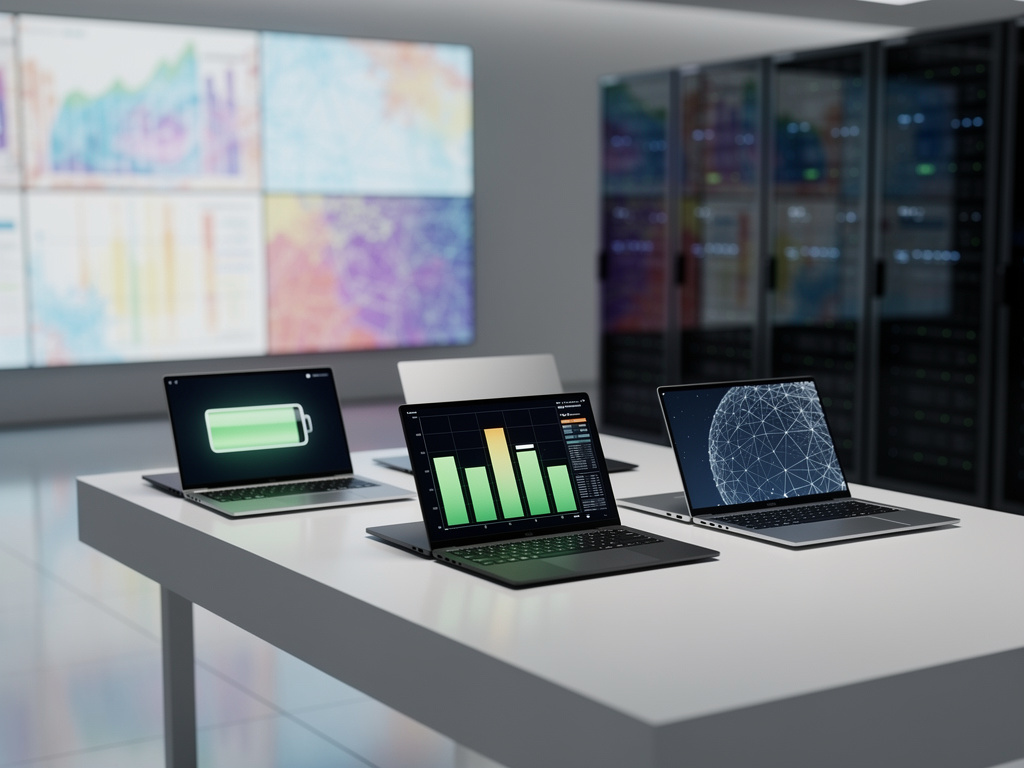
The Great AI PC Rethink: Dell’s Sobering Pivot in a Hype-Filled Market
In the bustling halls of CES 2026, where tech giants unveil their latest innovations amid flashing lights and ambitious promises, Dell Technologies Inc. delivered a candid admission that cut through the noise. Executives from the company acknowledged that consumers aren’t prioritizing artificial intelligence features when purchasing personal computers. This revelation, shared during a briefing, marks a significant shift from the aggressive AI marketing push that dominated the industry just a year ago. “What we’ve learned over the course of this year, especially from a consumer perspective, is they’re not buying based on AI,” said Sam Burd, president of Dell’s client solutions group, in comments reported by 9to5Mac. This isn’t just a minor footnote; it’s a potential turning point for how PC makers approach the integration of AI in everyday devices.
Dell’s statement comes at a time when the tech sector is grappling with the realities of AI adoption. For years, companies like Dell, Microsoft Corp., and Qualcomm Inc. have touted AI PCs as the next evolution, promising on-device processing that enhances productivity, creativity, and security without relying on cloud servers. Features such as real-time language translation, automated photo editing, and intelligent power management were positioned as must-haves. Yet, consumer behavior tells a different story. Sales data from the past year indicates that while enterprise customers have shown some interest in AI-optimized hardware for tasks like data analysis, individual buyers remain focused on traditional factors: price, battery life, performance, and design.
This disconnect highlights a broader challenge in the consumer electronics space. Industry analysts have long warned that AI hype could outpace practical utility, leading to a backlash if promised benefits fail to materialize. Dell’s pivot is particularly noteworthy because the company was among the frontrunners in promoting AI PCs. In 2025, Dell launched a lineup of laptops and desktops equipped with neural processing units (NPUs) from partners like Intel Corp. and Advanced Micro Devices Inc., marketing them as gateways to an AI-powered future. But as Burd noted, these features often confuse rather than convince buyers, who question the tangible value added to their daily computing needs.
Shifting Strategies Amid Market Realities
The admission at CES 2026 isn’t isolated. Reports from the event, including insights from PC Gamer, describe Dell’s briefing as refreshingly free of AI overload, a stark contrast to previous years. Instead of doubling down on generative AI demos, Dell emphasized core improvements like better displays, ergonomics, and sustainability. This strategic recalibration reflects internal data showing that AI mentions in marketing materials haven’t translated to higher conversion rates. In fact, surveys conducted by Dell and shared during the event suggest that less than 20% of potential buyers cite AI as a top-three purchase driver.
To understand this trend, it’s essential to look back at the AI PC boom’s origins. The concept gained traction in 2023 with Microsoft’s Copilot+ PC initiative, which required specific hardware thresholds for AI capabilities. Dell, along with rivals like HP Inc. and Lenovo Group Ltd., quickly adapted, integrating NPUs into their flagship models such as the XPS series. Initial enthusiasm was fueled by partnerships with chipmakers; for instance, Dell’s collaboration with Nvidia Corp. on AI servers spilled over into client devices. However, as Reuters reported in late 2025, while Dell’s AI server business surged—forecasting higher growth due to data center demand—the consumer PC segment lagged.
Market research corroborates this split. According to a 2025 report from Canalys, global PC shipments grew modestly, but AI-specific models accounted for only a fraction of that increase. Consumers, it seems, are wary of paying premiums for features they don’t fully understand or need. Posts on social platform X echo this sentiment, with users frequently noting that AI hype feels like marketing fluff rather than essential innovation. One thread highlighted how buyers prioritize affordability amid rising component costs, exacerbated by supply chain shifts toward AI infrastructure.
Enterprise vs. Consumer Divide
Delving deeper, the divergence between enterprise and consumer interest in AI PCs reveals structural differences in adoption. Businesses have embraced AI for efficiency gains, such as automated workflows and predictive analytics, driving Dell’s robust server sales. As detailed in a CNBC analysis of Dell’s third-quarter 2026 earnings, the company’s AI infrastructure revenue hit record highs, underscoring its position as a key vendor for Nvidia-based systems. This success has buffered Dell against consumer-side softness, with executives raising long-term growth targets based on enterprise demand.
In contrast, everyday users appear underwhelmed. A key issue is the lack of killer applications that demonstrate AI’s value in personal computing. While tools like Microsoft’s Recall feature promised enhanced search capabilities, privacy concerns and underwhelming performance led to scaled-back rollouts. Dell’s own experiments, such as AI-assisted content creation in its Inspiron line, haven’t sparked widespread adoption. Industry insiders point to this as a classic case of technology push versus market pull—companies are building AI features because they can, not necessarily because consumers demand them.
Furthermore, economic factors play a role. With inflation persisting into 2026 and PC refresh cycles extending due to durable hardware, buyers are more price-sensitive. A post on X from a tech analyst noted that AI PCs often carry a $100 to $300 premium, which deters upgrades unless justified by clear benefits. This is compounded by competition from tablets and smartphones, where AI integrations like Apple’s Siri enhancements feel more seamless and less intrusive.
Competitor Responses and Industry Ripples
Dell’s candor has prompted reactions from peers. At CES 2026, HP and Lenovo showcased AI features but tempered their pitches, focusing on hybrid work solutions rather than futuristic AI narratives. Microsoft, a close Dell partner, has adjusted its Windows AI strategy, emphasizing optional integrations over mandatory hardware specs. This collective moderation suggests the industry is learning from past overhype cycles, such as the 3D TV fad of the 2010s.
Looking at financial implications, Dell’s stock experienced a minor dip following the CES comments, but analysts remain optimistic about its diversified portfolio. A piece from AInvest framed a recent price drop as a buying opportunity, citing sustained AI server growth. Indeed, Dell’s forecasts, as covered by Reuters in October 2025, nearly doubled profit growth targets through 2029, driven by data center investments. This resilience underscores that while consumer AI PCs may falter, the backend infrastructure powering AI remains a goldmine.
Social media buzz on X amplifies these dynamics, with threads debating whether AI in PCs is a solution in search of a problem. Users share anecdotes of returning AI-touted laptops due to negligible real-world improvements, reinforcing Dell’s findings. One viral post from a gaming enthusiast praised Dell’s CES shift toward performance-oriented hardware, free from AI gimmicks, as a return to what matters most.
Future Trajectories in Tech Innovation
As we move further into 2026, Dell’s pivot could influence broader tech trends. Predictions from Dell’s own blog on AI governance and energy innovations hint at a more measured approach, focusing on sustainable AI rather than consumer-facing bells and whistles. This aligns with expert views in IBM’s 2026 tech trends report, which emphasizes agentic AI and robotics over personal device integrations.
Challenges persist, including chip shortages diverting resources to hyperscalers, as noted in an IBTimes UK article on rising laptop prices. Dell must navigate these while innovating in areas like quantum computing tie-ins, potentially redefining AI’s role in PCs. For now, the company’s honesty at CES serves as a reality check, reminding the industry that true innovation stems from user needs, not just technological prowess.
The road ahead may see AI PCs evolve into niche products for creators and professionals, while mainstream models revert to fundamentals. Dell’s experience could inspire a more balanced marketing era, where AI enhances rather than defines the product. As one X user succinctly put it, consumers want computers that work well, not ones that promise to think for them. This sentiment, echoed across forums and reports, points to a maturing market where hype gives way to practicality.
Lessons from the AI Overpromise
Reflecting on Dell’s journey, it’s clear that the initial AI PC rush was fueled by competitive pressures and investor enthusiasm. Partnerships with Nvidia and AMD propelled rapid development, but consumer education lagged. Features like on-device AI models for privacy-preserving computations sounded revolutionary, yet implementation hurdles—such as high power consumption—dimmed their appeal.
Industry watchers, including those at MIT Technology Review, forecast that 2026 will see AI trends fracture, with mega-cap stocks like the Magnificent Seven facing scrutiny over returns on investment. Dell’s consumer insights could accelerate this, pushing firms to quantify AI’s value more rigorously.
Ultimately, Dell’s admission isn’t a defeat but a strategic realignment. By acknowledging consumer indifference, the company positions itself to lead in areas of genuine demand, potentially setting a precedent for the sector. As tech evolves, this moment at CES 2026 may be remembered as when the AI bubble in personal computing began to deflate, making way for more grounded advancements.


 WebProNews is an iEntry Publication