
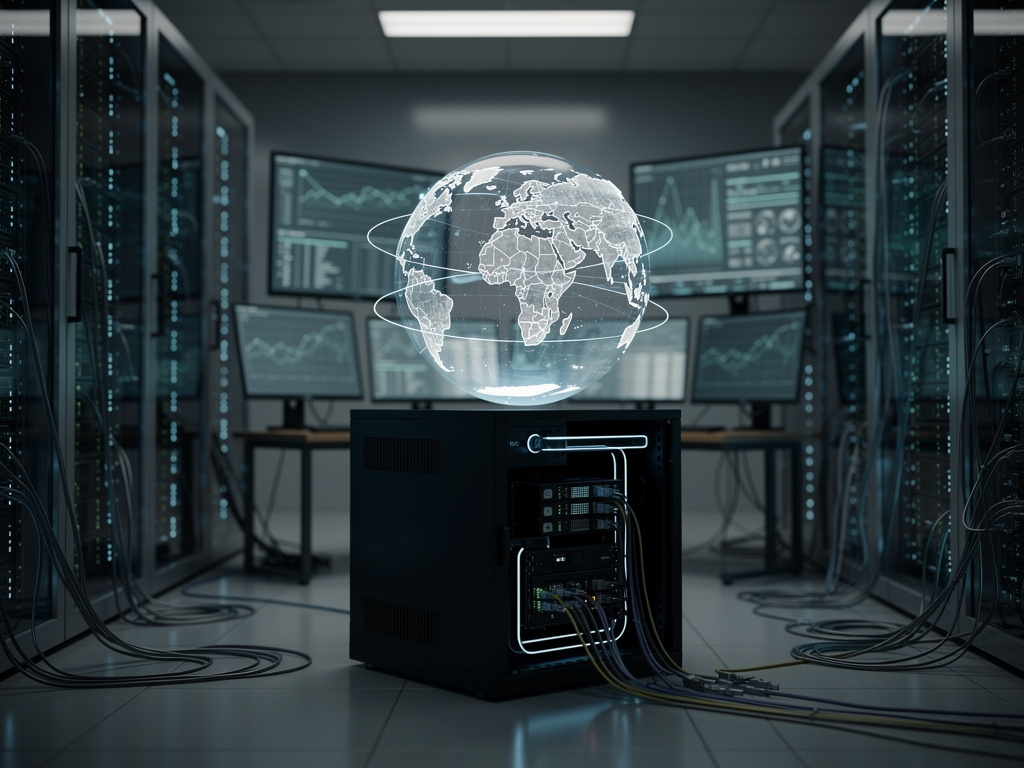
For several hours on a recent weekday, DeepSeek — the Chinese artificial intelligence company that stunned global markets earlier this year with its low-cost models — went dark. Users across multiple regions reported persistent errors, failed API calls, and an inability to access the company’s chatbot interface. The outage, which stretched across much of the business day, forced developers and enterprises relying on DeepSeek’s infrastructure to scramble for alternatives or simply wait.
It was exactly the kind of incident that raises hard questions about operational resilience at a company that has attracted enormous attention but remains, by Silicon Valley standards, lightly staffed and thinly resourced.
According to MSN, DeepSeek acknowledged the disruption and said it was investigating the cause. The company’s status page confirmed degraded performance across its services, though specific technical details were sparse. Users took to social media platforms including X to report that both the web-based chat interface and the developer API returned errors consistently, with some noting that the problems persisted for upwards of four to five hours before service began to stabilize.
The timing couldn’t have been worse. DeepSeek has spent the first half of 2025 aggressively courting enterprise customers and developer communities outside China, positioning itself as a credible — and dramatically cheaper — alternative to OpenAI, Anthropic, and Google’s Gemini. An extended outage chips away at the trust that underpins those commercial ambitions.
This wasn’t DeepSeek’s first brush with service instability. Earlier in 2025, the company experienced disruptions that it attributed to large-scale cyberattacks, a claim that drew both sympathy and skepticism from the technical community. In January, as reported by multiple outlets at the time, DeepSeek temporarily restricted new user registrations citing “large-scale malicious attacks” on its infrastructure. Whether the latest outage shares a similar root cause remains unclear. DeepSeek has not publicly confirmed or denied any external attack vector this time around.
What’s known is that DeepSeek’s infrastructure footprint is considerably smaller than its Western competitors. The company operates primarily out of China, with data center capacity that, by most informed estimates, is a fraction of what Microsoft provides to OpenAI or what Google deploys for its own AI services. That’s been part of the DeepSeek narrative — the scrappy upstart that achieves remarkable model performance on a shoestring budget. But scrappy and reliable don’t always coexist.
The outage sent ripples through developer forums and enterprise Slack channels. Several users on X reported that production applications built on DeepSeek’s API experienced cascading failures, with no failover mechanism available because the company doesn’t yet offer multi-region redundancy in the way that AWS, Azure, or Google Cloud do for their hosted AI endpoints. One developer posted: “We built a demo on DeepSeek to save costs. Now the demo is down during a client presentation. Lesson learned.”
That anecdote, while small, illustrates a broader tension in the AI industry right now. Companies are under intense pressure to cut inference costs, and DeepSeek’s pricing — often an order of magnitude below OpenAI’s — makes it enormously attractive. But cost optimization carries its own risks. Cheaper infrastructure means fewer redundancies. Fewer redundancies mean that when something breaks, it breaks for everyone, all at once.
And it’s not just startups gambling on DeepSeek. Reports from Reuters in recent months have documented growing interest from mid-sized enterprises in Asia and Europe exploring DeepSeek integrations, drawn by benchmark performance that rivals GPT-4-class models at a fraction of the cost. For those organizations, an hours-long outage isn’t a minor inconvenience. It’s a procurement risk that IT departments will flag in their next vendor review.
The competitive implications are real. OpenAI, which has faced its own share of outages over the past two years, has invested heavily in infrastructure reliability, partnering with Microsoft to build out dedicated capacity. Anthropic has similarly emphasized uptime guarantees as a selling point for its Claude models in enterprise settings. Google, with its vast global infrastructure, pitches Gemini partly on the promise that it inherits the reliability DNA of Google Cloud. DeepSeek, by contrast, can’t yet make those same assurances.
So what actually went wrong? The honest answer is that nobody outside DeepSeek knows yet, and the company has been characteristically tight-lipped. Chinese AI companies tend to communicate less openly about incidents than their American counterparts, partly for cultural reasons and partly because the regulatory environment in China discourages public disclosure of vulnerabilities. This opacity itself becomes a liability when you’re trying to win over international customers who expect detailed post-mortems and transparent status updates.
Some observers on X speculated that the outage could be related to infrastructure scaling challenges as DeepSeek onboards new users at a rapid clip. Others pointed to the possibility of GPU cluster failures, noting that DeepSeek relies heavily on Nvidia hardware that has become increasingly difficult to procure due to U.S. export restrictions. If a significant portion of a GPU cluster goes down and there’s limited spare capacity, recovery times stretch.
The export control angle deserves attention. Since late 2022, the U.S. government has progressively tightened restrictions on advanced chip sales to China, specifically targeting the high-end Nvidia GPUs that power AI training and inference. DeepSeek has reportedly stockpiled older-generation chips and developed optimization techniques to extract maximum performance from constrained hardware. But constrained hardware also means constrained redundancy. Every GPU is precious. There may not be idle capacity sitting in reserve waiting to absorb a failure.
This is the paradox at the heart of DeepSeek’s story. The same resource constraints that forced the company to innovate — producing models that rival Western competitors at a fraction of the compute cost — also leave it more exposed when things go wrong. Efficiency and fragility can be two sides of the same coin.
The market reaction to the outage was muted, largely because DeepSeek is privately held and doesn’t have publicly traded shares to punish. But the incident did briefly boost sentiment around U.S. AI stocks, with shares of companies like Microsoft, Alphabet, and Nvidia ticking upward in the session following the outage reports, as investors appeared to recalibrate the competitive threat DeepSeek poses.
That recalibration may be premature. A single outage doesn’t define a company’s trajectory. Amazon Web Services, now the world’s largest cloud provider, suffered a catastrophic multi-hour outage in 2017 that took down a significant portion of the internet. It recovered. It grew. But AWS also had the resources, the engineering depth, and the institutional credibility to weather that storm. DeepSeek is still building all three.
For enterprise buyers evaluating AI providers in 2025, the calculus is getting more complex. Price matters. Performance matters. But so does reliability, transparency, and the ability to provide contractual uptime guarantees backed by real infrastructure. DeepSeek excels on the first two dimensions. The latest outage suggests it has significant ground to cover on the rest.
The broader lesson extends beyond any single company. The AI industry is entering a phase where operational maturity matters as much as model capability. It’s no longer enough to publish impressive benchmarks or win on price. As AI systems become embedded in critical business processes — customer service, financial analysis, healthcare triage, software development — the tolerance for downtime shrinks toward zero. The companies that figure out how to deliver both performance and reliability at scale will capture the enterprise market. The ones that don’t will remain interesting experiments.
DeepSeek is far from finished. Its technical achievements are genuine, its cost advantages are structural, and its ambition is evident. But ambition without infrastructure is a promissory note. And on the day the servers went down, that note came due.


 WebProNews is an iEntry Publication