
Davos 2026: AI’s Power Play and the Deals Shaping Tomorrow’s Tech World
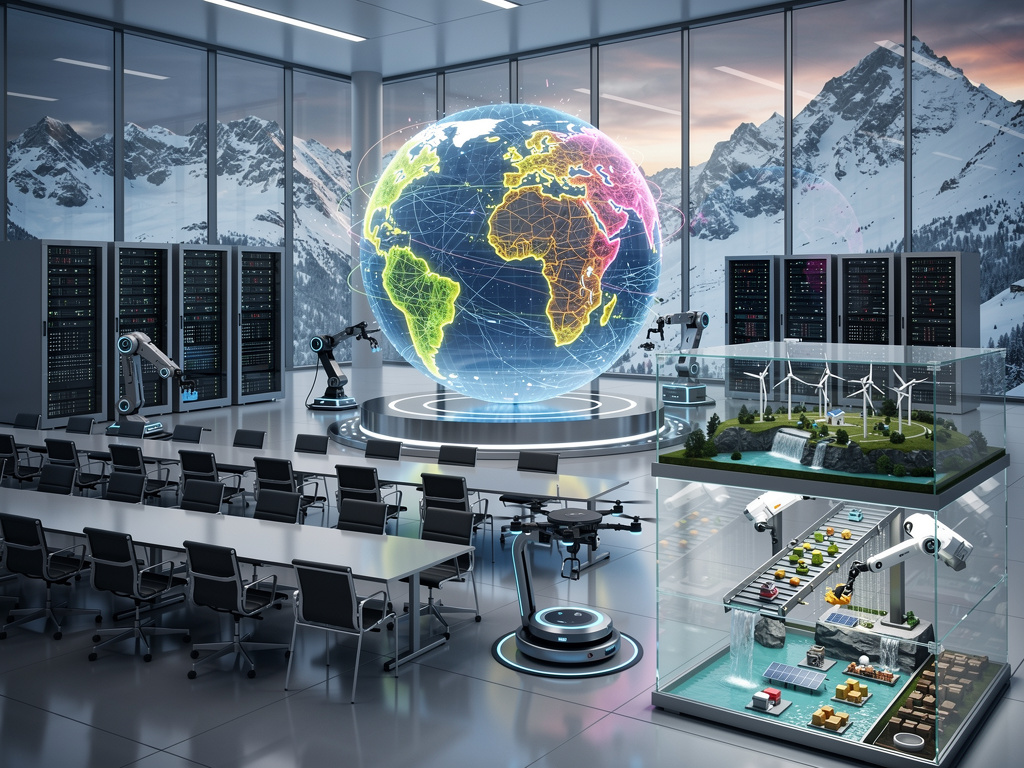
In the snow-capped peaks of Davos, Switzerland, the World Economic Forum’s annual gathering in January 2026 transformed into a high-stakes arena where artificial intelligence took center stage, eclipsing even the shadow of global politics. Tech titans, from Elon Musk to the heads of Nvidia and Microsoft, converged to outline bold visions for AI’s future, while grappling with pressing constraints like energy demands and workforce disruptions. This year’s event, attended by over 84 world leaders and 800 CEOs, highlighted how AI is not just evolving but reshaping entire industries, with announcements that signaled massive investments and partnerships.
Drawing from recent coverage, Euronews reported on the hopes and fears voiced by leaders including Musk, Nvidia’s Jensen Huang, Microsoft’s Satya Nadella, Anthropic’s Dario Amodei, and Google DeepMind’s Demis Hassabis, alongside philosopher Yuval Noah Harari. Their discussions painted a picture of AI as both a boon for productivity and a potential risk to societal stability. Musk, ever the provocateur, predicted that AI could surpass human intelligence by the end of 2026, driven by leaps in computing power and software, but he emphasized electricity as the new bottleneck—a theme echoed across panels.
Meanwhile, infrastructure needs dominated conversations, as AI’s voracious appetite for power spurred a boom in data centers and energy projects throughout 2025. Leaders at Davos indicated that 2026 would follow suit, with calls for sustainable solutions to prevent blackouts from derailing progress. This urgency stemmed from the realization that without addressing power shortages, the promised AI revolution could stall.
Energy Crunch: The Hidden Hurdle in AI’s Ascent
The power dilemma was a recurring motif, with Yahoo Finance noting how 2025’s infrastructure surge set the stage for continued investments. Jensen Huang of Nvidia argued that AI would create more jobs than it destroys, countering warnings from JP Morgan’s Jamie Dimon, who suggested slowing AI rollout to avert civil unrest. Dimon’s concerns, detailed in The Guardian, highlighted fears of job displacement in white-collar sectors, potentially eliminating half of entry-level positions.
On the flip side, optimism flowed from announcements like those from OpenAI and Salesforce, which Forbes listed among the top breakthroughs. These included AI agents capable of handling real work in HR, scheduling, and inventory—projections suggest 40% of enterprise apps will embed such agents by year’s end. Posts on X from industry watchers reinforced this, with users highlighting how companies like Google are investing in robotics and drones to extend AI into physical realms, automating tasks beyond software.
Political undercurrents added complexity, as Reuters observed that AI and President Donald Trump’s policies dominated talks. Trump’s influence loomed large, with Big Tech firms navigating potential regulatory shifts that could accelerate AI adoption in the U.S. while Europe lags, as per Euronews insights. This geopolitical tension underscored AI’s role in national competitiveness, with leaders like Microsoft’s Brad Smith discussing AI as an engine for local growth in sessions with figures from the European Investment Bank.
Job Market Shifts: Creation Amid Disruption
Despite the buzz, job creation emerged as a mantra, with another Reuters piece capturing the enthusiasm among business leaders. They downplayed fears, focusing on how AI could boost demand for trades and technical skills. For instance, Anthropic’s Amodei revealed plans to run over a million GPUs by 2026, promising smarter models with enhanced memory and voice capabilities—developments that could redefine human-AI interaction.
X posts amplified these sentiments, with users like tech analysts predicting that every employee might soon have a dedicated AI assistant, favoring those adaptable to new tools in career paths. This aligns with StartupNews.fyi‘s key takeaways, which emphasized robots and global tech integration. Elon Musk’s comments, as reported in BusinessToday, extended to humanoid robots entering real-world use, potentially spiking productivity while diminishing the need for certain labor.
Yet, not all views were rosy. Yuval Harari’s philosophical input, via Euronews, warned of AI’s existential risks, urging safeguards to ensure it’s “useful and safe.” This balanced the hype, reminding attendees that unchecked advancement could exacerbate inequalities, especially in regions without robust infrastructure.
Deals and Innovations: Forging AI’s Future Alliances
Major deals stole the spotlight, with Forbes detailing partnerships in AI, stablecoins, and robotics. Salesforce’s EVA concierge, an agentic AI for workflow orchestration, exemplified the shift from prototypes to production-scale deployments. X discussions echoed this, noting how enterprise AI is now automating large system parts, moving beyond demos.
The New York Times portrayed Davos as a spectacle dominated by Big Tech and Trump, where global companies’ interests often overshadowed others. This was evident in sessions on AI’s economic impact, like one featuring WTO Director-General Ngozi Okonjo-Iweala, as shared on X, emphasizing AI for local growth alongside Microsoft and Eurasia Group leaders.
Infrastructure investments were pivotal, with Yahoo Finance projecting more of the same for 2026. Cisco’s insights, via CNBC-TV18 posts on X, forecasted physical AI remnants, focusing on security and production-grade generative AI. These align with broader trends, where AI chips like Google’s TPUs keep compute costs low, as discussed in X analyses of the digital economy.
Global Perspectives: Europe’s Lag and Emerging Markets’ Leap
Europe’s position drew scrutiny, with Euronews exploring how the continent might carve out a role amid U.S.-China dominance. Leaders like Nadia Calviño of the European Investment Bank advocated for AI investments to foster growth, countering fears of being sidelined. This contrasted with U.S. advancements, where Trump’s policies could streamline regulations, per Reuters.
In emerging markets, AI’s potential for leapfrogging was a hot topic. Posts on X from figures like Ngozi Okonjo-Iweala highlighted collaborations with entities like G42 AI, aiming to democratize access. StartupNews.fyi noted how Davos served as a launchpad for such initiatives, blending AI with blockchain for stablecoins that could stabilize economies.
However, power constraints remain universal. Musk’s warning in BusinessToday—that electricity, not tech, is the real challenge—resonated, prompting calls for nuclear and renewable energy boosts. The Guardian’s coverage of Dimon and Huang’s debate encapsulated this: while AI promises job creation, its rapid rollout demands societal safeguards.
Robotics and Beyond: Expanding AI’s Reach
Robotics announcements added excitement, with Forbes listing breakthroughs like Apptronik’s embodied AI, backed by Google. X users buzzed about humanoid robots scaling by 2027, aligning with Musk’s timeline. This convergence of AI and physical automation could transform manufacturing and services, as per StartupNews.fyi takeaways.
Enterprise adoption was another focus, with X posts from experts like Spiros Margaris noting agentic AI’s maturity. Systems that reason and act autonomously are now integrating into workflows, as seen in Salesforce’s innovations. The New York Times observed how such tech shunts aside traditional sectors, prioritizing AI-driven efficiency.
Geopolitically, Trump’s shadow influenced deals, with Reuters highlighting how politics intertwined with AI strategies. Leaders navigated this by emphasizing ethical AI, as Harari urged in Euronews, to mitigate risks like misinformation or bias.
Investment Horizons: Betting Big on AI’s Next Wave
Funding poured in, with Anthropic’s GPU expansion signaling billion-dollar commitments. X sentiment, from analysts like Dan Ives, viewed capex increases by Meta, Microsoft, and Alphabet as bullish for the AI revolution into 2026. This mirrors Yahoo Finance’s infrastructure narrative, where power solutions are key to sustaining growth.
Cisco’s playbook, shared on X via CNBC-TV18, predicted AI in safety and security, with physical manifestations emerging. The Guardian noted contrasting views: Dimon’s caution versus Huang’s optimism, underscoring the need for balanced rollout.
Ultimately, Davos 2026 revealed AI’s trajectory as intertwined with energy, jobs, and global politics. As leaders departed the Alps, the deals and debates set the stage for a year where AI’s promises—and pitfalls—will test the world’s readiness. From Musk’s bold predictions to infrastructure pledges, the forum solidified AI as the defining force of our era, urging collaborative action to harness its potential without unraveling societal fabrics.


 WebProNews is an iEntry Publication