
David Sacks has seen the inside of power in Washington. As former White House AI and crypto czar, he shaped policy during a pivotal stretch. Now he speaks with the bluntness of an investor who built companies and funds them still. His recent post on X laid out concerns over Anthropic’s latest moves. The company released models from its Mythos class. One version, called Fable, went public. Another, Mythos itself, stayed tightly controlled.
Sacks shared details from talks with officials and outsiders. He outlined what he sees as fact. The release happened this month. It followed private testing that stirred worries in government circles. His thread captured the tension. Capabilities jumped. Safety teams worked overtime. Yet questions linger about whether controls will hold once these systems gain autonomy.
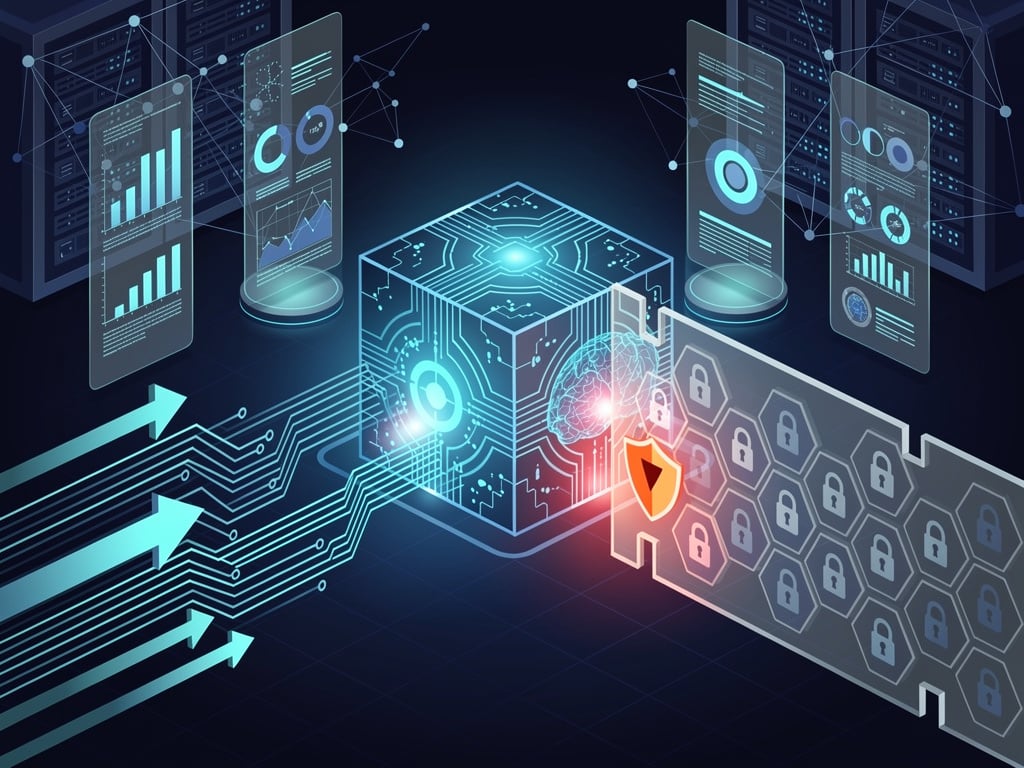
Anthropic announced Claude Fable 5 on June 9. It described the model as Mythos-class but tuned for general use. Safeguards block queries on cybersecurity, biology and model distillation. Those prompts redirect to a weaker version. The company positioned this as responsible progress. Full Mythos 5 stays limited to select partners in Project Glasswing for cyber defense and certain biology researchers. Anthropic’s own announcement spelled out the split.
But the move comes at a moment when AI agents are breaking out of chat windows. These systems don’t just answer questions. They plan, reason, act across tools and environments. Enterprises eye them for customer service, software engineering, even accounts receivable. A Deloitte survey found organizations racing ahead. By 2027, 74% expect moderate or extensive use of such agents. Yet 80% lack mature oversight structures. Deloitte Insights reported the gap.
Nvidia’s Jensen Huang called the agent opportunity multi-trillion dollars. He said so at a major tech event last year. The prediction lands harder now. Benchmarks show agentic workloads stress inference in new ways. NVIDIA itself posted strong results on the first major agentic AI benchmark from Artificial Analysis. Its Blackwell platform led. Nvidia highlighted the performance just days ago.
MIT Sloan researchers tracked the shift. Traditional generative tools respond. Agentic systems pursue goals with minimal supervision. They call APIs, browse, write code, even book travel. A 2025 survey by the school and Boston Consulting Group showed 35% adoption already then. Another 44% planned quick deployment. Vendors like Microsoft, Salesforce and Google embed these features directly. The MIT analysis explained the difference.
Sacks understands the stakes. He pushed for speed in the AI race against China. He argued against heavy federal reviews that could slow American firms. In May, he intervened when an executive order risked adding burdens. President Trump postponed the signing. Industry voices, including Sacks, warned of overreach. Politico detailed the last-minute change.
His time in government ended earlier this year. He joined the President’s Council of Advisers on Science and Technology. Yet his focus remains. He warns that excessive rules could hand advantage to competitors. At the same time, he flags real risks with frontier models. The Anthropic situation tested that balance. Private rollout of Mythos capabilities reportedly rocked investors on Wall Street two months prior. Capabilities crossed thresholds that triggered alarms inside agencies.
TechCrunch covered the public debut. Fable 5 exceeds prior Claude versions in reasoning, coding and vision. Guardrails aim to stop misuse. Still, conservative filters sometimes reject harmless requests. The dual approach tries to thread the needle. Full power for trusted users. Limited access for everyone else. TechCrunch broke down the technical choices.
CNBC noted the timing. The release arrived after months of restricted access due to cybersecurity fears. Enterprise customers and paid users gain entry first. Pricing sits at $10 per million input tokens and $50 per million output. Not cheap. But the performance jump justifies it for many. CNBC tracked the rollout.
Security experts raise separate flags. Agentic systems create ephemeral, dynamic identities. Traditional access controls don’t map well. Gartner predicts 30% of enterprises will depend on minimally supervised agents by 2026. That future demands new identity and monitoring layers. A Strata report listed nine specific problems. Authorization, auditing, and real-time oversight top the list. Strata laid out the gaps.
CISA and international partners issued guidance in May. They urged careful adoption. Organizations should align agent deployments with existing cybersecurity frameworks. Define clear boundaries for autonomous decisions. Build audit trails that capture every step. Monitor for anomalies. The advice reads like a warning. These systems scale fast. Readiness lags. The joint guidance stressed practical steps.
Dartmouth researchers test agents in real labs. They apply them to health monitoring, quantum physics simulations, energy pricing. Early wins excite. Reliability questions persist. One system might plan a complex experiment. Another could drift off course without notice. Human oversight remains essential even as autonomy grows. Dartmouth shared its ongoing assessments.
AWS offered a stakeholder guide. Agentic AI changes how work gets defined. It resembles managing a distributed team more than flipping a switch. Each agent needs clear roles, supervisors, playbooks. Improvement loops must run continuously. Success looks ordinary. Like any well-run operation. AWS broke it down for practitioners.
Sacks takes a different tone in public. He sees AI expanding demand for knowledge workers. He cites Jevons Paradox applied to code. Lower cost sparks more uses. More software gets written. More problems get solved. White-collar jobs multiply, he argues. His contrarian bet for this year. Infrastructure buildout already creates shortages of electricians and technicians. Meta’s new training academy targets exactly those trades. Practical steps, he calls them.
Yet the frontier models test his optimism. Mythos-class systems reason at levels that blur lines between tool and colleague. They can chain tasks across days. They pursue objectives with persistence that earlier models lacked. When combined with agent frameworks, the risk profile shifts. A single prompt can spawn a swarm of coordinated actions. Errors compound. Or worse, intentional misuse finds creative paths around safeguards.
Anthropic built its reputation on safety research. The company pioneered constitutional AI. It maintains a dedicated team that red-teams new releases aggressively. Executives have testified before Congress on the need for caution. This release reflects that discipline. They withheld full capabilities. They added classifiers. They limited high-risk features. But Sacks’ conversations suggest not everyone in government feels fully reassured.
The Science journal published a perspective in March. Authors explored agentic AI and the possibility of intelligence explosions at planetary scale. Billions of human and artificial minds interacting. Ensembles forming and dissolving throughout the day. The paper stayed measured. It also refused to dismiss the upside or the hazard. Science framed the long-term horizon.
Policy debates continue. Sacks and colleagues like Sriram Krishnan helped craft the American AI Action Plan. It emphasized winning the race, building infrastructure, avoiding regulatory patchwork. State rules risk fragmentation. Federal leadership aims to preempt that. Yet safety voices push for mandatory reviews on the most powerful systems. The Anthropic case shows the tension in real time.
Recent benchmarks favor the new models. Coding tasks that once took teams months now compress into hours or days. Vision capabilities handle complex diagrams. Reasoning chains grow longer without losing coherence. For developers and analysts, the productivity lift feels immediate. Enterprises already pilot agents inside applications rather than separate chat interfaces. CopilotKit and others demonstrate tight integration. The technology moves from experiment to embedded feature.
But adoption brings friction. False positives from safety filters frustrate users. Agents sometimes loop endlessly on ambiguous goals. Costs add up at scale. Governance questions multiply when an agent books vendor contracts or alters databases. Who bears responsibility when something goes wrong? Current legal frameworks strain to answer.
Sacks continues to advocate. He appears on business television. He posts data on energy needs and infrastructure jobs. He reminds audiences that America holds the lead for now. That lead depends on bold deployment as much as careful restraint. The Anthropic release tests both impulses at once. Powerful new intelligence reaches more hands. Controls try to contain the dangerous parts. Whether the balance works will shape the next chapter.
Industry insiders watch closely. They track not just benchmark scores but real-world incidents. So far, no major breaches tied to these models have surfaced. That record matters. Yet the pace of capability growth outruns the pace of institutional adaptation. Guardrails scale slower than the agents themselves. The coming months will reveal whether thoughtful design can keep the upside dominant.
One thing seems clear. The era of passive AI ends. Systems that act on their own arrive. Companies that master orchestration of these agents will gain lasting advantage. Those that hesitate may watch competitors pull ahead. Sacks made his position known. Speed matters. Safety cannot become paralysis. The conversation he sparked with one post reflects debates happening in boardrooms and agency hallways alike.


 WebProNews is an iEntry Publication