
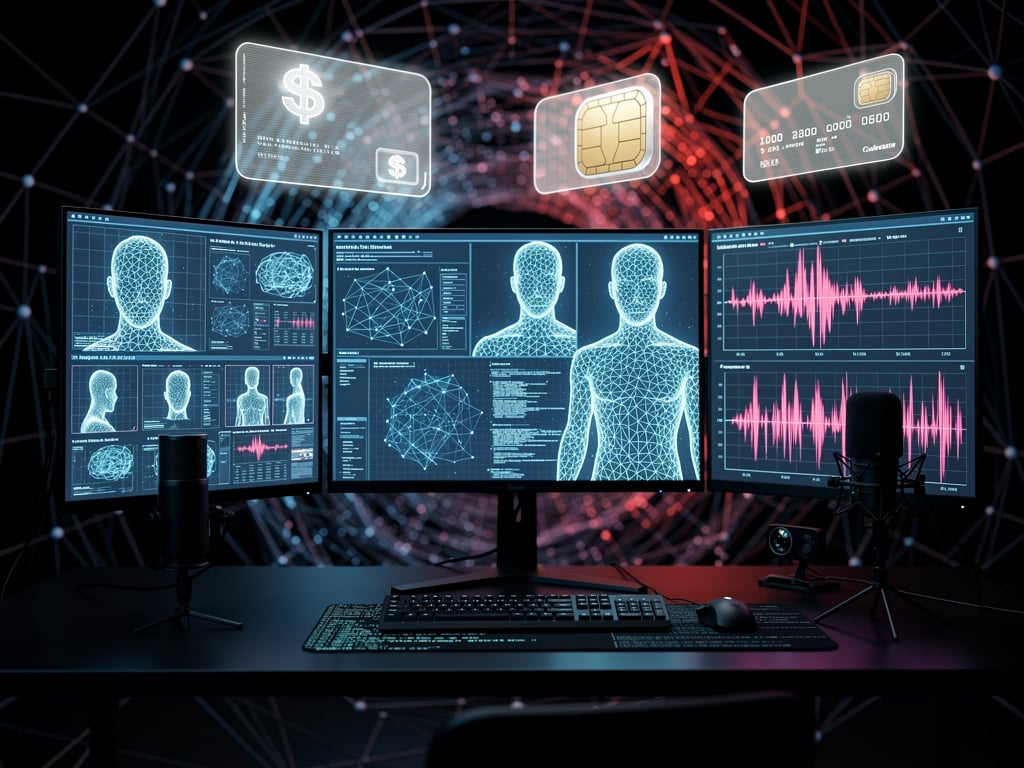
TechRadar reports a 39 percent increase in dark web discussions about deepfake-as-a-service offerings during recent months. This surge signals growing accessibility of advanced video and audio manipulation tools that require minimal technical skill from buyers. Security professionals warn that these developments could dramatically expand the scale and sophistication of business email compromise attacks, particularly those impersonating company executives.
The trend reflects a broader shift in how cybercriminals acquire and deploy synthetic media. Rather than building their own models from scratch, threat actors now purchase ready-made services that generate convincing fake videos and voice clones on demand. Pricing for these services varies widely, with basic packages starting at a few hundred dollars and premium options that promise higher quality and faster delivery reaching several thousand. Vendors on underground forums often provide tutorials, sample outputs, and customer support channels to attract less experienced criminals.
This commoditization lowers the barrier for entry into high-value fraud schemes. Traditional fake boss scams, also known as CEO fraud, typically relied on email messages that mimicked executive writing styles to trick employees into wiring funds or revealing sensitive information. Success rates depended heavily on the attacker’s ability to research targets and craft believable messages. Deepfake technology adds a new dimension by allowing real-time or recorded video calls where the attacker’s face and voice are replaced with those of the impersonated executive.
Financial losses from these attacks have already reached staggering levels. The FBI’s Internet Crime Complaint Center documented more than 2.7 billion dollars in business email compromise losses in 2023 alone. Experts anticipate that the integration of deepfakes will push these figures higher as video evidence becomes a more common requirement in financial transactions and internal approvals. Employees who might question an unusual email request could find themselves persuaded by a video call that appears to show their actual boss making the demand.
The technical foundation for these services rests on publicly available machine learning models that have been refined through years of open-source development. Many deepfake-as-a-service providers adapt tools originally created for entertainment or research purposes, fine-tuning them on datasets scraped from social media profiles of potential targets. A single high-quality source video or audio sample, often harvested from LinkedIn, YouTube, or corporate websites, can generate hours of synthetic content that maintains consistent facial expressions, mannerisms, and vocal patterns.
Voice cloning has advanced particularly quickly. Modern systems can create convincing replicas from as little as three minutes of recorded speech. These clones capture not only the target’s accent and tone but also emotional inflections that make conversations feel authentic. Attackers have begun incorporating these cloned voices into vishing campaigns where victims receive phone calls from what sounds exactly like their supervisor requesting urgent action.
Real-world incidents demonstrate the potential impact. In one documented case from 2024, fraudsters used deepfake video during a video conference to impersonate a chief financial officer and convince a finance team to transfer 25 million dollars to an overseas account. The call included multiple participants, with the deepfake technology applied selectively to the attacker’s feed while accomplices played supporting roles. The transaction appeared legitimate until the funds had already cleared and become difficult to recover.
Another incident involved a real estate transaction where lawyers participated in what they believed was a video call with their client authorizing a property purchase. The deepfake showed the client discussing details from previous conversations, creating a false sense of continuity that overcame initial suspicions. The attackers intercepted the closing funds, leaving both the law firm and their client facing significant losses.
Security researchers tracking these developments observe that dark web marketplaces have evolved to accommodate different skill levels. Novice users can buy complete attack packages that include pre-generated deepfakes for popular executives at Fortune 500 companies. More advanced operators purchase access to live deepfake generation tools that work in real time during video calls. These tools often integrate with popular conferencing platforms through virtual camera feeds that replace the user’s actual video output.
The quality of available deepfakes has improved markedly. Earlier versions suffered from visible artifacts, unnatural blinking patterns, and audio synchronization issues that trained observers could detect. Current offerings demonstrate better lighting adaptation, more natural head movements, and improved lip synchronization. Some services claim to bypass basic detection tools by incorporating countermeasures against common forensic analysis methods.
Companies find themselves in a difficult position when establishing verification procedures. Traditional security questions or callback methods may not suffice when attackers can generate real-time responses that match an executive’s known knowledge and speaking style. Multi-factor authentication helps but does not address situations where the executive’s identity itself is being synthesized. Some organizations have begun implementing biometric verification systems that analyze subtle facial movements or vocal characteristics that current deepfakes struggle to replicate perfectly.
However, these defensive measures come with their own challenges. False positives can frustrate legitimate users, while sophisticated attackers continuously adapt their tools to defeat new detection methods. The cat-and-mouse dynamic between deepfake creators and detection specialists shows no signs of slowing, with each advancement on one side prompting rapid responses from the other.
Training programs for employees have taken on renewed importance. Organizations now conduct simulations that include deepfake video calls to help staff recognize subtle signs of manipulation. These exercises emphasize the need to verify requests through multiple independent channels rather than relying solely on visual or auditory confirmation. Some companies have established special verification codes or secret phrases that executives must include in any urgent request.
The supply chain for deepfake services extends beyond the initial vendors. Data brokers sell packages of personal information that include social media histories, professional backgrounds, and family details useful for training more convincing models. Graphic design freelancers on legitimate platforms sometimes find themselves unwittingly contributing to these operations by creating training datasets or editing synthetic content.
Law enforcement faces significant hurdles in addressing this threat. Many deepfake-as-a-service operations are hosted in jurisdictions with limited cooperation agreements. Even when arrests occur, the modular nature of these criminal networks makes it difficult to dismantle entire operations. A vendor providing the software might operate separately from groups that gather training data and others that execute the actual scams.
International cooperation has produced some successes. Joint operations between agencies in the United States, Europe, and Asia have shut down several prominent marketplaces, but new ones quickly emerge to fill the void. The profit margins remain attractive enough to ensure continuous innovation and adaptation within the criminal community.
Technology companies are investing heavily in detection capabilities. Major video conferencing platforms have begun incorporating real-time analysis tools that flag suspicious feeds for additional verification. However, the effectiveness of these systems varies, and privacy concerns limit how aggressively they can monitor user content. Enterprise customers often receive more sophisticated protection options than individual users.
The insurance industry has started adjusting policies to account for deepfake risks. Cyber insurance providers now routinely ask about specific controls for executive impersonation fraud and may adjust premiums based on an organization’s preparedness level. Some carriers have begun offering specialized coverage for losses involving synthetic media, though the long-term viability of such policies remains uncertain as attack volumes increase.
Looking ahead, experts anticipate that deepfake technology will integrate with other emerging threats. The combination of synthetic media with artificial intelligence-driven social engineering could create attacks that adapt in real time to victim responses. Automated systems might generate appropriate facial expressions and conversational responses based on sentiment analysis of the target.
Organizations that treat this threat as purely technical miss the broader picture. The most effective defenses combine technology with human factors training and robust procedural controls. Simple measures like requiring secondary confirmation for transactions above certain thresholds can significantly reduce risk even when deepfakes are involved.
The 39 percent spike in dark web conversations about these services serves as an early warning. As the tools become more accessible and their quality continues to improve, organizations must prepare for a future where video and audio evidence can no longer be taken at face value. The next wave of executive impersonation attacks will likely test not only technical defenses but also the fundamental ways businesses establish trust and authorize critical decisions.
Security teams should prioritize updating incident response plans to include deepfake scenarios. This includes establishing clear protocols for verifying executive identities during both digital and in-person interactions. Regular audits of financial approval processes can identify vulnerabilities before attackers exploit them. Collaboration between information technology, security, and business units becomes essential for creating comprehensive protection strategies.
The accessibility of deepfake-as-a-service represents a significant shift in the threat environment. What once required specialized skills and expensive equipment now sits within reach of moderately resourced criminal groups. This democratization of advanced fraud techniques will likely result in both increased attack frequency and greater diversity in targets. Small and medium-sized businesses that previously considered themselves below the radar of sophisticated threat actors may find themselves increasingly in the crosshairs.
As detection technology advances, so too will the sophistication of the attacks. The ongoing competition between those creating deepfakes and those working to identify them will shape the security landscape for years to come. Organizations that stay informed about these developments and maintain flexible defense strategies will be better positioned to protect their assets and employees from this growing threat vector. The conversation on dark web forums indicates that the problem is not going away and may accelerate as more criminals discover the potential returns from investing in these capabilities.


 WebProNews is an iEntry Publication