
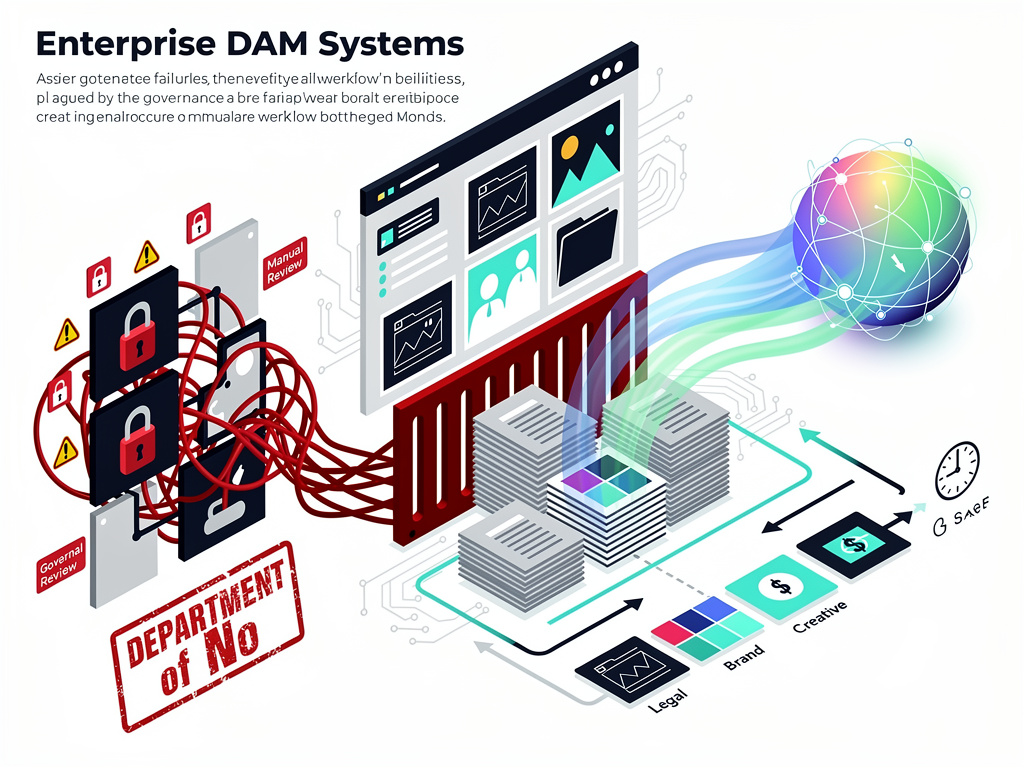
In the high-stakes world of enterprise content creation, digital asset management systems—once heralded as saviors of efficiency—are increasingly derided as the ‘Department of No.’ Marketing teams submit assets for approval, only to face endless delays from legal, brand, and compliance gatekeepers. The true culprit, insiders say, lies not in overly cautious departments but in fractured governance structures within DAM platforms themselves.
Andrew Brust, chief content officer at Bynder, pins the blame squarely on outdated processes. ‘The “Department of No” problem is really a DAM governance problem,’ he writes in a CMSWire analysis. Disconnected manual workflows, he argues, amplify bottlenecks, turning what should be swift approvals into protracted battles.
Executives at Fortune 500 firms report teams wasting hours chasing permissions via email chains and spreadsheets, disconnected from the DAM repository. This inefficiency cascades into missed campaign deadlines and ballooning production costs.
Roots of the Governance Breakdown
The issue stems from DAM systems designed in an era of static files, ill-equipped for today’s dynamic, AI-driven content pipelines. Manual tagging, fragmented metadata schemas, and siloed permissions create chokepoints. Legal teams, for instance, must manually review assets outside the system, severing the audit trail and inviting errors.
Bynder’s Brust highlights how poor governance manifests: ‘Disconnected, manual workflows’ force brand managers to duplicate efforts, querying lawyers via email rather than through integrated tools. This ‘Department of No’ moniker, popularized in marketing circles, reflects the frustration of creators stonewalled by approvers who lack real-time visibility into assets.
Recent surveys underscore the scale. A 2025 Forrester report notes 68% of enterprises cite DAM workflow delays as a top barrier to agility, with governance cited in 72% of cases.
Manual Workflows’ Hidden Toll
Consider a global consumer goods company: Creative teams upload campaign visuals to DAM, triggering notifications to brand and legal. Without automated routing, approvers download files, review offline, and respond asynchronously—often weeks later. This disconnect breeds version control nightmares and compliance risks.
Brust advocates for ‘rethinking DAM governance’ through embedded workflows. Platforms like Bynder now integrate approval chains directly into the asset viewer, allowing legal to comment, redact, and approve in-context. Yet adoption lags; many firms cling to legacy tools lacking these features.
The financial hit is stark. DAM News estimates manual processes inflate content costs by 30-50%, with enterprises losing $1.2 million annually per team on rework alone, per a 2025 G2 benchmark.
AI Emerges as Governance Game-Changer
By early 2026, AI is reshaping the equation. CMSWire reports in ‘DAM’s Final Evolution‘ that next-gen systems evolve from mere libraries to ‘enterprise intelligence cores.’ Auto-tagging, predictive compliance checks, and contextual approvals slash review times by 70%.
Take NICE’s Cognigy Simulator, highlighted in recent CMSWire coverage: It deploys digital twins for pre-launch AI agent testing, mirroring DAM’s shift to proactive governance. Marketers at Duracell, per CMSWire, ditched fragile CMS workflows for integrated DAM, unlocking faster go-to-market.
Posts on X from industry leaders echo this pivot. CMSWire’s feed notes CX teams leveraging real-time signals to preempt friction, a tactic now extending to DAM for instant legal flagging.
Enterprise Case Studies Reveal Path Forward
Procter & Gamble overhauled its DAM in 2025, embedding brand guidelines as AI-enforced rulesets. Legal reviews dropped 85%, per internal metrics shared at DAM NY conference. The key: Unified metadata standards linking assets to policies, eliminating manual handoffs.
Similarly, Adobe’s Experience Manager integrates with legal tech stacks, auto-generating redline reports. A Digital Asset Management News feature details how 24 platforms, evaluated in Forrester’s Wave, now prioritize governance automation.
Challenges persist for laggards. CI Hub’s best practices guide stresses asset discoverability via semantic search, warning that without it, even AI falls short against siloed data.
2026 Roadmap: From Bottlenecks to Velocity
Looking to 2026, Gartner predicts 80% of enterprises will mandate ‘intelligent DAM’ with native governance. Features like blockchain audit trails and federated permissions promise end-to-end traceability, dissolving the ‘Department of No.’
Bynder’s Brust urges immediate action: Standardize workflows, invest in API integrations, and train approvers on platform-native tools. Early adopters report 4x faster time-to-publish, fueling revenue growth amid tightening budgets.
As one X post from CMSWire captures the sentiment: ‘AI turns DAM teams into strategic drivers.’ The evolution demands it—governance isn’t a cost center; it’s the engine of creative freedom.


 WebProNews is an iEntry Publication