
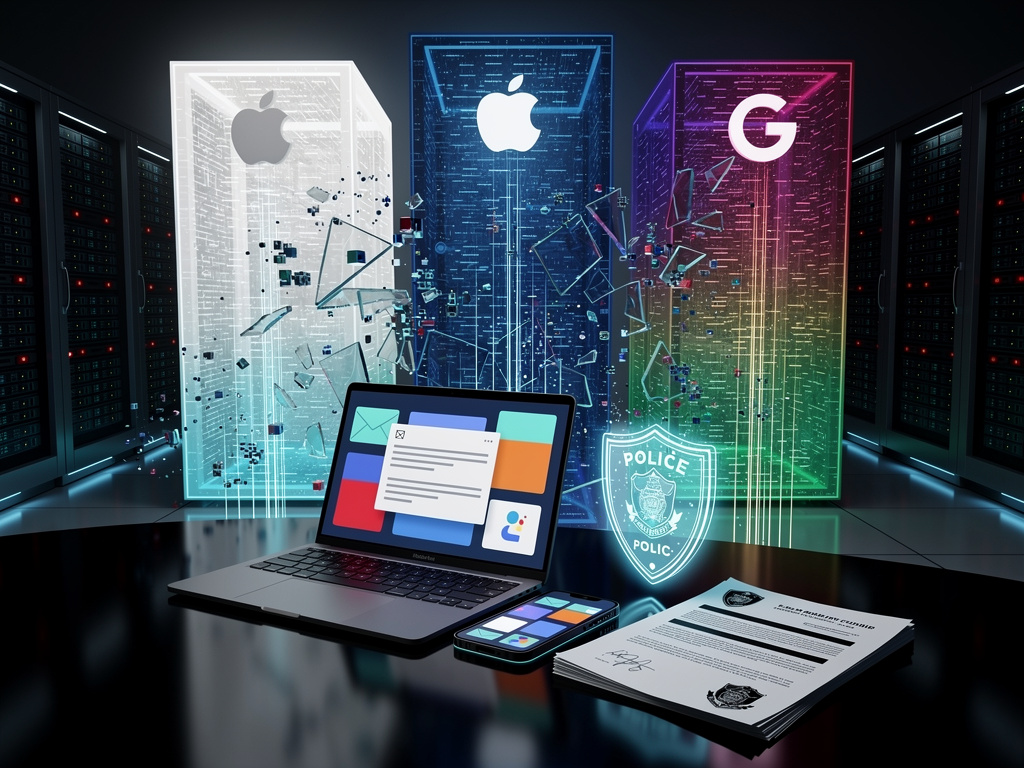
The Fake Badge Heist: Impersonators Infiltrating Tech’s Data Vaults
In an era where digital privacy hangs by a thread, a new breed of cybercriminals is exploiting the very systems designed to protect it. Hackers are masquerading as law enforcement officials, using forged documents and spoofed emails to trick major technology companies into surrendering sensitive user information. This tactic, known as emergency data requests (EDRs), bypasses traditional legal channels like subpoenas or warrants, which require judicial oversight. Instead, these requests claim urgent threats to life or safety, prompting tech firms to hand over data swiftly—often without verifying the authenticity of the requester.
The scheme has gained traction among doxing groups and cybercriminals who sell personal information on the dark web. By posing as police officers, these actors exploit the trust that big tech places in official-sounding demands. For instance, a simple forged emergency request form, combined with a compromised government email account, can yield phone numbers, IP addresses, and even physical locations. This method isn’t new, but its sophistication and success rate have escalated, raising alarms across the cybersecurity community.
Recent incidents highlight how pervasive this threat has become. According to reports, companies like Apple, Meta, and Google have fallen victim to such deceptions, inadvertently exposing user data to unauthorized parties. The fallout includes potential identity theft, harassment, and more severe crimes enabled by the leaked information. As tech giants grapple with these breaches, questions arise about the adequacy of their verification processes and the broader implications for user trust.
Unmasking the Tactics Behind the Deception
At the heart of these attacks is the exploitation of EDR protocols, which are meant for genuine emergencies where delays could cost lives. Hackers craft convincing forgeries, often using templates obtained from underground forums. They might hack into local police department email systems or create spoofed domains that mimic official ones. Once armed with these tools, they submit requests to tech companies, claiming imminent danger to justify immediate data release.
One notable case involved a group known for doxing services, where members impersonated law enforcement to extract data from social media platforms and telecom providers. WIRED detailed how a spoofed email and a faked document were sufficient to convince major firms to comply. The article reveals that compliance rates are alarmingly high, with some companies prioritizing speed over scrutiny to avoid liability in potential real emergencies.
This isn’t isolated to a few bad actors. Posts on X (formerly Twitter) from cybersecurity experts like Brian Krebs have long warned about such tactics, noting instances dating back to 2022 where hackers abused EDRs to target individuals. In one thread, Krebs described how crooks hacked government emails to send fake requests, achieving high success rates with ISPs and social media giants. These social media insights underscore a persistent vulnerability that has evolved but not been fully eradicated.
The Role of Compromised Systems in Amplifying Risks
Compromised police and government systems serve as a gateway for these impersonators. By breaching low-security municipal networks, hackers gain access to legitimate email accounts, lending credibility to their fraudulent requests. This chain reaction turns a minor hack into a major data heist, affecting thousands of users downstream.
For example, in a recent wave of attacks, perpetrators used hacked law enforcement inboxes to phish for data from big tech. TechRadar reported that companies are essentially being phished themselves, with sometimes abused police credentials facilitating the deception. The piece emphasizes how this blurs the line between legitimate and illicit requests, leaving tech firms in a bind.
Broader web searches reveal similar patterns in other sectors. A November 2025 incident involving a financial tech firm breach led U.S. banks like JPMorgan Chase and Citi to scramble in assessing stolen data, as covered by TechCrunch. While not directly tied to law enforcement impersonation, it illustrates the cascading effects of initial breaches, where stolen credentials fuel further attacks.
Big Tech’s Response and Internal Challenges
Tech companies are now racing to bolster their defenses against these sophisticated social engineering ploys. Measures include enhanced verification protocols, such as requiring additional confirmation from known law enforcement contacts or implementing AI-driven anomaly detection for incoming requests. However, the pressure to respond quickly to potential emergencies complicates these efforts, creating a tension between security and compliance.
Insiders at firms like Google and Meta have acknowledged the difficulty in distinguishing fakes from real requests. According to industry sources, training programs for legal compliance teams are being ramped up, but the sheer volume of requests—thousands annually—overwhelms resources. WIRED’s coverage points out that even with red flags, like unusual email domains, some requests slip through due to procedural oversights.
On X, discussions among security professionals highlight the need for standardized verification across the industry. Posts from users like Cory Doctorow reference historical cases, such as the LAPSUS$ group’s tactics in 2022, where impersonating cops led to breaches at multiple agencies. These online conversations reflect a growing consensus that collaborative frameworks, perhaps involving government oversight, are essential to curb the abuse.
Regulatory Gaps and Calls for Reform
The regulatory environment surrounding EDRs remains fragmented, with varying standards across jurisdictions. In the U.S., laws like the Stored Communications Act govern data disclosures, but they don’t mandate foolproof verification for emergency scenarios. This loophole allows impersonators to thrive, as tech companies err on the side of caution to avoid lawsuits from genuine law enforcement.
Advocates for privacy reform argue that mandatory multi-factor authentication for EDRs could mitigate risks. TechRadar’s analysis suggests that without legislative changes, these attacks will persist, potentially eroding public trust in digital platforms. International dimensions add complexity, as hackers operate across borders, exploiting weaker regulations in some countries.
Recent news from data breach trackers, such as PKWARE’s 2025 breach roundup, lists several incidents where impersonation played a role, including ransomware attacks that began with credential theft. These compilations serve as a stark reminder of the interconnected nature of cyber threats, where one vulnerability cascades into widespread data exposure.
Victim Impacts and Real-World Consequences
The human cost of these deceptions is profound. Victims of doxing often face stalking, swatting, or financial fraud, with leaked data enabling targeted harassment. In one documented case, a user’s physical address obtained via a fake EDR led to real-world threats, underscoring the dangers beyond digital realms.
Cybersecurity firms report a surge in such incidents, with doxing-as-a-service operations advertising quick access to personal info. TechCrunch’s reporting on banking data thefts illustrates how stolen information ripples through financial systems, affecting credit scores and personal security.
X posts from affected individuals and journalists amplify these stories, with accounts like RT detailing how Apple and Meta were duped into releasing user data in 2022. While dated, these narratives persist in current discussions, highlighting enduring patterns that demand attention.
Industry Innovations and Future Safeguards
To combat this, some tech leaders are exploring blockchain-based verification for official requests, ensuring tamper-proof authenticity. Others advocate for public-private partnerships to share threat intelligence, reducing the isolation that hackers exploit.
Innovations like automated cross-referencing with law enforcement databases could flag anomalies in real-time. WIRED notes that while these tools are promising, their adoption lags due to privacy concerns and implementation costs.
Looking ahead, experts predict that as AI evolves, so will the forgeries—potentially using deepfakes for video confirmations. TechRadar’s insights warn that without proactive measures, the cat-and-mouse game will intensify, challenging the core of digital security.
Global Perspectives and Emerging Threats
Internationally, similar schemes have surfaced in Europe and Asia, where data protection laws like GDPR impose stricter penalties for breaches. Yet, enforcement varies, allowing cross-border hackers to operate with impunity.
A 2025 leak of Chinese hacking tools, as reported by WIRED in a separate piece, reveals state-sponsored elements that could inspire non-state actors. Though not directly linked, it broadens the context of global cyber espionage.
On X, global users share alerts about rising impersonation attacks, with posts from outlets like Bloomberg echoing 2022 breaches at Apple and Meta. These amplify calls for unified international standards.
Strengthening Defenses Through Collaboration
Collaboration between tech firms and law enforcement is key to fortifying against these threats. Joint task forces could develop shared databases of verified contacts, minimizing spoofing risks.
Training simulations for compliance teams, as suggested in industry forums, help identify red flags like inconsistent language in requests. PKWARE’s breach reports emphasize proactive monitoring as a deterrent.
Ultimately, this evolving challenge requires vigilance from all stakeholders, ensuring that the rush to protect lives doesn’t inadvertently expose them to greater harm. As the digital realm grows more intertwined with daily life, safeguarding user data against such cunning deceptions becomes not just a technical imperative, but a societal one.


 WebProNews is an iEntry Publication