
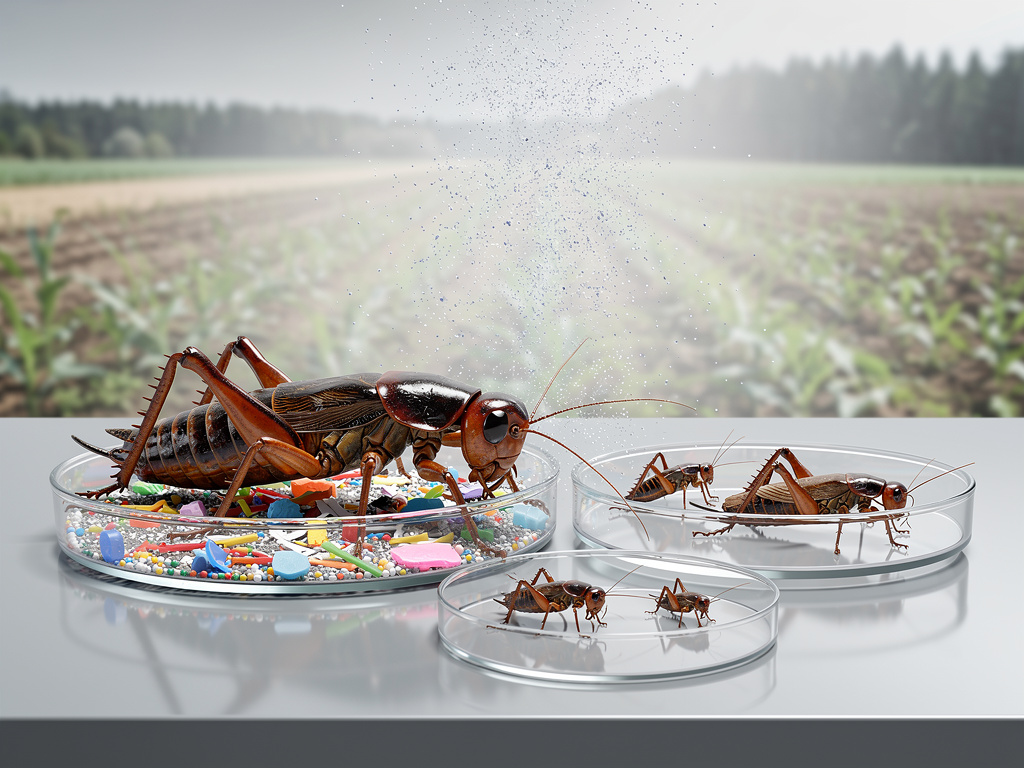
Plastic-Eating Crickets: A Giant Leap in Size and Environmental Peril
In a surprising twist of environmental science, researchers have uncovered that crickets, when fed a diet including microplastics, can experience explosive growth, ballooning up to 25 times their normal size over just seven weeks. This phenomenon, detailed in a recent study, raises profound questions about how pervasive plastic pollution might be altering food chains and ecosystems in unexpected ways. The findings stem from experiments where scientists observed crickets not only ingesting these tiny plastic particles but also breaking them down into even smaller nanoplastics, potentially amplifying pollution’s reach.
The study, published in Futurism, highlights how crickets of the species Gryllodes sigillatus were exposed to polyethylene microplastics mixed into their feed. Remarkably, the insects didn’t just tolerate the plastics; they thrived on them, achieving sizes that defy typical biological expectations. Lead researchers noted that while the crickets’ digestive systems pulverized the microplastics into nanoplastics—particles smaller than 1 micrometer—these same insects grew significantly larger than their counterparts on a standard diet.
This growth spurt isn’t merely a lab curiosity. It suggests that microplastics, ubiquitous in soils, waterways, and even the air, could be influencing insect populations in the wild, potentially cascading through the food web to affect birds, fish, and other predators. Environmental scientists are now grappling with the implications: if insects like crickets are super-sizing due to plastic ingestion, what does this mean for agricultural systems where these bugs play roles in pest control or as prey?
Unpacking the Science Behind Supersized Insects
Delving deeper into the mechanics, the crickets’ ability to process microplastics involves their robust digestive tracts, which grind down larger particles into nanoplastics that can then be excreted or absorbed. According to a report in Discover Magazine, this fragmentation process doesn’t harm the crickets; instead, it correlates with accelerated development. Over the study period, crickets fed plastics reached adult sizes far exceeding norms, with some individuals growing to lengths that would make them outliers in natural populations.
Comparisons with control groups showed no negative impacts on survival rates or reproductive success, but the size increase was consistent and dramatic. Researchers speculate that microplastics might be providing an unintended energy source or altering gut microbiomes in ways that enhance nutrient absorption. This echoes earlier findings from a 2023 paper in ScienceDirect, which documented how crickets readily ingest and excrete microplastics without apparent detriment to their growth.
Yet, this apparent boon for the crickets could spell trouble elsewhere. As these insects break down plastics, they release nanoplastics into the environment, which are more mobile and bioavailable than their larger counterparts. Nanoplastics can penetrate cell membranes, enter bloodstreams, and accumulate in organs, as seen in parallel studies on zebrafish reported in the same Discover Magazine outlet.
Environmental Ripples: From Soil to Food Chains
The broader ecological fallout is becoming clearer through fieldwork. A study in Scientific Reports examined wild crickets in Ontario agricultural fields treated with biosolids, finding over half contained microplastics in their guts. These particles, ranging from fragments to fibers, were ingested alongside natural debris, illustrating how plastic pollution infiltrates even managed farmlands.
In agricultural contexts, where crickets contribute to soil aeration and serve as food for livestock or wildlife, such contamination could disrupt balances. Posts on X (formerly Twitter) from users like environmental advocates highlight growing concerns, with one noting that microplastics are already linked to crop yield reductions of up to 14% in staples like wheat and rice, based on recent analyses. This sentiment aligns with warnings from Phys.org, where researchers emphasize that larger crickets consume bigger plastic particles, perpetuating a cycle of fragmentation and spread.
Moreover, the transformation of microplastics into nanoplastics by cricket digestion could exacerbate pollution in waterways and soils. Nanoplastics are notoriously hard to filter out and have been detected in remote ecosystems, from Arctic ice to deep-sea sediments. This dispersal mechanism, driven by insect activity, adds a new layer to the plastic crisis, potentially accelerating the infiltration of toxins into higher trophic levels.
Health and Agricultural Implications Explored
Shifting focus to human-relevant impacts, the presence of microplastics in insects raises alarms for food security. Crickets are increasingly farmed as a sustainable protein source, but if wild or cultivated populations are ingesting plastics, this could introduce contaminants into human diets. A Yahoo News article from researchers shocked by crickets’ lifelong consumption of plastics warns of negative ecosystem consequences, including easier spread of nanoplastics that affect reproduction and cardiovascular health in various species, as detailed in Yahoo.
In agriculture, where biosolids are used as fertilizers, the risk is amplified. The Scientific Reports study found 87 microplastic particles in just 50 crickets from treated fields, suggesting widespread exposure. This ties into broader research on how microplastics mimic drought stress on plants, as reported in older but relevant posts on X referencing New Scientist studies showing impaired photosynthesis and growth in crops exposed to plastic fibers.
Industry insiders in agrotech are now pondering interventions, such as developing plastic-free fertilizers or monitoring insect populations for size anomalies as pollution indicators. The American Chemical Society’s press release on crickets munching microplastics notes that mouth size determines ingestion rates, with larger crickets tackling bigger particles, as per ACS.
Policy and Mitigation Strategies in Focus
As awareness grows, policy responses are emerging. Regions banning single-use plastics aim to curb microplastic sources, but experts argue for more targeted measures in agriculture. X posts from figures like climate analysts underscore the urgency, with one citing projections of dramatic crop losses by 2034 due to plastic permeation, drawing from environmental reports.
Scientific communities are calling for expanded research, including longitudinal studies on how supersized insects affect biodiversity. The Weather Network’s coverage of growing crickets ingesting larger microplastics emphasizes the need to understand digestive fragmentation, as outlined in The Weather. This could inform bioremediation efforts, where insects like crickets are harnessed to clean up plastics, though risks of nanoplastics must be weighed.
Internationally, collaborations are forming to map microplastic hotspots. A ScienceAlert piece warns that microplastics spread pathogens, adding another dimension to the threat, as per ScienceAlert. For industry leaders, this means integrating plastic monitoring into supply chains, from soil health assessments to alternative materials research.
Future Horizons: Balancing Innovation and Caution
Looking ahead, the cricket-microplastic dynamic offers a window into adaptive biology amid pollution. While the growth effect is startling, it might inspire bioengineering solutions, like enzymes from insect guts that degrade plastics efficiently. However, caution prevails; unchecked, this could lead to imbalanced ecosystems where oversized insects disrupt pollination or predation patterns.
Educational campaigns, amplified on platforms like X, are vital for public engagement. Posts from raw egg nationalists and others discuss plankton’s role in worsening the crisis by producing nanoplastics, echoing the cricket findings. This grassroots buzz complements formal research, pushing for global treaties on plastic production.
Ultimately, addressing this requires interdisciplinary action—from chemists developing degradable alternatives to farmers adopting sustainable practices. As studies evolve, the tale of plastic-eating crickets serves as a stark reminder of humanity’s footprint, urging swift, informed steps to mitigate an escalating environmental challenge.


 WebProNews is an iEntry Publication