
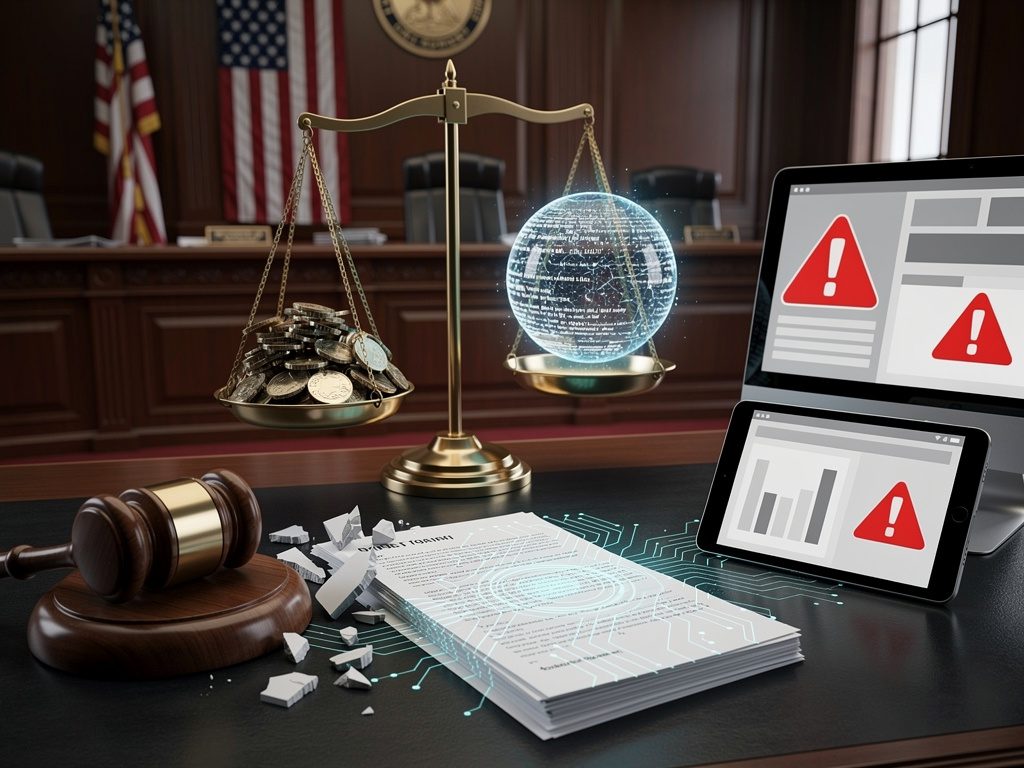
Lawyers once trusted their instincts and case reporters. Now they trust algorithms. And courts are paying the price. Fabricated case citations, conjured from thin air by generative AI tools, have flooded legal filings across U.S. courts in 2026. Judges, fed up with the deception, are hitting back harder than ever. Fines in the first quarter alone topped $145,000, according to a tally from Newcase.ai. That’s not sloppiness. That’s fraud on the court.
Take the Oregon vineyard dispute. Joanne Couvrette sued her brothers Mike and Mark Wisnovsky over control of Valley View winery in Jacksonville. Her San Diego lawyer, Stephen Brigandi, filed briefs riddled with 15 made-up cases and eight bogus citations. U.S. Magistrate Judge Mark D. Clarke called it a ‘notorious outlier in both degree and volume.’ He dismissed the suit with prejudice, slapped Brigandi with $15,500 in fines and $80,500 in opponents’ fees, and dinged Portland local counsel Tim Murphy for $14,000 more. Total: $110,000. Clarke didn’t mince words: ‘Rather than a correction, Mr. Brigandi attempted a cover-up. He failed at both.’ Brigandi claimed a client drafted the briefs; Murphy said he just lent his name. Neither verified a thing. The Oregonian broke the story on April 15.
This isn’t isolated. A database by researcher Damien Charlotin tracks 1,317 cases worldwide, with hundreds in the U.S. alone. April 2026 saw a flurry: On April 14, a Southern District of Indiana judge warned counsel in Cynthia White v. Walmart for fabricated exhibits. April 10 brought an order to show cause in Florida’s Sixth Circuit over Bruno Roberto Rodriguez v. Kathryn Louise Rodriguez. Nine days earlier, in N.D. Illinois, Ifeoma Delliane Chinedu Obi v. Cook County drew a $4,999 sanction and struck briefs. Westlaw’s CoCounsel pops up repeatedly—think United States v. Farris in the Sixth Circuit, where counsel got disqualified, lost pay, and faced bar referral for fake quotes and doctrine. Charlotin’s database logs it all.
Even high-profile names stumble. Roger Roots, attorney for ‘Tiger King’ Joe Maldonado, filed a complaint against Black Pine Animal Sanctuary alleging Endangered Species Act violations. It brimmed with imaginary citations. U.S. District Judge John J. McConnell Jr. fined Roots $1,500 and referred him to Rhode Island disciplinary authorities. Roots blamed a paralegal and medical issues but admitted lapses. The suit? Dismissed for lack of standing. Reason.com detailed the mess on April 12.
Appellate courts show no mercy. The Fifth Circuit nailed Heather Hersh of FCRA Attorneys with a $2,500 sanction for 21 fabrications in a brief drafted via vLex and Thomson Reuters’ CoCounsel. Chief Judge Jennifer Walker Elrod wrote that the problem ‘shows no sign of abating.’ In Ohio’s Southern District, Senior Judge Walter H. Rice hit two lawyers with $7,500 and contempt for Rule 11 breaches he called his most egregious ever. Cincinnati’s Sixth Circuit piled $30,000 on another pair for two dozen fakes, dismissing their case as ‘almost entirely frivolous.’ ABA Journal reported the uptick on April 2.
Why the surge? AI promises speed. Lawyers crave it. But tools like CoCounsel and ChatGPT spit out confident lies—hallucinations, in tech parlance. A brief’s filename tipped off the Sixth Circuit in a criminal appeal: ‘CoCounsel Skill Results.’ The lawyer admitted directing staff to upload docs for a draft, then filing without checks. Result: no Criminal Justice Act pay, disqualification, bar referral. Courts see real cases twisted into frivolity.
Sanctions escalate for repeat play. Am Law 100 firm Gordon Rees drew fire twice—first in a 2025 bankruptcy, then in Huynh v. Redis Labs. Judges demand accountability. One litigator told Law.com on April 2: ‘They’ll keep ramping up until this gets resolved.’ Warnings give way to fines, disqualifications, referrals. Florida suspended Thomas Grant Neusom for two years—not just for AI fakes, but repeated defiance. Pennsylvania courts flagged 13 cases in 2025; now it’s routine.
Firms adapt unevenly. BigLaw hires AI-savvy associates up 106%, per reports. Solos stick to pads and Westlaw classics, wary of $900/month tools that hallucinate 17-34% of the time, Stanford tests show. Custom builds from base models like Claude offer cheaper paths, but verification remains king. Human oversight. Always.
Judges grapple too. The Third Circuit reprimanded but spared cash last month. Fourth Circuit admonished in In re: Nwaubani. Georgia’s Supreme Court caught hallucinations in a state attorney’s filing and a lower court order. No one’s immune.
The tab keeps rising. Q1’s $145K could double by year-end. Bar associations charge ahead—California’s State Bar hit two attorneys for unchecked AI filings. Clients suffer delays, dismissals. Trust erodes. AI won’t vanish from briefs. But file at your peril without eyes on every cite. Courts demand it. Lawyers ignore at their cost.


 WebProNews is an iEntry Publication