
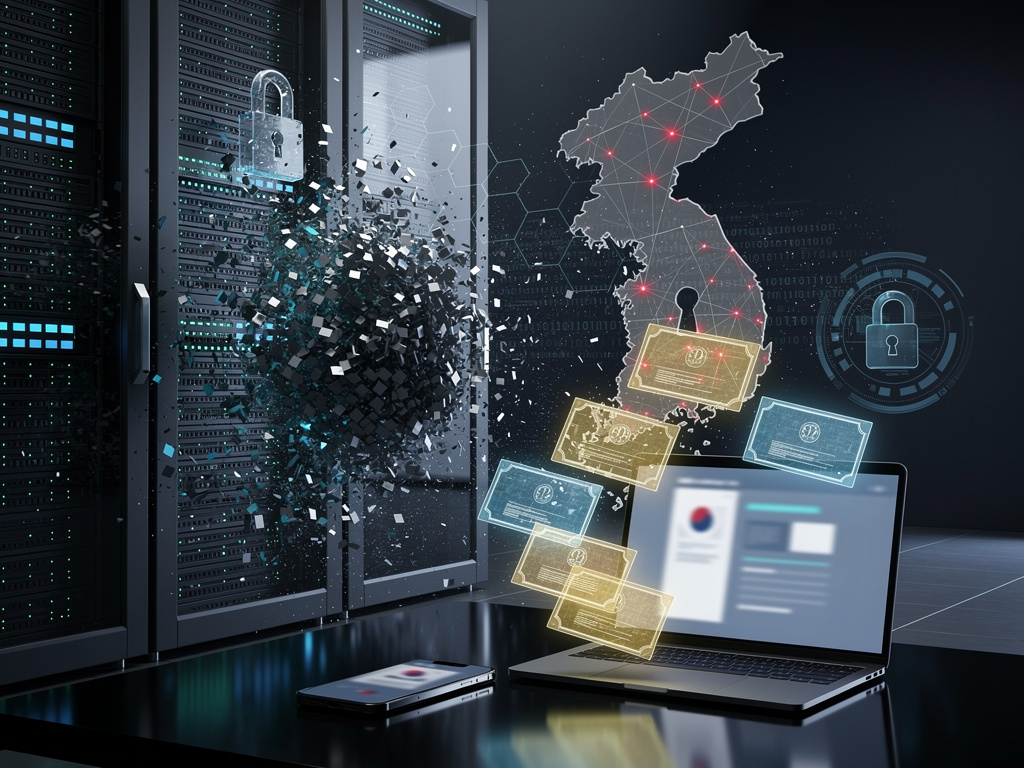
Coupang’s Billion-Dollar Reckoning: Unpacking the Fallout from South Korea’s Largest Data Breach
In the fast-paced world of e-commerce, where customer trust is the ultimate currency, South Korean giant Coupang has found itself at the center of a storm. The company, often dubbed the “Amazon of South Korea,” announced a staggering compensation package worth approximately $1.18 billion to address a massive data leak that compromised the personal information of 33.7 million users. This move, revealed on December 29, 2025, comes amid intense scrutiny from users, lawmakers, and regulators, marking one of the most significant corporate responses to a data breach in the region’s history.
The breach itself stemmed from an internal threat: a former employee, reportedly of Chinese nationality, who accessed and leaked sensitive data before fleeing the country. According to reports, the incident exposed names, addresses, phone numbers, and other personal details, sparking widespread outrage. Coupang’s founder, Kim Bom (also known as Bom Kim), issued a public apology, emphasizing the company’s cooperation with authorities and the successful deletion of the leaked data by the suspect.
Details of the compensation plan include vouchers totaling 50,000 won (about $35) per affected customer, distributed across various Coupang services: 5,000 won for general products, 5,000 won for food delivery, 20,000 won for travel, and 20,000 won for luxury beauty items via the R.LUX platform. This totals 1.69 trillion won, or roughly $1.18 billion, aimed at restoring faith in the platform that powers a significant portion of South Korea’s online shopping.
The Breach That Shook an E-Commerce Empire
Coupang’s rapid ascent in the e-commerce sector has been nothing short of meteoric. Founded in 2010 by Kim, a Harvard Business School dropout, the company went public on the New York Stock Exchange in 2021, raising $4.6 billion in what was then the largest U.S. IPO by a foreign company that year. Backed by heavyweights like SoftBank, which holds a substantial stake, Coupang has built an empire on lightning-fast delivery and a subscription model called Wow, boasting millions of loyal users.
But this breach exposes vulnerabilities in even the most robust systems. The incident was first disclosed in late November 2025, with Coupang confirming that the data had been accessed unlawfully. Reuters reported that the leak triggered immediate backlash, with lawmakers demanding accountability and users expressing fears over identity theft and privacy invasions.
Industry insiders note that while data breaches are not uncommon—think Equifax in 2017 or Yahoo’s multiple incidents—the scale here is unprecedented for South Korea. The country’s Personal Information Protection Commission (PIPC) has launched an investigation, potentially leading to fines or stricter regulations. Coupang claims all leaked data has been deleted, but skepticism lingers, as evidenced by public sentiment on social platforms.
Compensation as Strategy: Vouchers Over Cash
Critics argue that the voucher-based compensation is more of a marketing ploy than genuine restitution. Rather than direct cash payouts, which could empower users to spend elsewhere, the vouchers tie customers back to Coupang’s ecosystem. This approach mirrors strategies seen in other tech compensations, like Uber’s credits after breaches, but on a much larger scale.
Bloomberg highlighted that the plan covers all 33.7 million affected accounts, making it South Korea’s biggest-ever data breach response. However, lawmakers have labeled it insufficient, pointing out that vouchers essentially funnel money back into the company, potentially boosting future revenues disguised as aid.
For industry observers, this raises questions about corporate accountability in data privacy. In the U.S., class-action lawsuits often result in cash settlements, but South Korea’s legal framework leans toward regulatory oversight. Coupang’s decision might mitigate immediate financial outflow while encouraging continued engagement, a tactic that could set precedents for other Asian tech firms facing similar crises.
Political and Regulatory Ripples
The fallout has extended into South Korea’s political arena, with opposition parties criticizing the government’s handling of foreign investments and data security. Some speculate geopolitical undertones, given the suspect’s background, though no official links to state actors have been confirmed. Posts on X (formerly Twitter) reflect a mix of user frustration and conspiracy theories, with some questioning if external forces aimed to undermine Coupang’s dominance.
Kim’s apology, detailed in a statement on the company’s website, pledged swift action and full cooperation. Reuters covered this as Kim’s first public acknowledgment, underscoring the pressure on executives to personally address such crises in a culture where corporate leaders are highly visible.
Regulators are now pushing for enhanced cybersecurity measures across the sector. The PIPC could impose penalties up to 4% of global revenue under South Korea’s data protection laws, similar to Europe’s GDPR. For Coupang, which reported $24.4 billion in revenue last year, this could mean substantial fines, adding to the compensation costs.
Market Impact and Investor Sentiment
Wall Street has been watching closely. Coupang’s stock, trading under CPNG, dipped following the breach announcement but showed signs of recovery after the compensation reveal. Analysts from firms like Goldman Sachs have noted that while the short-term hit is evident, the long-term brand loyalty could strengthen if handled well.
SoftBank’s involvement adds another layer. The Japanese conglomerate, which invested billions in Coupang, stands to benefit from any rebound. Historical posts on X recall SoftBank’s windfall from Coupang’s 2021 IPO, where a $3 billion stake ballooned to $36 billion post-listing, highlighting the high-stakes nature of these investments.
Competitors like Naver and Kakao are likely monitoring the situation, potentially capitalizing on any user exodus. Yet, Coupang’s logistics prowess—its “Rocket Delivery” promises same-day service—remains a key differentiator, insulating it somewhat from immediate threats.
User Reactions and Broader Implications
On social media, reactions vary. Some users on X praise the compensation as a generous gesture, with one post noting the vouchers’ value for frequent shoppers. Others decry it as inadequate, demanding cash or stronger privacy guarantees. This sentiment echoes broader concerns in South Korea, where data privacy is increasingly a hot-button issue amid rising cyber threats.
The breach also spotlights internal security risks. Industry experts emphasize that employee vetting and access controls are critical, especially in multinational firms. Coupang, with operations in multiple countries, must now bolster its protocols to prevent repeats.
For global e-commerce players, this serves as a cautionary tale. Companies like Amazon and Alibaba have faced similar issues, but Coupang’s response—combining apologies, compensation, and transparency—could become a model, albeit a controversial one.
Innovation Amid Crisis: Coupang’s Path Forward
Looking ahead, Coupang is investing heavily in technology to rebuild trust. Reports indicate enhanced encryption and AI-driven threat detection are in the works. The company’s expansion into Taiwan and Singapore adds pressure to maintain a spotless record.
CNBC detailed how the vouchers are structured to cover diverse services, potentially driving uptake in underutilized areas like travel and luxury goods. This strategic pivot could turn a liability into an opportunity, encouraging users to explore more of the platform.
Insiders suggest this incident might accelerate regulatory reforms in South Korea, pushing for mandatory breach notifications and compensation standards. As digital economies grow, such measures could harmonize with international norms, influencing how companies worldwide handle data mishaps.
Geopolitical Shadows and Global Repercussions
Whispers of international intrigue persist, with some X posts speculating on China’s involvement, though unsubstantiated. South Korea’s tense relations with neighbors amplify these narratives, but official statements from Coupang and authorities focus on the individual perpetrator.
Globally, this breach underscores the interconnectedness of tech supply chains. Coupang’s reliance on diverse talent pools highlights risks in hiring practices, a lesson for firms everywhere.
As the dust settles, Coupang’s handling of this crisis will be studied in boardrooms and classrooms alike, shaping the future of data governance in e-commerce.
Lessons for the Industry: Beyond Compensation
Ultimately, the true test for Coupang lies in preventing future breaches. Investments in cybersecurity talent and infrastructure are paramount, as noted by experts. The company’s Wow membership, recently facing price hikes, must now justify its value through unassailable security.
Comparisons to other breaches reveal patterns: rapid response and user-centric remedies often mitigate damage. Yet, the voucher model invites debate on what constitutes fair compensation.
For industry insiders, this episode reinforces that in the digital age, data is not just an asset but a liability demanding vigilant stewardship.
Echoes of Trust: Rebuilding in a Digital World
Coupang’s journey from startup to e-commerce behemoth has been marked by innovation and ambition. This breach, while a setback, offers a chance to lead in privacy practices.
Users, empowered by social media, will continue to hold companies accountable. As one X post put it, the compensation is a start, but true restoration requires systemic change.
In the end, Coupang’s billion-dollar reckoning may redefine how tech giants respond to trust erosions, setting new benchmarks for transparency and recovery in an era of perpetual connectivity.


 WebProNews is an iEntry Publication