
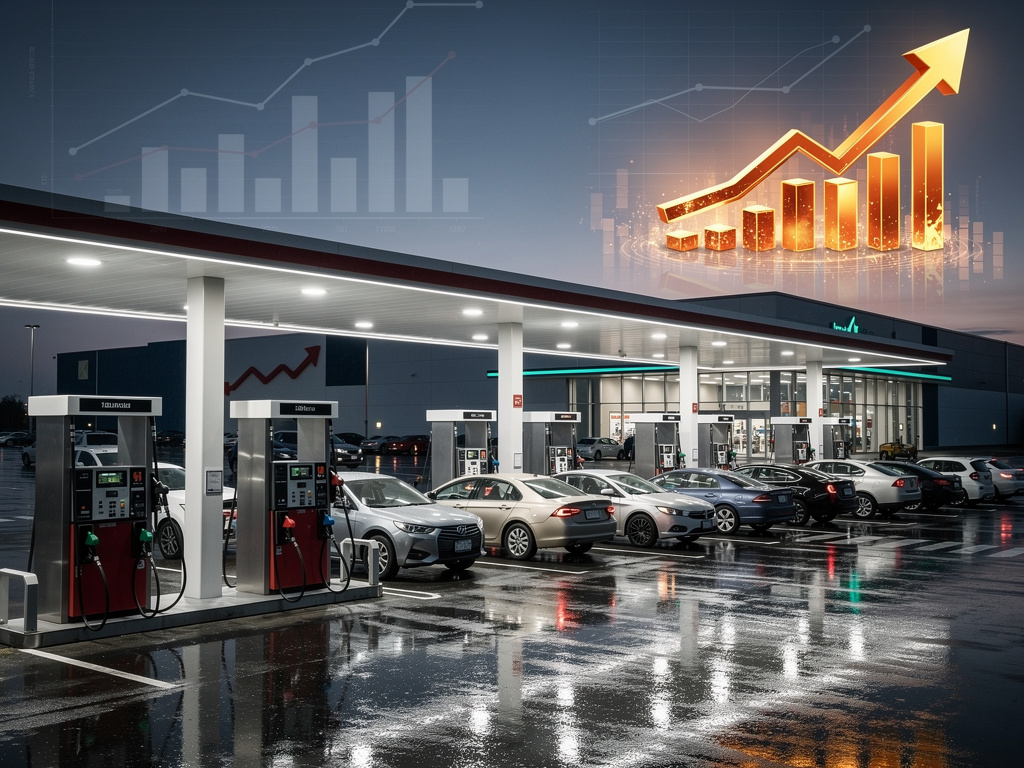
Costco Wholesale reported another quarter of solid growth. Yet the numbers tell a more nuanced story about American consumers. Record gasoline volumes at the retailer’s pumps point to heightened price sensitivity. Shoppers are filling tanks in unusually high numbers. They seek savings of 10 to 30 cents a gallon.
The company’s fiscal third-quarter results, released late on May 28, showed net sales rising 11.6 percent to $69.15 billion. Net income climbed to $2.19 billion, or $4.93 a share. Comparable sales grew 9.8 percent overall and 6.6 percent when adjusted for gasoline prices and currency swings. Digital sales jumped more than 20 percent. Costco investor relations release.
But the standout detail came from the fuel business. CEO Ron Vachris described “record-breaking” gasoline sales. Pumps needed extra deliveries to stay stocked. “As events in the Middle East have had a significant impact on product supply and gas prices, our focus, as always, is to be there for our members by staying in stock and offering the best value,” he said during the earnings call.
Vachris added that high consumer price sensitivity drove those volumes. Many members used Costco gas stations for the first time in the quarter. The executive expects those new visitors will shop inside the warehouse too. Members who buy gas tend to load up on everything from rotisserie chickens to household goods.
This isn’t the first time Costco has seen unusual demand at the pump. Earlier tariff worries in 2025 sparked some stockpiling of groceries and essentials. The New York Times reported shoppers at Costco stores in places like Marina del Rey, Calif., filling carts with water, soap and mouthwash. One customer admitted the atmosphere created an urge to buy more. “The panic is enough to make me want to buy,” she told reporters. Yet widespread hoarding never fully materialized. Many held back, betting prices or policies might shift.
Today’s surge feels different. It centers on fuel. Geopolitical strains from conflict involving Iran have pushed pump prices higher across the country. Inflation-weary households notice every cent. Costco’s model keeps its fuel margins thin on purpose. Low prices pull traffic. That traffic turns into broader sales inside the stores.
Paid memberships grew 4.1 percent. Renewal rates held above 89 percent. Traffic to the company’s website and app rose 37 percent. Categories such as pharmacy, home furnishings, gold and jewelry posted double-digit gains. The numbers suggest resilience. They also show caution. Shoppers chase value wherever they find it.
Analysts had expected earnings around $4.93 a share. Revenue came in slightly ahead of forecasts. The stock had already climbed to records earlier in May. Strong results reinforced investor confidence even as macro uncertainty lingers. Bloomberg noted the retailer continues to gain ground among cautious U.S. consumers.
Costco has navigated similar moments before. During the early pandemic, panic buying of toilet paper, paper towels and cleaning supplies emptied shelves. Comparable sales jumped more than 10 percent in some periods. Executives limited purchases per member to keep supply available. The company learned to communicate clearly and restock aggressively.
This time the behavior centers on a single category. Gas. Yet the underlying driver looks familiar. Uncertainty. Whether from viruses, trade policy or foreign conflicts, external shocks push households toward proven bargains. Costco positions itself as that bargain. Its warehouses function almost like community anchors during turbulent times.
Still, thin fuel margins mean the gasoline business itself adds little to profits. The real payoff comes later. In the aisles. In the food court. In the added trips that turn one stop into several hundred dollars spent. Vachris made that connection explicit. First-time gas users become first-time or more frequent warehouse shoppers.
Economists have watched these patterns for years. When prices rise faster than wages, bulk buying at clubs like Costco offers psychological comfort. A full tank feels like preparation. A loaded cart signals control. But it can also mask deeper pressures. Savings at the pump matter most when every other expense squeezes budgets.
Recent coverage captured the shift. Yahoo Finance highlighted the phenomenon, noting Americans are once again directing urgency toward fuel rather than household staples. The Fast Company version of the story, published May 29, framed it plainly. “Costco says Americans are panic-buying one thing again—and it’s not toilet paper.” The article detailed how price sensitivity translated into record pump traffic and the company’s commitment to value.
Management avoided dramatic language in its prepared remarks. No talk of panic inside corporate offices. Instead the tone stayed measured. Focus on execution. On staying in stock. On delivering the lowest possible prices without sacrificing quality or availability.
That discipline has served Costco well. Membership fees provide a steady revenue stream that grows with each renewal and new sign-up. The model insulates the company somewhat from quarterly sales volatility. Even when consumers pull back on discretionary items, they still need gas, groceries and toilet paper. They still renew those cards.
Looking ahead, several questions remain. How long will Middle East tensions keep fuel prices elevated? Will new members acquired through gas savings stick around once prices normalize? Can the company sustain double-digit digital growth while preserving its in-warehouse experience that members love?
Executives sounded optimistic. They pointed to market share gains and operational improvements. They acknowledged ongoing economic uncertainty and geopolitical risks but expressed confidence in their formula. Price. Value. Volume.
For industry watchers the lesson is clear. American consumers remain acutely aware of costs. They respond to savings opportunities with speed. Costco has built an empire on that truth. Its latest results show the strategy still works. Even when the trigger is a tanker route half a world away. Even when the item filling carts is invisible inside the tank.
The warehouses keep expanding. The lines at the pumps keep forming. And the data keeps showing that when prices bite, Costco benefits. Not from fear. But from smart positioning. From understanding that a few cents a gallon can drive thousands of extra transactions. From turning sensitivity into sales.


 WebProNews is an iEntry Publication