
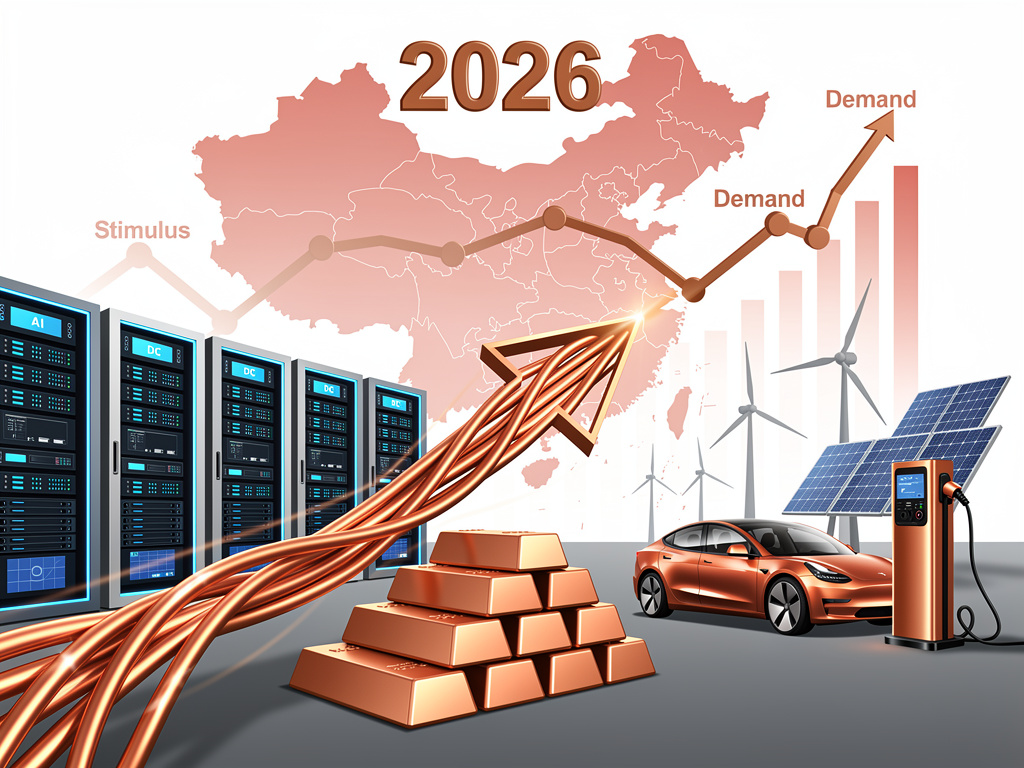
The global copper market stands at a critical inflection point as multiple powerful forces converge to push prices toward unprecedented territory. Industry analysts and commodity traders are watching closely as artificial intelligence infrastructure demands, Chinese economic stimulus measures, and supply constraints create what some are calling the most compelling bull case for copper in decades. The red metal, long considered a barometer of global economic health, is now emerging as the linchpin commodity in the transition to both artificial intelligence and clean energy technologies.
According to Business Insider, copper prices are positioned to reach record highs by 2026, driven primarily by surging demand from AI data centers and potential Chinese economic stimulus. The confluence of these factors has created a supply-demand imbalance that market participants believe could persist for years, fundamentally altering the pricing dynamics of industrial metals markets.
The artificial intelligence revolution has emerged as an unexpected catalyst for copper demand, with data centers requiring exponentially more of the conductive metal than traditional computing infrastructure. Each AI-focused data center consumes approximately three to five times more copper than conventional facilities, according to industry estimates. Major technology companies including Microsoft, Amazon, and Google are racing to build out AI capabilities, translating into unprecedented demand for copper wiring, cooling systems, and power distribution networks. This structural shift in technology infrastructure represents a demand driver that few commodity analysts had fully anticipated even two years ago.
The AI Data Center Copper Multiplier Effect
The scale of copper requirements for AI infrastructure extends far beyond the data centers themselves. The electrical grid upgrades necessary to support these power-intensive facilities require substantial copper investments in transmission lines, transformers, and distribution equipment. A single large-scale AI data center can require more than 1,000 tons of copper for its internal systems alone, not including the grid infrastructure needed to deliver reliable power. As hyperscalers plan to invest more than $200 billion annually in AI infrastructure through 2026, the copper intensity of this spending represents a significant new source of demand that traditional forecasting models failed to capture.
The geographic concentration of AI data center development amplifies the supply chain challenges. Northern Virginia, known as “Data Center Alley,” along with emerging hubs in Texas, Arizona, and the Pacific Northwest, are experiencing unprecedented electrical infrastructure buildouts. Utilities in these regions report multi-year backlogs for grid connection projects, with copper availability becoming a critical constraint on development timelines. This bottleneck has prompted some technology companies to secure direct relationships with copper suppliers, bypassing traditional distribution channels and further tightening available supply for other industrial users.
Beyond data centers, the broader electrification trend driven by artificial intelligence extends to autonomous vehicles, smart manufacturing, and edge computing deployments. Each of these applications requires significantly more copper per unit than their predecessors. Electric vehicles, for instance, contain approximately 183 pounds of copper compared to just 48 pounds in conventional internal combustion vehicles. As AI enables more sophisticated autonomous driving capabilities, the copper content per vehicle continues to increase with additional sensors, computing power, and electrical systems.
China’s Economic Recalibration and Commodity Implications
China’s potential economic stimulus measures represent the second major pillar supporting copper’s bullish outlook. The world’s largest copper consumer has signaled readiness to deploy significant fiscal and monetary stimulus to stabilize its property sector and boost domestic consumption. Historical patterns demonstrate that Chinese stimulus programs consistently translate into surging commodity demand, particularly for industrial metals like copper used in construction, manufacturing, and infrastructure development.
Recent policy signals from Beijing suggest a shift toward infrastructure-intensive growth strategies, including renewable energy installations, urban rail transit expansion, and electrical grid modernization. Each of these priorities carries high copper intensity. China’s commitment to carbon neutrality by 2060 requires massive investments in wind and solar power generation, which use five times more copper per megawatt than conventional fossil fuel plants. The State Grid Corporation of China has announced plans to invest over $500 billion in grid infrastructure through 2025, creating a substantial baseline demand for copper that exists independent of cyclical economic conditions.
The Chinese property sector, while troubled, may paradoxically support copper demand through its restructuring. Government efforts to complete unfinished housing projects and stabilize the sector require significant copper for electrical systems, plumbing, and HVAC installations. Even as new construction starts remain subdued, the completion of existing projects represents a near-term demand source that has been delayed rather than destroyed. Additionally, China’s focus on urban renewal and renovation of aging housing stock creates ongoing copper demand that differs from the boom-bust cycles of new development.
Supply Side Constraints Tighten the Vice
While demand drivers capture headlines, supply-side fundamentals present equally compelling reasons for higher copper prices. Global copper mine production faces significant headwinds from declining ore grades, permitting delays, and underinvestment in new projects. The average grade of copper ore has fallen by approximately 30% over the past decade, meaning miners must process substantially more material to extract the same amount of metal. This grade decline increases energy costs, water consumption, and environmental impacts, all of which translate into higher production costs and reduced output from existing operations.
New copper mine development faces unprecedented challenges in obtaining permits and social licenses to operate. Projects in Chile and Peru, which together account for nearly 40% of global copper production, face increasing opposition from local communities and stricter environmental regulations. The average timeline from discovery to production for a major copper deposit now exceeds 15 years, creating a significant lag between price signals and supply responses. Several major copper projects announced in the past five years have been delayed or canceled due to permitting issues, removing hundreds of thousands of tons of potential annual supply from future production forecasts.
The copper recycling sector, while growing, cannot fill the supply gap created by surging demand and constrained primary production. Recycled copper currently accounts for approximately 30% of global supply, but the growth rate of recycling capacity lags far behind the acceleration in demand from AI and electrification. The long life cycle of copper-intensive products means that much of the copper being installed in today’s infrastructure will not become available for recycling for decades. This creates a structural deficit that can only be addressed through higher prices incentivizing both increased primary production and improved recycling economics.
Market Dynamics and Price Discovery Mechanisms
The financialization of copper markets adds another layer of complexity to price formation. Exchange-traded funds focused on battery metals and electrification themes have accumulated significant copper positions, creating a new class of long-term holders less sensitive to short-term price fluctuations. This shift in market structure reduces the available floating supply and may contribute to increased price volatility as industrial consumers compete for tighter physical supplies. The London Metal Exchange reported that copper inventories have fallen to critically low levels, representing less than one week of global consumption, a situation that historically precedes sharp price increases.
Derivative markets reflect growing conviction in higher future copper prices, with the forward curve in backwardation—a condition where near-term prices exceed future prices—signaling tight current supplies. Options markets show increased interest in call options at strike prices 20-30% above current levels, indicating that sophisticated traders are positioning for a potential price breakout. The implied volatility in copper options has increased substantially, reflecting uncertainty about the magnitude and timing of the next major price move but general agreement that the direction is higher.
The correlation between copper prices and broader equity markets has weakened in recent months, suggesting that copper is increasingly trading on its own fundamental drivers rather than as a proxy for general economic sentiment. This decoupling indicates that the market is pricing in structural changes in supply and demand rather than cyclical economic fluctuations. Historically, such periods of decorrelation have preceded major secular trends in commodity prices, as occurred during the Chinese industrialization boom of the 2000s.
Strategic Implications for Industrial Consumers
Industrial consumers of copper face difficult strategic decisions as the supply-demand balance tightens. Many manufacturers are exploring copper substitution strategies, investigating aluminum and other materials for applications where performance requirements allow flexibility. However, copper’s superior electrical and thermal conductivity make it irreplaceable for many critical applications, particularly in high-performance computing and power transmission. Companies that depend heavily on copper are increasingly looking to secure long-term supply agreements directly with miners, accepting price premiums for supply certainty.
The automotive sector faces particularly acute challenges as it transitions to electric vehicles while simultaneously managing copper price risk. Major automakers have begun investing directly in copper mining projects and establishing strategic partnerships with mining companies to secure future supplies. This vertical integration strategy, once uncommon in the automotive industry, reflects the strategic importance of copper to the electric vehicle transition and the recognition that copper availability could become a binding constraint on EV production targets.
Technology companies building AI infrastructure are similarly reassessing their supply chain strategies. Some are exploring designs that optimize copper usage, while others are accepting higher material costs as necessary to maintain competitive advantages in AI capabilities. The strategic value of AI infrastructure appears to outweigh copper cost considerations for many hyperscalers, who view reliable access to computing capacity as more critical than managing commodity input costs. This relative price insensitivity among major buyers could support higher copper prices even if economic growth moderates.
Geopolitical Dimensions of Copper Security
The concentration of copper production in a handful of countries creates geopolitical risks that are increasingly factoring into market pricing. Chile, Peru, and the Democratic Republic of Congo account for more than half of global copper mine production, and political instability in any of these regions could significantly disrupt supplies. Recent political developments in Peru, including protests that have temporarily shut down major mining operations, demonstrate the vulnerability of global supply chains to localized disruptions. These geopolitical risks carry premium valuations in forward markets as consumers seek to hedge against potential supply interruptions.
China’s dominant position in copper refining and processing creates additional strategic considerations for Western economies. Approximately 40% of global copper refining capacity is located in China, giving the country significant influence over the availability of refined copper products even when it does not control mine production. This concentration has prompted discussions in the United States and Europe about developing domestic refining capacity to reduce dependence on Chinese processing, though such investments require years to implement and face significant economic and environmental hurdles.
The intersection of copper supply security with clean energy and technology ambitions has elevated the metal to strategic commodity status in major economies. Government policies increasingly recognize copper as critical to national security and economic competitiveness, leading to support for domestic mining and processing investments. These policy interventions may alter traditional market dynamics by introducing non-commercial buyers and subsidized production capacity, though the scale of such interventions remains modest relative to overall market size.
Investment Implications and Portfolio Positioning
For investors, copper’s evolving supply-demand dynamics present multiple entry points across the value chain. Direct exposure through copper futures or physically-backed ETFs offers pure-play access to price movements but requires managing contango or backwardation in futures curves. Equity investments in copper mining companies provide leveraged exposure to price increases but introduce company-specific risks related to operations, management, and jurisdiction. The dispersion of returns among copper miners can be substantial, with well-managed operations in favorable jurisdictions significantly outperforming industry averages.
The valuation gap between copper prices and copper mining equities has widened in recent months, suggesting that equity markets remain skeptical about the sustainability of higher copper prices. This skepticism may reflect memories of previous commodity booms that ended in busts, or concerns about the ability of miners to translate higher prices into profits given cost inflation and regulatory pressures. However, if the structural demand thesis proves correct, this valuation gap represents a potential opportunity for investors willing to take a multi-year view on the sector. Mining companies with low-cost operations, long reserve lives, and projects in stable jurisdictions appear best positioned to benefit from a sustained period of elevated copper prices.
The options market offers sophisticated investors tools to express nuanced views on copper’s trajectory. Long-dated call options provide asymmetric exposure to potential price spikes while limiting downside risk to the premium paid. Spread strategies can reduce the cost of establishing bullish positions while maintaining exposure to significant upside moves. As volatility in copper markets increases, options strategies may become more attractive relative to outright futures or equity positions, particularly for investors seeking to manage risk while maintaining conviction in the long-term bullish thesis.


 WebProNews is an iEntry Publication