
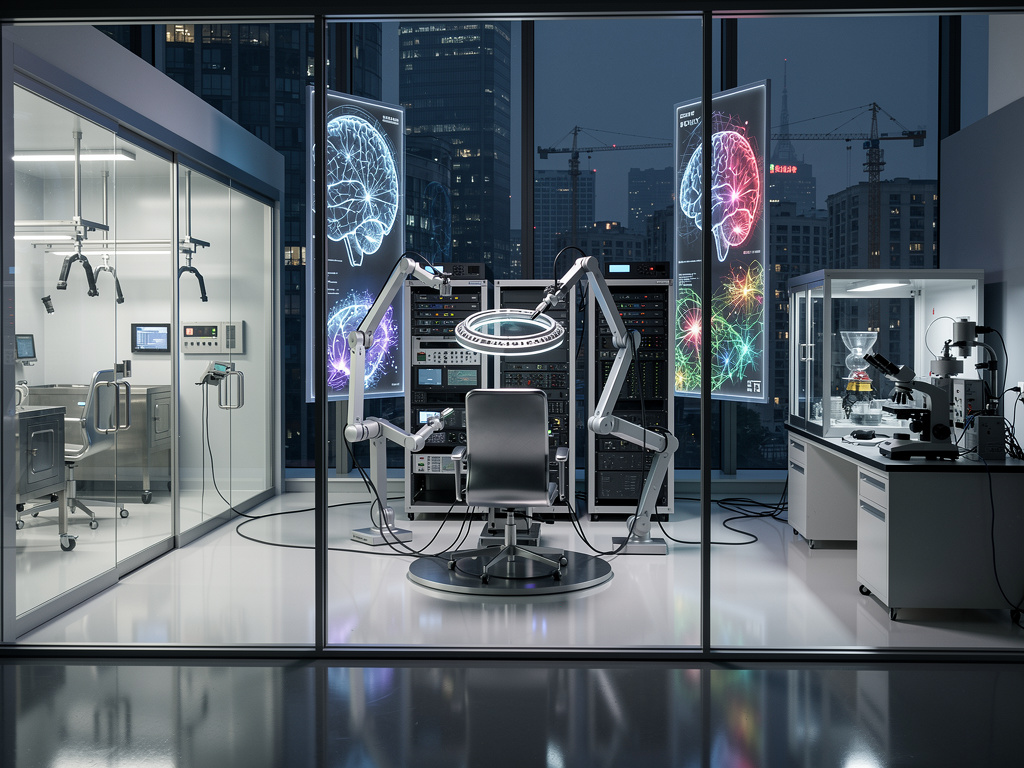
Charles Lieber arrived in Shenzhen on April 28, 2025. Just a dream. A couple of bags of clothes. That’s how the 67-year-old former Harvard chemistry chair described his fresh start at a local government conference last December. Three years after a U.S. federal conviction for lying about Chinese payments, he’s now director of i-BRAIN, China’s state-funded Institute for Brain Research, Advanced Interfaces and Neurotechnologies. The lab, nestled in the Shenzhen Medical Academy of Research and Translation, or SMART, gives him tools Harvard never did: dedicated nanofab equipment, primate facilities, billions in government cash.
Back in Boston, January 2020. FBI agents arrested Lieber at Harvard. Prosecutors said he hid ties to China’s Thousand Talents Plan, a talent-recruit drive, and payments from Wuhan University of Technology—$50,000 monthly salary, $150,000 living expenses, $1.5 million for a lab there. He didn’t report a Chinese bank account or the income on U.S. taxes. A jury convicted him in December 2021 on all counts: false statements, tax offenses. Sentence in 2023: two days prison (time served), six months house arrest, $50,000 fine, $33,600 IRS restitution. U.S. Department of Justice records detail how his group pulled in over $15 million from U.S. agencies like the Pentagon and NIH from 2008-2019, all while he built that shadow lab abroad.
Supervised release didn’t stop China trips. Court filings show U.S. District Judge Denise Casper approved at least three in 2024, one for ’employment networking.’ By May 1, 2025, i-BRAIN named him investigator and founding director—roles listed on SMART’s site. He’s also chair professor at Tsinghua Shenzhen International Graduate School. Jung Min Lee, his former Harvard co-author on brain-tissue electronics, joined as research associate professor. i-BRAIN posts seek recruits for rhesus monkey electrophysiology, modeling human brain-computer interfaces. No such primate work at Harvard; the university shuttered its New England Primate Research Center in 2015 over welfare and funding issues.
Shenzhen’s Guangming Science City. Manicured parks. Waterways. A national hub. SMART’s 2026 budget: $153 million, up 18%. i-BRAIN taps a deep-ultraviolet lithography system from ASML—two generations behind U.S.-restricted models, but dedicated, costing millions. Nearby, Brain Science Infrastructure Shenzhen boasts 2,000 primate cages. All state-funded. This dwarfs Harvard’s shared Center for Nanoscale Systems, serving 1,600 users yearly. Lieber’s work targets electronics woven into brains—mesh for signals, flexible probes. Promise for ALS patients, paralysis. Reuters reported China’s first BCI device market approval last year, and a brain implant restoring speech.
China eyes BCIs hard. March 2026 five-year plan lists it as growth priority. Zheng Shanjie, National Development and Reform Commission head, called it a new high-tech sector by 2036. People’s Liberation Army probes soldier enhancements: mental speed, awareness. U.S. DARPA funds similar for drones, cyber. Lieber’s Harvard grants topped $8 million from Defense since 2009. Analysts see irony. ‘China has weaponized against us our own openness,’ says Glenn Gerstell, ex-NSA general counsel. Lieber? ‘Exhibit A’ for weak U.S. tools. Post-conviction, he’s off to China.
John Donoghue, Brown University neuroscientist behind BrainGate, gets the draw. Primate studies essential for human translation. U.S. hurdles: regulations, funding, animal protests. ‘To have somebody give you all this support, access to technology, a concentrated center, a national initiative—those are very attractive.’ Emily de La Bruyère of Horizon Advisory flags policy gaps letting talent flow despite risks. The DOJ’s China Initiative, launched under Trump to fight espionage, scored Lieber as a rare win before Biden axed it in 2022 amid profiling backlash.
Lieber declined Reuters interview via assistant, citing commitments. SMART, i-BRAIN silent. A science park sign reads: ‘Innovate with the Party.’ His U.S. defense called him ‘young and stupid’ for Thousand Talents; at arrest, he told FBI he craved a Nobel. Thomson Reuters named him top chemist of 2001-2011 decade. Lymphoma in remission slowed him during case—80-hour lab weeks turned to home confinement, pumpkin patches, wrestling coaching. Now? Recruiting. Building. In Shenzhen.
But U.S. concerns linger. Lieber’s move spotlights export controls, tech transfer. His lab trained Chinese researchers; many co-authors had Chinese names. X buzz today echoes Reuters: posts from Reuters, Disclose.tv highlight the lab rebuild, national priority tag. Taipei Times recaps the primate angle. No fresh quotes from Lieber. Just the work ahead. Monkey brains first. Human next.


 WebProNews is an iEntry Publication