
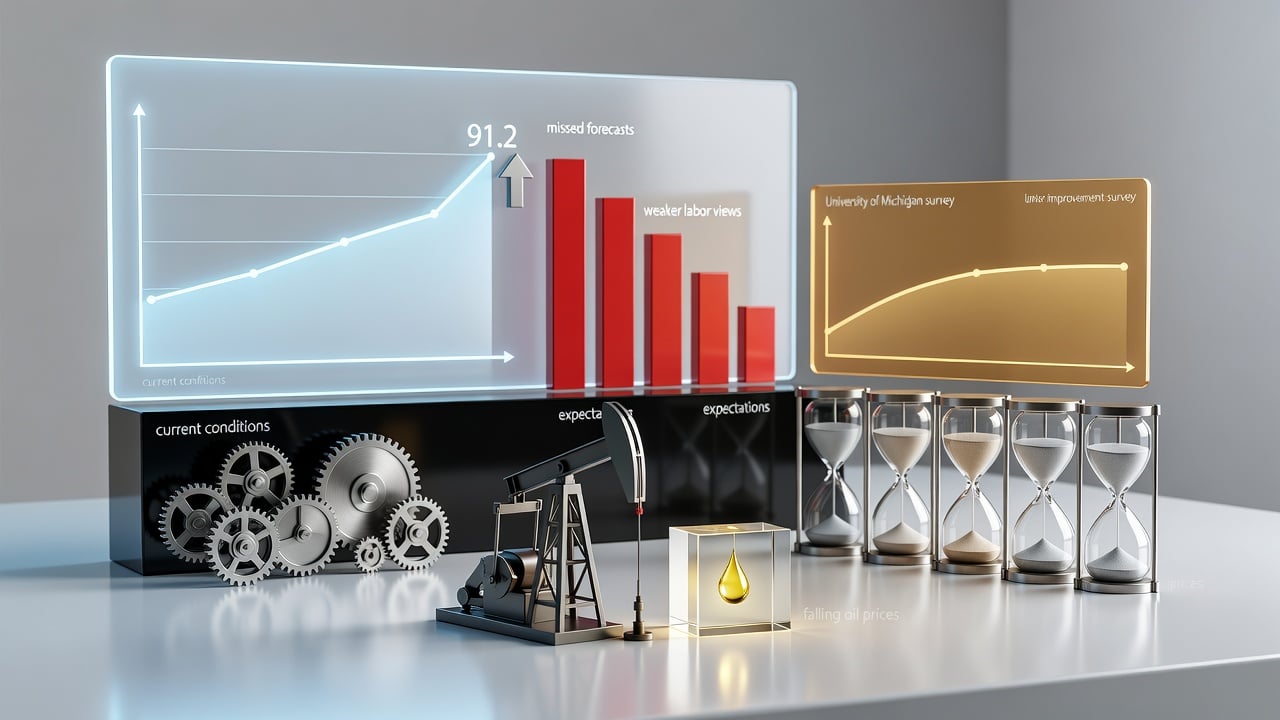
Consumer confidence posted a modest gain in June. The increase came as falling gasoline prices offered households a measure of relief from the inflationary pressures that had weighed heavily in prior months. Yet the details reveal a split picture. Current conditions assessments slipped while expectations edged forward.
The Conference Board’s Consumer Confidence Index rose to 91.2 in June. That figure marked a 0.6-point increase from a downwardly revised 90.6 in May. Economists had anticipated a stronger reading near 94. The miss highlights persistent caution among American consumers even as one source of pain eased.
Falling oil prices drove much of the improvement. “Consumer confidence inched up in June as falling oil prices in recent weeks provided some relief to consumer inflation fears,” said Dana M. Peterson, chief economist at The Conference Board. The comment, issued in the group’s official release on June 30, points to a direct link between energy costs and household sentiment.
Gasoline prices dropped below $4 a gallon in mid-June for the first time since the U.S.-Israel conflict with Iran began in February. That decline, reported by Reuters, coincided with the survey period running from June 1 to 23. The timing mattered. Relief at the pump translated into slightly brighter short-term outlooks.
But the Present Situation Index fell three points to 116.4. Consumers downgraded their view of current business and labor market conditions. The Expectations Index, by contrast, rose three points to 74.4. This divergence suggests Americans see better days ahead even if today feels tougher.
Labor market perceptions deteriorated noticeably. The share of consumers saying jobs are “hard to get” climbed to 22.5 percent. That level stands as the highest since January 2021. Reuters noted the figure underscores measurable softening. Peterson added that appraisals of current business conditions were slightly more positive than last month. However, perceptions of the labor market softened measurably. Consumers anticipate little change in the job market six months from now.
Two surveys paint a consistent yet incomplete portrait of recovery.
The University of Michigan’s consumer sentiment index also rebounded. It climbed to a final reading of 49.5 in June from 44.8 in May. That gain, first signaled in a preliminary report, reversed much of the plunge triggered by the Middle East conflict. Still, the level sits 13 percent below February’s reading before the Iran-related disruptions and nearly 20 percent lower than a year earlier. The New York Times reported the improvement arrived amid stubbornly high prices overall. One consumer told the paper gas prices had come down but remained very, very high.
Year-ahead inflation expectations eased modestly to 4.6 percent from 4.8 percent in May. Long-run expectations fell to 3.3 percent. These figures, drawn from the Michigan survey and analyzed by Trading Economics, show households still worry about the cost of living. The cost remains front and center in their minds.
Markets reacted with limited enthusiasm to the Conference Board data. Stocks had already priced in some relief from lower energy costs. Bond yields held steady. The modest confidence gain does not yet signal a broad resurgence in spending. Consumer outlays drive roughly two-thirds of U.S. economic activity. Any sustained weakness here could weigh on growth forecasts for the second half of the year.
Economists continue to watch the gap between current conditions and future expectations. The Conference Board data shows that gap narrowing slightly in June. Present conditions remain well above expectations, a pattern that has persisted for months. Such inversions often precede shifts in behavior. When expectations catch up, spending can accelerate. When they don’t, caution prevails.
Global context adds another layer. Ipsos reported an uptick in worldwide consumer confidence for the second straight month in June. Europe saw a significant rise. The improvement, covered in Ipsos research, suggests the U.S. trend fits a broader pattern of tentative stabilization after earlier shocks from energy markets.
Yet U.S. households face unique pressures. The labor market, while still relatively strong by historical standards, shows cracks in consumer eyes. Hiring has cooled in some sectors. Wage growth has failed to keep pace with cumulative price increases since 2021. These realities color how people respond to surveys even when headline unemployment remains low.
Peterson’s team at the Conference Board plans to monitor buying intentions in coming reports. Vacation plans, big-ticket purchases and stock market expectations all factor into the detailed survey. Early signals from June point to continued selectivity. Consumers may spend on necessities and experiences that feel affordable. They hesitate on larger commitments.
The extension of the U.S.-Iran ceasefire during the survey window helped calm some fears. Oil prices responded. So did sentiment measures. But the episode serves as a reminder. Geopolitical events can jolt household psychology quickly. Inflation expectations, once anchored, became unmoored after the latest conflict. Re-anchoring them will take time.
Analysts at major banks have adjusted their outlooks accordingly. Many now pencil in slower consumption growth for the third quarter unless labor conditions improve or energy prices fall further. The Federal Reserve watches these readings closely. Softer sentiment can influence policy decisions even if hard data on retail sales holds up.
For now the message is mixed. Confidence moved in the right direction in June. The labor market views pulled in the opposite one. Falling fuel costs bought some breathing room. Whether that room leads to renewed optimism or simply delays tougher choices remains the open question. Businesses, policymakers and investors will parse the next several months of data with care.
Additional reporting from recent coverage shows the rebound has legs but limited power. The Wall Street Journal noted the Michigan survey’s final June figure confirmed the early-month gains tied to gasoline moderation. No single release changes the narrative. The cumulative trend does. And that trend shows Americans adapting to a higher-cost environment while hoping for better times ahead.


 WebProNews is an iEntry Publication