
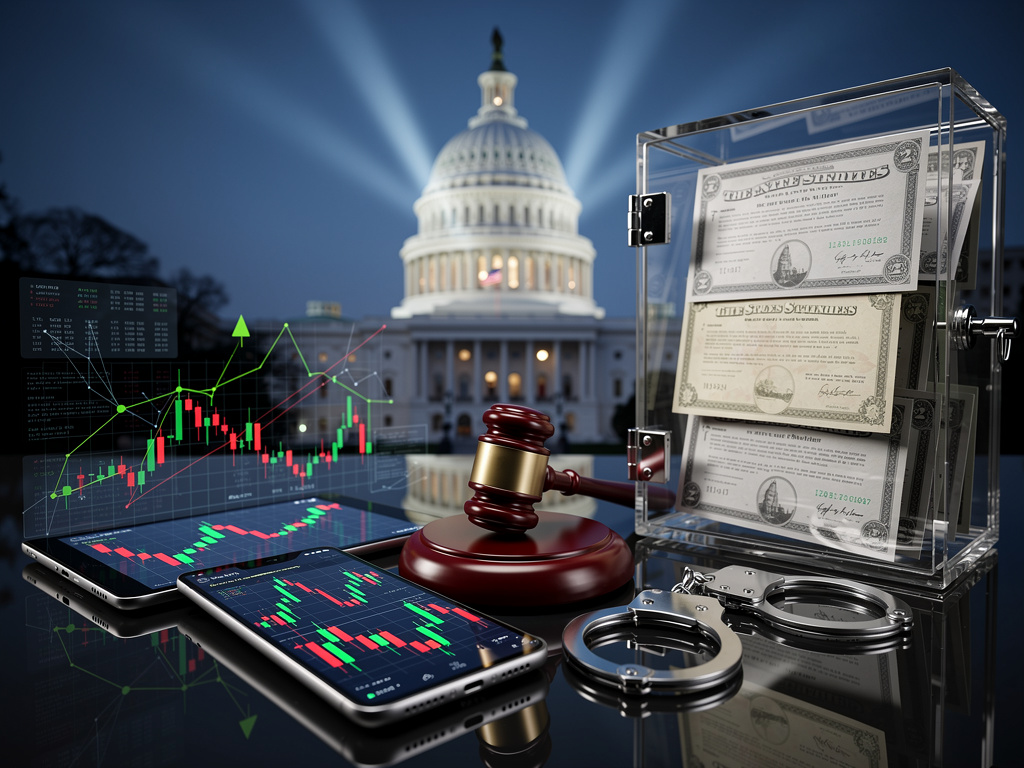
Capitol Hill’s Portfolio Purge: Will 2025 Finally End Lawmakers’ Stock Trading Era?
In the corridors of power, where policy decisions can sway markets and fortunes, a long-simmering debate is reaching a boiling point. For years, members of Congress have navigated a gray area, trading stocks while privy to nonpublic information that could influence those very investments. Now, as 2025 unfolds, bipartisan momentum is building toward a outright ban on such activities, driven by public outrage, ethical concerns, and a desire to restore trust in government. Recent developments suggest that a vote could come early in the new year, potentially reshaping how lawmakers manage their finances and interact with the financial world.
The push for reform isn’t new, but it’s gaining unprecedented traction. Advocacy groups, watchdog organizations, and even some high-profile investors have long argued that allowing legislators to trade individual stocks creates inherent conflicts of interest. They point to instances where lawmakers have profited handsomely from trades that coincided with committee hearings or legislative actions. For example, during the early days of the pandemic, several senators faced scrutiny for selling stocks just before markets plummeted, raising questions about insider knowledge. This backdrop has fueled a series of bills aimed at curbing these practices.
At the heart of the current effort is the Ban Congressional Stock Trading Act, introduced in the Senate as S.1879 in the 119th Congress. This legislation seeks to prohibit members of Congress, their spouses, and dependent children from holding or trading individual stocks, opting instead for blind trusts or diversified funds. Proponents argue that such measures would eliminate the temptation to leverage privileged information for personal gain, aligning lawmakers’ interests more closely with those of their constituents.
Bipartisan Coalitions and Political Hurdles
The drive for a ban has transcended party lines, with both Democrats and Republicans sponsoring related bills. In the House, a bipartisan group unveiled a proposal in September 2025, as reported by NPR, which includes provisions for lawmakers to reinvest their holdings tax-free—a sweetener to ease the transition. This tax break, detailed in a Politico article, aims to mitigate financial burdens on members who might otherwise face capital gains taxes upon divesting.
However, partisan divides persist, particularly over whether the ban should extend to the executive branch, including the president. House Democrats recently rolled out a version that includes President Donald Trump, according to The Washington Post, a move that has sparked resistance from Republicans. This inclusion could jeopardize broader support, as some GOP members view it as an overreach targeting the current administration. Despite this, House Republicans have signaled their intent to bring a bill to a vote in early 2026, per a CNBC report, highlighting intraparty negotiations to advance the measure.
The Senate side shows similar activity. The aforementioned S.1879, summarized on Congress.gov, has garnered attention amid growing pressure. A Reuters piece from December 2025 notes a bipartisan coalition pushing for action, emphasizing ethics questions that have plagued Capitol Hill for decades. This coalition’s efforts underscore a broader sentiment that self-regulation has failed, with voluntary disclosures often proving insufficient to prevent appearances of impropriety.
Historical Context and Past Failures
To understand the current momentum, it’s essential to revisit the history of these reform attempts. Efforts to ban congressional stock trading date back to at least 2012, when the STOCK Act was passed, requiring lawmakers to disclose trades but stopping short of an outright prohibition. That law aimed to curb insider trading, yet enforcement has been lax, with numerous violations going unpunished. Critics argue it created a facade of accountability without addressing the root issues.
High-profile figures like former House Speaker Nancy Pelosi have been central to this narrative. A New York Times article details how Pelosi long resisted such bans, fueling suspicions amid her family’s successful trades. Her stance shifted only under mounting pressure, but the delay has left a legacy of skepticism. Similarly, other lawmakers from both parties have amassed wealth through savvy investments, often outperforming market averages—a statistic that reformers cite as evidence of unfair advantages.
Public sentiment has played a pivotal role in reviving the issue. Polls consistently show overwhelming support for a ban, with upwards of 80% of Americans favoring restrictions. This groundswell, amplified by social media and advocacy campaigns, has forced congressional leaders to act. On platforms like X, users have expressed frustration, with posts highlighting perceived hypocrisy in lawmakers enriching themselves while crafting economic policy.
Economic Implications for Lawmakers and Markets
If enacted, the ban would have profound effects on how members of Congress handle their personal finances. Many lawmakers enter office with significant wealth, and stock trading has been a common way to grow it. Transitioning to blind trusts or mutual funds would limit their control, potentially reducing returns but also shielding them from accusations of conflicts. The proposed tax incentives, as outlined in the Politico coverage, could soften the blow by allowing tax-deferred reinvestments, a nod to the practical challenges of divestment.
Beyond individual impacts, the reform could influence broader market dynamics. Congressional trades have occasionally moved stocks, especially in sectors like technology and healthcare, where legislative oversight is intense. Banning such activity might reduce volatility tied to political rumors, fostering a more level playing field for everyday investors. Analysts suggest that while the immediate market reaction might be minimal, the long-term signal of ethical governance could bolster investor confidence in U.S. institutions.
Enforcement mechanisms are another critical aspect. Proposed bills include stiff penalties, such as fines equivalent to 10% of the traded asset’s value, to deter violations. Oversight would likely fall to bodies like the Office of Congressional Ethics, which has faced criticism for lacking teeth. Strengthening these institutions would be key to ensuring the ban’s effectiveness, preventing it from becoming another symbolic gesture.
Voices from the Ground and Future Prospects
Industry insiders and ethics experts are closely watching these developments. Treasury Secretary Scott Bessent’s endorsement of a ban, as mentioned in posts on X, adds weight from the executive branch, emphasizing systemic conflicts. This support aligns with bipartisan proposals, potentially bridging gaps between parties. Meanwhile, figures like Rep. Seth Magaziner have pledged to force action through discharge petitions, according to a Cryptopolitan report, indicating Democrats’ strategy for 2026.
Opposition isn’t absent. Some lawmakers argue that a ban infringes on personal freedoms and that existing rules suffice. They contend that blind trusts could complicate family finances without necessarily eliminating all conflicts. Yet, with public pressure mounting and recent scandals fresh in memory, resistance is waning. A Business Insider analysis from December 2025 explores the feasibility, noting confidence among proponents that the bill could pass if brought to the floor.
Looking ahead, the inclusion of spouses and dependents remains a sticking point. Earlier versions, like those discussed in NPR’s November 2025 coverage, aimed to phase in restrictions, starting with members and extending to families by 2027. This gradual approach seeks to balance reform with practicality, acknowledging the intertwined nature of personal and political lives.
Broader Reforms and Ethical Overhaul
The stock trading ban is part of a larger conversation about congressional ethics. Companion measures include enhanced disclosure requirements and limits on post-congressional lobbying. Advocates see this as an opportunity to overhaul a system perceived as self-serving, where lawmakers’ net worth often surges during their tenure. Data from transparency groups reveal that congressional portfolios have outperformed the S&P 500 by significant margins, fueling calls for change.
International comparisons offer perspective. Countries like the United Kingdom impose stricter limits on parliamentary investments, often requiring blind trusts for high officeholders. Adopting similar models could position the U.S. as a leader in governance transparency, potentially influencing global standards. However, implementation challenges, such as defining “dependent children” or handling existing holdings, will require careful legislative crafting.
As the new year approaches, all eyes are on House leadership. The Washington Times reported on December 19, 2025, that Republicans have struck an intraparty deal for an early vote, signaling progress amid rank-and-file demands. This development, coupled with Democratic maneuvers, suggests a convergence that could finally deliver reform.
The Path to Passage and Lingering Uncertainties
Navigating the legislative process will test the coalition’s resolve. With a divided Congress, securing the necessary votes demands compromise, particularly on executive branch inclusions. If the bill advances, it could set precedents for other branches, including judicial officers who face similar scrutiny.
Critics warn that without robust enforcement, the ban risks being toothless. Proposals to empower independent auditors or automate compliance checks could address this, ensuring accountability. Moreover, educating incoming lawmakers on these rules would be vital to prevent inadvertent violations.
Ultimately, the debate encapsulates tensions between personal liberty and public duty. As 2025 progresses, the outcome will reveal much about Congress’s willingness to self-regulate in an era of heightened scrutiny. Whether this marks the end of an era or another stalled effort, the push for a stock trading ban underscores a fundamental quest for integrity in American governance. With bipartisan backing and public momentum, the stage is set for what could be a transformative shift in how power and profit intersect on Capitol Hill.


 WebProNews is an iEntry Publication