
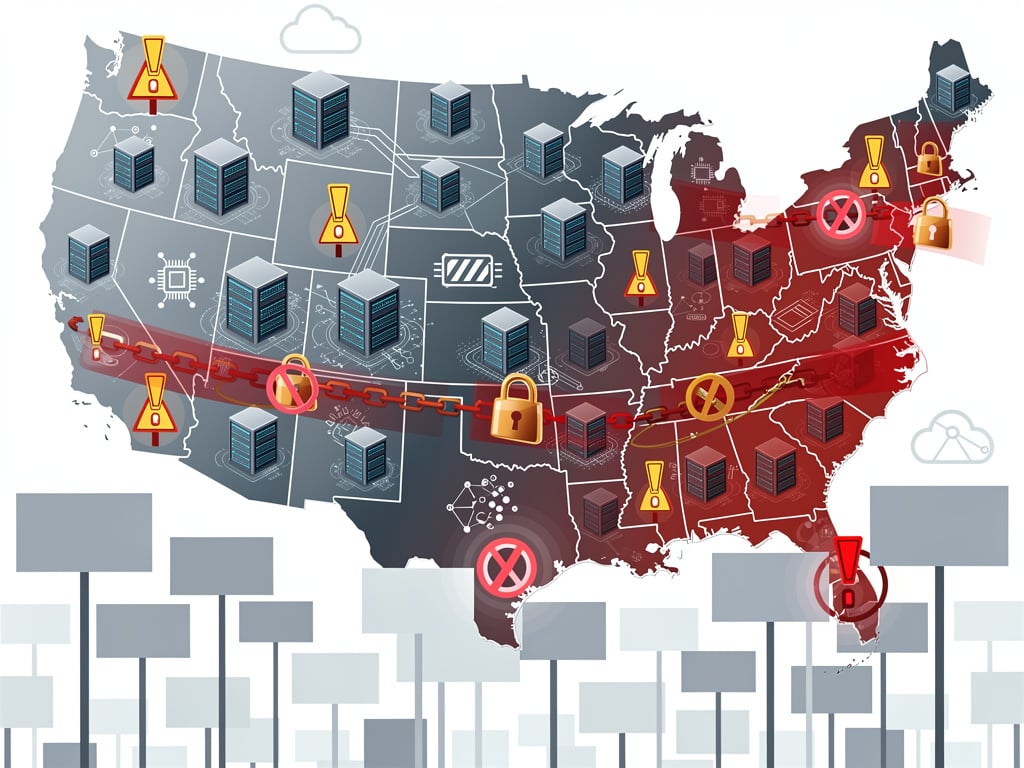
Opposition to new data centers has surged to record levels this year. In the first three months of 2026 alone activists blocked or delayed at least 75 projects worth roughly $130 billion. That matches the entire tally for all of 2025. The numbers come from a fresh analysis by Data Center Watch, a tracking project run by AI intelligence firm 10a Labs.
The pace shows no signs of slowing. Opposition groups have more than doubled since late last year. They now number 833 and operate across 49 states. Maryland, Ohio and Texas report the highest concentrations. And the resistance crosses party lines. Republicans and Democrats alike rally against proposed builds in their backyards.
Concerns center on electricity demands, water usage and constant noise. Data centers gulp power at scales that strain local grids and drive up rates for residents. They consume vast amounts of water for cooling. Many facilities hum with fan noise audible for miles. Communities fear these burdens outweigh any promised tax revenue or jobs. Most centers employ few permanent staff. Often just a handful of technicians.
The Next Web detailed the Data Center Watch findings on June 14. The report describes a structural shift rather than a temporary spike. Communities have adopted a proven playbook of organizing early, often before formal permit applications arrive. Rumors alone now spark coordinated campaigns. Local zoning boards feel the heat. Permitting bodies face packed meetings and political pressure long before shovels break ground.
Public sentiment has flipped fast. A Gallup poll from March found seven in 10 Americans oppose construction of an AI data center in their local area. Nearly half strongly oppose the idea. That marks a sharp change from surveys just months earlier when opinion split more evenly. Heatmap Pro polls echo the trend. A majority now say they would strongly oppose a facility near their home.
Legislators have taken notice. More than 300 data-center-related bills appeared in statehouses during the first six weeks of the year. Fourteen states introduced measures that would impose moratoriums. Proposals range from three-month pauses to four-year halts. None have fully passed yet. But Maine came close. Its legislature approved a bill to pause permitting for facilities drawing 20 megawatts or more. Gov. Janet Mills vetoed it. She said she would have signed the measure if it exempted a specific project in Jay that enjoyed local backing. She did sign separate legislation barring data centers from state tax incentives.
Federal voices have joined the chorus. Sen. Bernie Sanders and Rep. Alexandria Ocasio-Cortez introduced an AI moratorium act. The move signals the fight has moved beyond individual zoning disputes. It now influences elections and national policy debates.
Earlier warnings proved prescient. In 2025 at least 48 projects representing $156 billion in investment faced blocks or stalls according to the same Data Center Watch effort. NBC News reported the 2026 first-quarter figures on June 12 and quoted the researchers directly. “The quarter reflected a structural shift rather than a cyclical spike,” the study concluded. “Communities have internalized an opposition playbook, legislative sessions introduced formal regulatory uncertainty, and the number of active opposition groups more than doubled to 833 across 49 states.”
Industry plans roll forward anyway. Hyperscalers project capital spending above $200 billion this year. Utilities forecast $1.4 trillion in grid upgrades by 2030 driven largely by data center demand. The gap between ambition and local tolerance widens. Developers once counted on tax breaks and speedy approvals. Many now encounter withdrawn incentives and extended reviews.
But not every community says no. Some have welcomed the facilities and reaped benefits. Loudoun County in Virginia has generated $1.3 billion in tax revenue from data centers. In Louisiana a Meta project boosted local sales and property taxes enough to fund teacher bonuses. Such successes remain outliers. Most proposed sites trigger resistance instead.
Robert Bryce documented the breadth of rejections on his Substack. Since January more U.S. communities have blocked or restricted data centers than in all of 2025. The tally already approaches the total number of wind projects rejected worldwide last year. His list catalogs actions from tax-break withdrawals in Wisconsin to outright bans in multiple states. The backlash, he argues, reflects a broad cultural push that spans demographics.
Ars Technica covered the same Data Center Watch release this week. It noted the $130 billion figure nearly equals the full 2025 total of $156 billion. The piece highlighted how opposition has evolved into a national narrative. No longer isolated fights. These battles reshape site selection nationwide. One quoted observer described the dynamic as communities gaining a “taste of political power” through packed planning meetings.
Even prominent investors feel the pushback. Kevin O’Leary faces stiff local resistance to a proposed data center in Utah. Recent social media posts show residents organizing against the project while O’Leary has suggested foreign influence plays a role. Such claims remain unproven. They underscore the tension.
Harvard researchers have examined the complaints. They find many worries legitimate. Surging power rates, water strain and environmental effects accompany the facilities. Data centers often span warehouse-scale footprints yet deliver limited ongoing employment. Residents sense a loss of control over their towns’ futures. Confidential deals between developers and officials fuel distrust. People feel blindsided.
The Brookings Institution reached similar conclusions in March. Local opposition now ranks as a primary constraint on data center siting. It cuts across political lines. Affordability of electricity and water matter. Yet the deeper issue often centers on preserving community character.
Tech companies have tried concessions. Some offer community funds or noise mitigation. Others scale back land footprints by half in response to complaints. These adjustments sometimes help. Frequently they arrive too late. Preemptive groups form at the first hint of interest.
International examples add context. Denmark paused all new grid connections for data centers over power concerns. The European Union has urged households to reduce peak electricity use because AI facilities overload the system. American communities watch these developments closely.
Analysts disagree on long-term effects. One Atlantic essay argued the backlash overlooks potential economic gains. It acknowledged opposition makes for effective politics but questioned whether it serves good policy. Tangible local benefits beyond taxes have proven hard to demonstrate in many cases.
Yet the momentum sits with the opponents for now. Poll numbers continue to slide against new builds. Legislative proposals multiply. The AI sector’s explosive growth depends on physical infrastructure. That infrastructure requires places willing to host it. Fewer such places exist with each passing quarter.
Utilities scramble to expand capacity. Hyperscalers sign power purchase agreements at record rates. Still the siting bottleneck tightens. Developers scout farther afield. They court smaller towns with fewer resources to evaluate massive proposals. Those towns often prove most skeptical.
The pattern suggests a new equilibrium. Data center construction will continue. Its geography and pace will change. Projects may cluster in friendlier states or shift toward existing industrial zones. Some companies explore alternatives like overseas locations or novel designs that reduce water and power intensity. None of those options eliminate the core tension.
For an industry betting trillions on artificial intelligence the local revolt presents a material risk. Wall Street has started to notice. Share prices of data center operators reflect growing uncertainty. Executives now spend time on community engagement strategies that once seemed unnecessary.
So the fight spreads. From rural Ohio to suburban Maryland. From Texas planning commissions to Maine statehouses. Each blocked project adds to the tally. Each new opposition group amplifies the message. The AI boom has met its physical limits. Those limits are drawn by neighbors who simply say enough.


 WebProNews is an iEntry Publication