
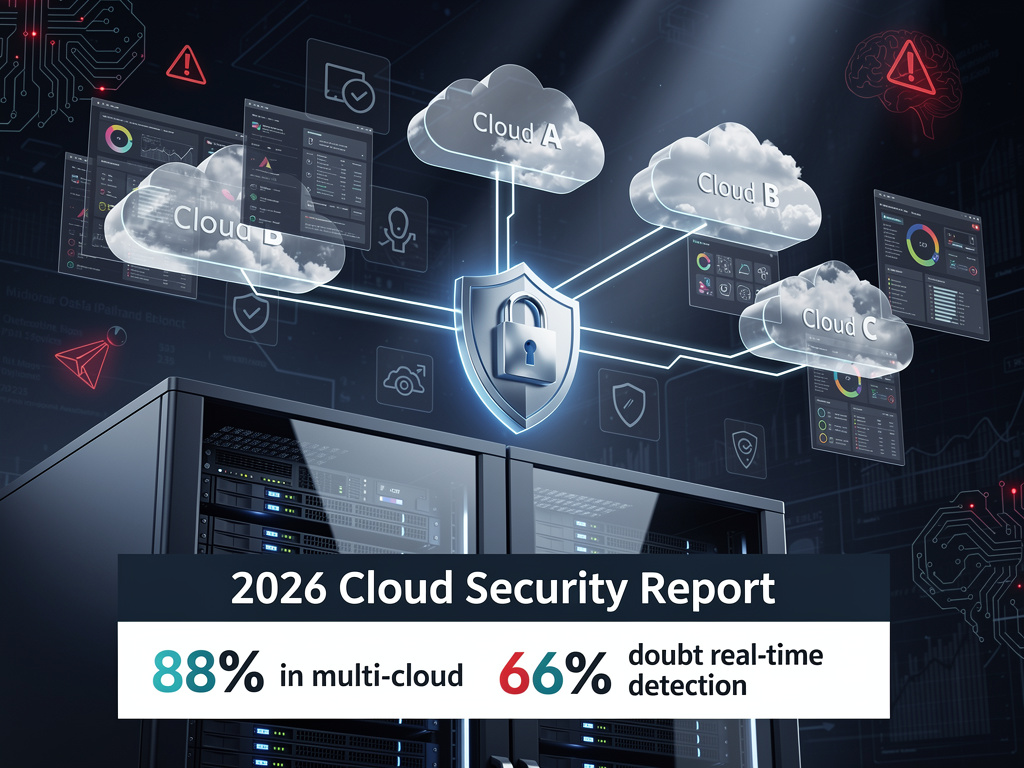
Enterprise cloud deployments are racing ahead of defenses, creating a perilous mismatch that cybersecurity leaders call the ‘complexity gap.’ Fortinet’s latest survey of 1,163 senior professionals worldwide reveals that 88% of organizations now operate in hybrid or multi-cloud setups, up from 82% a year ago, with 81% running critical workloads across two or more providers and 29% using three or more. This surge amplifies attack surfaces through sprawling configurations, dynamic identities, and intricate data flows, yet security teams struggle with fragmented tools and talent shortages.
The Fortinet Blog details how this gap stems from three interlocking pressures: disconnected security solutions, overextended staff, and adversaries wielding automation at machine speed. Nearly 70% of respondents pinpoint tool sprawl and visibility blind spots as their top barriers, forcing manual alert triage across incompatible systems. Meanwhile, 74% report shortages of skilled personnel, leaving 59% of firms mired in early-stage cloud security maturity.
“The velocity of AI adoption is fundamentally changing how cloud environments are managed and expanding the attack surface at a speed that outpaces traditional security models,” writes Vincent Hwang, Fortinet’s vice president of cloud security, in an analysis published by iTWire.
Fragmented Tools Fuel Operational Chaos
Each major cloud provider—AWS, Azure, Google Cloud, Oracle—demands bespoke controls, APIs, and dashboards, spawning a patchwork of point products. The Enterprise IT World report notes that this proliferation leads to inconsistent policies, duplicate efforts, and delayed incident response, especially amid microservices and containers that provision in minutes. Identity and access management emerges as the paramount risk, flagged by 77% of respondents in Virtualization Review, followed by misconfigurations at 70% and data exposure at 66%.
Despite budgets swelling—62% anticipate hikes, with cloud security claiming 34% of IT security spending—effectiveness stalls. Automation lags, with just 37% using it for alerts and 11% for remediation, per the same source. “Security teams are overwhelmed by all the integration required for tools from multiple different vendors,” Hwang adds. “They want fewer platforms and ones that can be integrated with shared data models and coordinated enforcement.”
Confidence in real-time threat detection has eroded further, with 66% expressing doubt, up from 64% last year—a trend WebProNews attributes to AI-accelerated threats that scan for exposed buckets or credentials in minutes.
AI Amplifies the Assault on Defenses
Attackers leverage scripting and AI to map permissions at scale and exploit flaws before patches deploy, shrinking detection windows dramatically. The Fortinet data underscores that 66% lack faith in countering these machine-speed incursions, compelling a pivot from reactive postures to predictive ones powered by unified intelligence.
Hybrid setups compound woes, intertwining SaaS apps, private clouds, public compute, and third-party APIs into webs demanding end-to-end monitoring. Misconfigurations, excessive privileges, and unmonitored endpoints dominate breach vectors, as teams firefight amid hypergrowth. “Cloud environments are evolving faster than most security teams can keep up with, especially as AI accelerates both innovation and risk,” notes Vishak Raman, Fortinet VP of sales for India, SAARC, SEA & ANZ, in Enterprise IT World.
Recent X discussions echo these alarms. Express Computer highlighted the report’s warnings on teams struggling to match pace, while Virtualization & Cloud Review stressed identity risks topping charts at 77%.
Budgets Rise but Maturity Lags
Investments pour in, yet fragmented architectures absorb gains without yielding proportional resilience. The Fortinet report page advocates automation, consistent enforcement, and upskilling to tame multi-cloud hurdles. A telling 64% say they would opt for single-vendor platforms unifying network, cloud, and app security if rebuilding strategies from scratch—signaling a consolidation wave.
This preference promises shared data models for holistic visibility, slashing alert fatigue and enabling coordinated responses. Managed service providers could bridge gaps, guiding migrations while delivering expertise against AI foes, as Hwang suggests in WebProNews coverage.
Staff constraints exacerbate divides: overworked pros juggle Kubernetes security, API protections, and cloud-native app safeguards, often missing priority signals amid noise. Global talent scarcity hits 74%, per Fortinet’s findings.
Pathways to Unified Resilience
For AI pursuits, fortifying cloud foundations proves paramount—vulnerabilities there could cascade into amplified exposures. The report urges proactive exposure management, platform integration, and open architectures to ease transitions without rip-and-replace overhauls.
Industry voices on X, like Telecom Review ME, spotlight AI, multi-cloud, and tool fragmentation as core fuels for challenges. Disaster Recovery Journal flagged the ‘complexity gap’ data, urging immediate fortification.
Enterprises face a mandate: streamline operations, automate defenses, and integrate for agility. Without action, the chasm widens, but targeted consolidation offers a bridge to secure innovation.
2026 Imperatives for Cloud Guardians
Looking ahead, security programs must tackle asset proliferation, control silos, team limits, threat velocity, identity webs, and AI adversaries head-on. Fortinet positions unified fabrics as antidotes, blending visibility with machine-speed countermeasures. As Hwang frames it in iTWire, closing the gap demands rethinking defenses for an era where cloud scales ceaselessly and threats evolve instantaneously.


 WebProNews is an iEntry Publication