
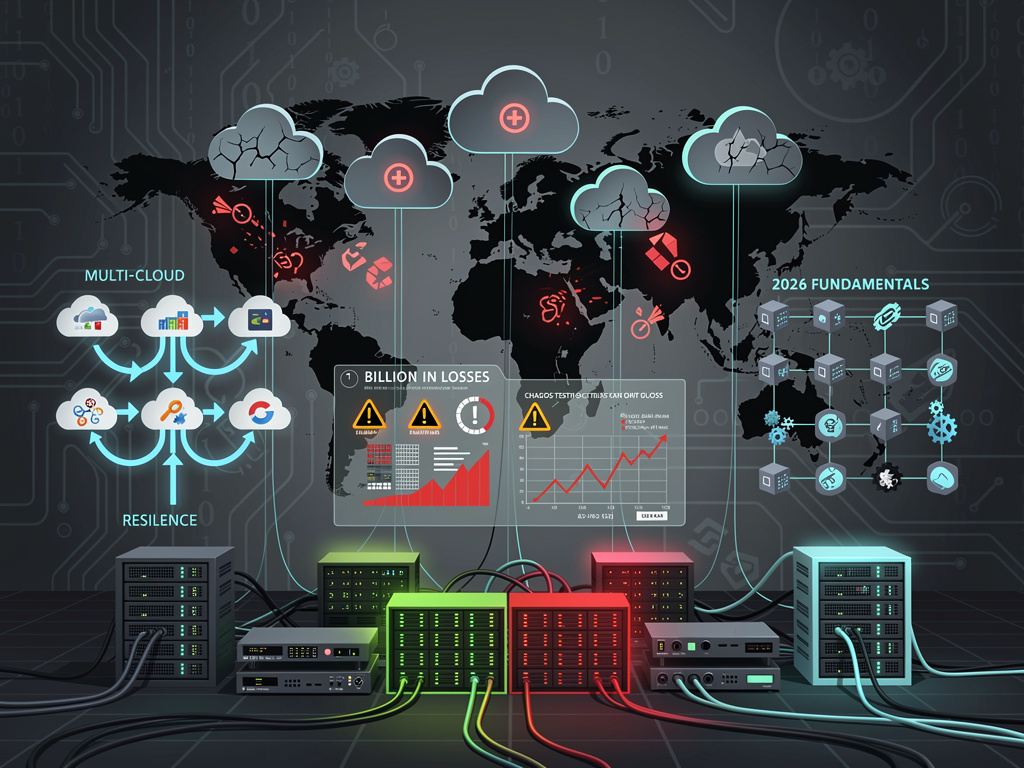
Chief information security officers long touted resilience as the cornerstone of modern cybersecurity programs. Yet when cloud storage flickered out in 2025, many found their vaunted plans inaccessible, trapped in the very systems they depended on. A recent CISO Series podcast captured this irony starkly, with Global CISO Johann Balaguer of Hard Rock Hotels and Casinos declaring, “We do [accept them as critical infrastructure], but unfortunately our hands are kind of tied when it comes to some of these big names out there. So, I think you have to go back to the basics… bake in those resiliency controls.”
The episode, hosted by Rivian CISO Mike Johnson, dissected how organizations treat hyperscalers like AWS, Azure, and Google Cloud as indispensable, yet lack control over their uptime. Balaguer stressed mapping dependencies and crafting failovers, drawing from South Florida hurricane preparations where data centers fail but payroll must continue. Johnson echoed the shared responsibility model: “They can only do so much… sometimes your application needs to be architected to take advantage of it… The world didn’t end when US East One went down… maybe a lot of companies learned their risk tolerance that day.”
These discussions hit harder amid 2025’s barrage of outages. AWS’s October US-East-1 failure lasted 15 hours, cascading from DNS issues to DynamoDB, Lambda, and EC2, hitting over 4 million users across 60 countries and services like Snapchat and airlines, per detailed post-mortems in SoftwareSeni.
2025’s Outage Onslaught
Cloudflare’s November meltdown disrupted 20% of global HTTP traffic for six hours after a ClickHouse config error ballooned memory usage, sidelining ChatGPT, Spotify, and X. Azure’s October hit Entra ID and Defender globally for hours, while Google Cloud’s June outage spanned 70 services. Rest of World chronicled entrepreneurs’ panic: Mexico’s Francisco Osorio told clients, “I couldn’t do anything other than feel helpless… I’m deeply sorry, I cannot help you today.” India’s Sundeep Narwani of Narrative Research Labs wasted hours on daily reports, delegating to project managers via SOPs.
In Kenya, Honeycoin founder David Nandwa rerouted payments: “Subscribing to multiple cloud providers definitely helps us not only to hedge against future risk but also to decrease reliance on a single one.” Nigeria’s Olumide Egbigbola at Leatherback spread traffic to unaffected regions for minimal ops. These tales underscore 94% of enterprises leaning on top providers controlling 62% market share, amplifying systemic risks.
Costs mounted fast: mid-sized firms lost $300,000 hourly, enterprises $5 million-plus, factoring revenue, productivity, and churn. Delta Airlines’ prior outage cost $500 million against $75 million credits, per SoftwareSeni analysis. SLAs promising 99.99% uptime cap credits at 10-25%, leaving gaps in foundational failures.
Concentration Risks Amplified
US-East-1’s role as AWS control plane hub exemplifies concentration: IAM, Route 53, and CloudFront rely on it globally. Regulators like the UK FCA and EU EBA now demand assessments. SC Media warns 2026 will fuse outages with attacks, as ransomware eyes Microsoft 365. Abnormal AI CIO Mike Britton predicts: “If I’m an attacker, I go for what’s easy… SaaS supply chains like Salesforce will become more common.” TeamViewer CISO Jan Bee urges velocity: “Secure the primary tools first, then move systematically through the supplier list.”
FluidCloud CTO Harshit Omar notes: “Outages rippled across… OpenAI, Snapchat… Billions lost because single-cloud dependence has become a single point of failure.” Mosaic Insurance Global CISO Jay Vinda, in Cyber Insurance Academy, advises: “Better third-party management, greater visibility of where our concentration risk points exist, and integrating insurance mechanics into tabletop exercises.”
CISOs report slippage: only 68% have strategies, down from 90%, per National CIO Review, risking extended disruptions. CSO Online lists third-party risk top for 2026, post-AWS/Azure/Cloudflare hits.
Architecting for True Durability
Balaguer pushes basics: logging, paper playbooks, minimal ops standards. Johnson favors architecting for hours-long tolerance. Multi-cloud active-active setups, Kubernetes portability, and hybrid models distribute loads, though costs rise 1.8-2.5x. Chaos engineering via Netflix Chaos Monkey cuts downtime 40%, with observability from Datadog spotting retry storms early.
Quarterly DR tests validate RTO/RPO; negotiate SLAs for 25-50% credits, priority support. X posts highlight alternatives: CUDOS boasted ASI:Cloud uptime during AWS outage via DePIN, no single failure point. SC Media’s Rajiv Pimplaskar: “Resilience isn’t redundancy — it’s adaptability.”
Google Cloud CISO Perspectives forecast cyber resilience via ThreatSpace simulations. CSO Online’s Aaron McCray sees resiliency as business enabler. Fortitude Re CISO Elliott Franklin resolves architectural discipline amid cloud reliance.
Regulatory and Boardroom Pressures
DORA and GDPR demand verifiable effectiveness. Gartner deems resiliency a 2026 theme, beyond IT to PR, disclosures. Boards must view it as advantage, per CSO Online. CrashPlan warns outages cost millions, urging proactive data resilience tied to compliance.
Forrester predicts 15% enterprises shift private AI to private clouds post-outages for control. Keepit CTO Jakob Østergaard foresees hybrid growth from sovereignty, costs. CyberArk’s Kevin Bocek flags 2026 certificate shortenings triggering outages: “A digital certificate is a machine’s identity. When it expires, machines can no longer communicate.”
CISOs like Balaguer return to fundamentals amid tied hands. As SC Media’s Harshit Omar concludes, “The future demands resilience by design.” Organizations mapping interdependencies, testing rigorously, and diversifying will weather the next storm—while others scramble for offline plans.


 WebProNews is an iEntry Publication