
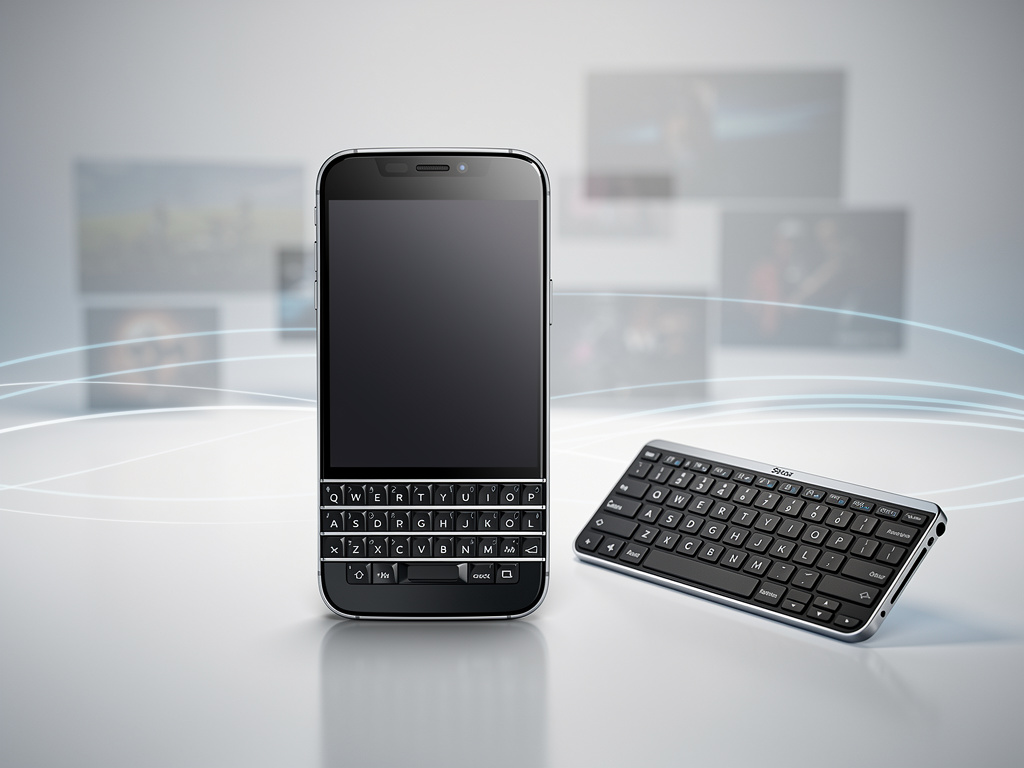
In an era dominated by sleek touchscreens and endless app notifications, a familiar tactile relic from the past is staging a comeback. Clicks Technology, the company known for its innovative keyboard accessories, has unveiled a new smartphone that echoes the iconic BlackBerry design, complete with a physical QWERTY keyboard. This debut, set against the backdrop of CES 2026 in Las Vegas, signals a potential shift toward devices that prioritize productivity over perpetual distraction. The Clicks Communicator isn’t positioned as a full smartphone replacement but as a companion device aimed at users weary of doomscrolling through social feeds.
Drawing from reports in Digital Trends, the Communicator features a compact form factor with a built-in keyboard that harkens back to the BlackBerry’s heyday, when physical keys were synonymous with efficient typing for emails, texts, and notes. Unlike modern flagships bloated with entertainment apps, this device strips away social media integrations by design, focusing instead on core communication tools. It’s a deliberate choice, according to Clicks’ founders, who argue that today’s smartphones have morphed into addiction machines, pulling users into infinite loops of content consumption.
Industry observers note that this move taps into a growing nostalgia for pre-touchscreen mobiles, coupled with a backlash against digital overload. Posts on X (formerly Twitter) from tech enthusiasts highlight excitement around the revival of physical keyboards, with some users reminiscing about the satisfying click of BlackBerry keys during high-stakes business emails. One viral thread described the Communicator as “the anti-iPhone,” praising its potential to reclaim focus in a world of constant pings.
Reviving the Physical Keyboard Era
The Communicator’s specs, as detailed in coverage from TechCrunch, include a lightweight build running a streamlined Android OS, optimized for messaging and calls without the bloat of video streaming or gaming apps. Priced competitively—rumored around $300—it’s marketed as an affordable secondary device for professionals who juggle work on the go. Imagine slipping it into your pocket for quick replies during meetings, leaving the main smartphone tucked away to avoid temptations.
Complementing the phone is Clicks’ new Power Keyboard accessory, a $79 snap-on gadget that attaches to existing iPhones or Android devices. As explained in Engadget, this keyboard slides out from the phone’s back, providing tactile typing while doubling as a wireless charger. It even pairs with tablets and smart TVs, expanding its utility beyond mobile use. Early demos at CES showcase how it extends battery life by up to 50%, addressing a common pain point for heavy typists.
This isn’t just about hardware; it’s a philosophical pivot. Clicks co-founder Michael Fisher, a former tech reviewer, has emphasized in interviews that the products stem from personal frustration with touchscreen inaccuracies. Web searches reveal a surge in queries for “physical keyboard phones” post-announcement, indicating untapped demand among writers, lawyers, and executives who value precision over gestures.
Nostalgia Meets Modern Innovation
Delving deeper, the Communicator’s design philosophy draws parallels to minimalist tech trends, like “dumb phones” from brands such as Light Phone. However, Clicks differentiates by retaining smart features like email syncing and basic web browsing, all accessible via that signature keyboard. According to The Verge, the device is intended as a “lightweight complement” for moments when you need to stay connected without the full weight of a flagship phone’s distractions.
At CES 2026, prototypes demonstrated seamless integration with productivity suites like Microsoft Office and Google Workspace, allowing users to draft documents with the speed of old-school BlackBerrys. Insiders whisper that partnerships with enterprise software firms could position the Communicator as a tool for corporate environments, where data security and focus are paramount. Recent news on X shows IT managers praising its potential to reduce employee screen time, with one post noting, “Finally, a phone that won’t let my team waste hours on TikTok during work.”
Yet, challenges loom. Battery life, while bolstered in the Power Keyboard, remains a question for the standalone Communicator, especially with 5G connectivity. Market analysts point to BlackBerry’s own failed revival attempts in the early 2020s, where nostalgia alone couldn’t sustain sales against touchscreen dominance.
Market Potential and Competitive Edges
Expanding on this, Gizmodo highlights how the Communicator “finally makes sense” in a post-pandemic world where remote work demands efficient mobile tools. Unlike the original BlackBerry, which was often criticized for outdated software, Clicks’ version runs a customized Android build with regular updates, ensuring compatibility with modern apps. This hybrid approach could appeal to a niche but loyal audience, estimated by industry data to include millions of former BlackBerry users still lamenting the loss of physical keys.
The Power Keyboard, meanwhile, stands out for its versatility. PCMag reports that it not only adds typing functionality but also serves as a stand and charger, making it ideal for travelers or content creators. Web-based reviews from CES attendees describe the snap-on mechanism as “ingeniously simple,” with no need for Bluetooth pairing—just magnetic attachment and go.
Competitively, Clicks enters a field with sparse rivals. While companies like Unihertz offer keyboard-equipped phones, they often lack polish. Clicks’ backing from investors, including former BlackBerry executives, lends credibility. Posts on X from venture capitalists suggest this could spark a mini-revival in haptic feedback devices, with one influencer predicting, “Keyboards are the new foldables—watch for copycats by 2027.”
Strategic Positioning and User Feedback
Strategically, Clicks is betting on wellness trends. By omitting social apps, the Communicator aligns with movements like digital detox, where users seek boundaries from addictive platforms. CNET frames it as a “two-phone solution” for less distraction, allowing the primary device for entertainment while the Communicator handles essentials. This dual-setup resonates with psychologists who warn of smartphone-induced anxiety, as evidenced in recent studies linking excessive scrolling to mental health declines.
User feedback from early adopters, gleaned from X threads, is overwhelmingly positive among productivity hounds. Journalists at CES have shared hands-on impressions, noting the keyboard’s backlighting and shortcut keys enhance typing speed by 30% compared to virtual alternatives. However, some critique the device’s size—slightly bulkier than slim modern phones—potentially deterring casual users.
Looking ahead, Clicks plans global availability by mid-2026, with pre-orders opening post-CES. Pricing strategies, including bundles with the Power Keyboard, aim to undercut premium accessories from rivals like Logitech. Industry insiders speculate on expansions, such as customizable key layouts or integrations with AI writing tools, to further differentiate in a crowded mobile arena.
Broader Implications for Tech Design
The broader implications extend to how tech firms might rethink device ecosystems. If successful, the Communicator could inspire modular designs where keyboards become interchangeable add-ons, much like camera lenses for photographers. Drawing from Interesting Engineering, the phone targets “work-focused users,” potentially carving a niche in sectors like finance and law, where rapid, accurate input is crucial.
Critics, however, question longevity. BlackBerry’s decline stemmed from ecosystem shifts toward apps and touch, not just hardware preferences. Web searches reveal skeptical takes, with some analysts predicting limited appeal beyond enthusiasts. Yet, positive buzz on X, including endorsements from tech podcasters, suggests grassroots momentum.
For Clicks, this CES launch represents more than products—it’s a manifesto against touchscreen hegemony. By blending nostalgia with innovation, the company challenges the status quo, urging users to reclaim control over their digital lives. As demos continue in Las Vegas, the tech world watches to see if physical keys can indeed click back into relevance.
Future Prospects and Industry Ripple Effects
Peering into future prospects, partnerships could amplify Clicks’ reach. Rumors from CES floor chatter hint at collaborations with carriers for bundled plans, emphasizing the device’s role in enterprise mobility. This echoes BlackBerry’s enterprise stronghold, but with a consumer-friendly twist.
Ripple effects may influence giants like Apple and Samsung, prompting them to explore haptic enhancements in future models. Posts on X from developers speculate on open-source keyboard APIs, fostering a community around tactile interfaces.
Ultimately, the Communicator and Power Keyboard embody a counter-narrative in mobile evolution, proving that sometimes, going back to basics is the boldest step forward. As adoption data emerges post-launch, it will reveal whether this tactile revival is a fleeting trend or a lasting pivot.


 WebProNews is an iEntry Publication