
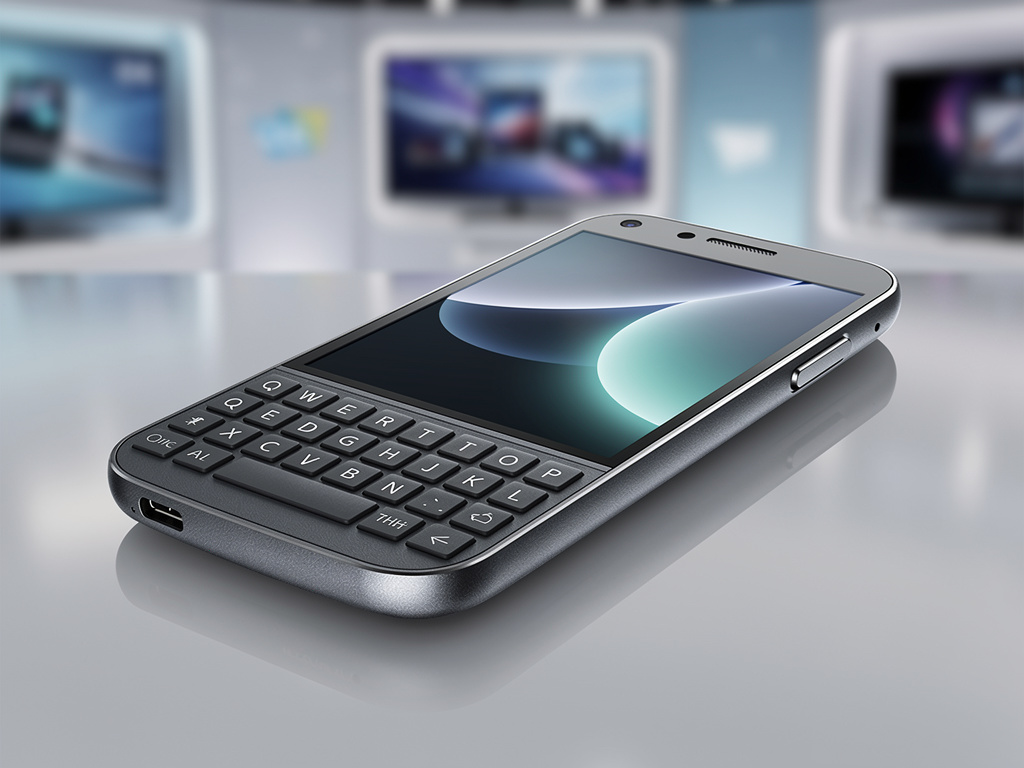
Reviving Tactile Typing: The Clicks Communicator’s Quest to Redefine Mobile Messaging
In an era dominated by sleek touchscreens and endless scrolling, a new device is emerging to challenge the status quo of smartphone design. The Clicks Communicator, unveiled at CES 2026, represents a bold pivot for Clicks Technology, the company previously known for its iPhone keyboard cases. This compact Android phone, complete with a physical keyboard, aims to serve as a dedicated communication tool, stripping away distractions to focus on messaging, emails, and calls. Drawing inspiration from the BlackBerry era, it promises a return to tactile typing while integrating modern features like a headphone jack and expandable storage.
The device’s launch has sparked intrigue among tech enthusiasts and professionals weary of notification overload. Priced at $399 for early adopters, with shipments expected later in 2026, the Communicator isn’t positioned as a primary smartphone but as a companion gadget. It runs a customized version of Android 16, featuring a streamlined launcher that prioritizes apps like Telegram, WhatsApp, Slack, and Gmail. This curated approach minimizes the temptation for social media binges, aligning with growing concerns over digital wellness.
Early hands-on impressions highlight the Communicator’s ergonomic design. Measuring just 4.03 inches with an AMOLED display, it’s pocket-friendly and evokes nostalgia for devices like the BlackBerry Key2. The physical keyboard, a hallmark of Clicks’ products, offers satisfying key travel and backlighting, making it ideal for extended typing sessions without the fatigue associated with virtual keyboards.
Nostalgia Meets Modern Engineering
Clicks Technology, founded by former BlackBerry executives, has built its reputation on reviving physical keyboards for contemporary devices. Their initial iPhone accessory, a snap-on case with QWERTY keys, gained traction for blending old-school input with iOS functionality. Now, with the Communicator, the company is expanding into full-fledged hardware, as detailed in a preview by Android Police. The article notes the device’s lightweight build and seamless integration of hardware and software, emphasizing how it avoids the bloat of typical smartphones.
Beyond the keyboard, the Communicator boasts practical features often absent from flagship phones. A 3.5mm headphone jack caters to audiophiles, while a microSD slot allows for storage expansion up to 1TB. The 50MP rear camera is serviceable for quick snaps, but the focus remains on productivity rather than photography. Powered by a mid-range processor and a 4,000mAh battery, it promises all-day usage for communication-heavy tasks, according to reports from MacRumors.
Industry insiders see this as a strategic move in a saturated market. By targeting users who juggle work and personal devices, Clicks is carving out a niche for focused tools. Posts on X from tech reviewers praise the typing experience, with one user noting the customizable actuation that mimics touchscreen responsiveness without the tactile void. This sentiment echoes broader discussions on platforms like X, where users express excitement over the device’s BlackBerry-like vibes.
Companion Device Dynamics
Pairing the Communicator with an existing smartphone is straightforward, thanks to its eSIM support and compatibility with major carriers. It’s designed to handle essential communications, allowing users to leave their main phone behind during focused work periods or downtime. This dual-device strategy addresses the burnout from constant connectivity, a theme explored in coverage by Engadget, which highlights the phone’s role in combating distraction.
The custom Android launcher is a standout element, curating a home screen devoid of endless app grids. Instead, it surfaces key messaging tools, with quick access to voice notes and email composition. Early reviews, such as those from 9to5Google, describe it as a “message-centric” interface that prioritizes efficiency over entertainment. This design philosophy could appeal to professionals in fields like journalism or finance, where rapid, accurate typing is crucial.
However, the device isn’t without compromises. Its small screen limits multimedia consumption, and the lack of high-end specs means it’s not suited for gaming or intensive apps. X posts reflect mixed opinions, with some users questioning the value proposition in an age of foldable phones and AI assistants. Yet, for those nostalgic for physical keys, the trade-offs may be worthwhile.
Expanding the Ecosystem
Alongside the Communicator, Clicks introduced the Power Keyboard, a MagSafe-compatible accessory that attaches to any compatible smartphone. This $79 add-on provides a sliding physical keyboard with an integrated battery, extending device life while offering tactile input. As reported by AppleInsider, it’s a evolution from their original cases, now supporting Android devices like the Pixel 10.
This accessory ecosystem underscores Clicks’ vision of modular enhancements. The Power Keyboard’s magnetic attachment allows for easy detachment, making it versatile for users who switch between devices. Reviews on X emphasize its portability and lag-free performance, drawing comparisons to wireless peripherals that enhance productivity without permanent commitment.
For industry observers, this launch signals a potential shift toward specialized gadgets. In a market where convergence has led to all-in-one devices, Clicks is betting on segmentation. Insights from Chrome Unboxed suggest that the Communicator could inspire similar products, particularly as remote work demands tools optimized for communication.
Challenges in Adoption
Despite the buzz, widespread adoption faces hurdles. The $399 price point, while competitive, may deter casual users accustomed to subsidized carrier plans. Moreover, integrating a secondary phone into daily routines requires behavioral changes, as noted in a hands-on from CNET. The article points out the learning curve for those who’ve forgotten the nuances of physical keyboards.
Competition from established players adds pressure. Devices like the Samsung Galaxy Z Flip offer compact designs with virtual keyboards, potentially overshadowing the Communicator’s niche appeal. X discussions reveal skepticism, with some users arguing that on-screen typing has evolved to be faster and more intuitive, echoing sentiments from a post by a tech photographer who critiqued the nostalgia-driven hype.
Clicks must also navigate software updates and ecosystem support. Running Android 16 positions it well for future-proofing, but long-term commitments from the company will be key. Early adopters, as per GSMArena, appreciate the expandable storage and headphone jack—features increasingly rare in premium phones.
Innovation in Typing Technology
Delving deeper into the keyboard itself, Clicks has refined the mechanics for modern users. The keys feature adjustable actuation points, allowing customization from deep presses to near-touch sensitivity. This innovation, highlighted in X posts about wireless keyboards, bridges the gap between physical and digital input methods.
The Communicator’s build quality emphasizes durability, with a chassis resistant to everyday wear. Its 4-inch display, while compact, offers vibrant colors and sufficient brightness for outdoor use. Battery life extends to mixed usage scenarios, supported by efficient power management in the custom OS.
For insiders, the real intrigue lies in Clicks’ software tweaks. The launcher includes AI-driven suggestions for quick replies, integrating with apps to streamline workflows. This could position the device as a productivity booster in enterprise settings, where secure, focused communication is paramount.
Market Implications and Future Prospects
The Communicator’s reception at CES 2026 was enthusiastic, with demos showcasing its seamless messaging flow. Coverage from Android Central frames it as a counter to smartphone addiction, aligning with trends toward mindful tech use.
Looking ahead, Clicks plans international availability, potentially expanding to markets where physical keyboards retain popularity, such as in parts of Europe and Asia. Partnerships with carriers could lower barriers to entry, making it more accessible.
Critics, however, warn of the risks in a volatile industry. If the device fails to gain traction, it might reinforce the dominance of touchscreen giants. Yet, positive X feedback, including calls for reviews from influencers, suggests a dedicated fanbase eager for alternatives.
Sustaining the Tactile Revolution
Ultimately, the Clicks Communicator challenges assumptions about what a smartphone should be. By prioritizing typing precision over screen real estate, it caters to writers, executives, and anyone frustrated with autocorrect mishaps. The inclusion of legacy ports like the headphone jack nods to user demands often ignored by major manufacturers.
As the device prepares for release, its success will hinge on community building. Clicks is already engaging with users through social channels, gathering feedback to refine features. This iterative approach, as seen in TechRadar, could foster loyalty among tactile typing enthusiasts.
In the broader tech arena, this launch might inspire hybrid devices that blend nostalgia with innovation. For now, the Communicator stands as a testament to the enduring appeal of physical interaction in a digital world, potentially sparking a renaissance for keyboard-centric gadgets. Whether it becomes a staple or a cult favorite remains to be seen, but its introduction undoubtedly stirs the pot in mobile technology.


 WebProNews is an iEntry Publication