
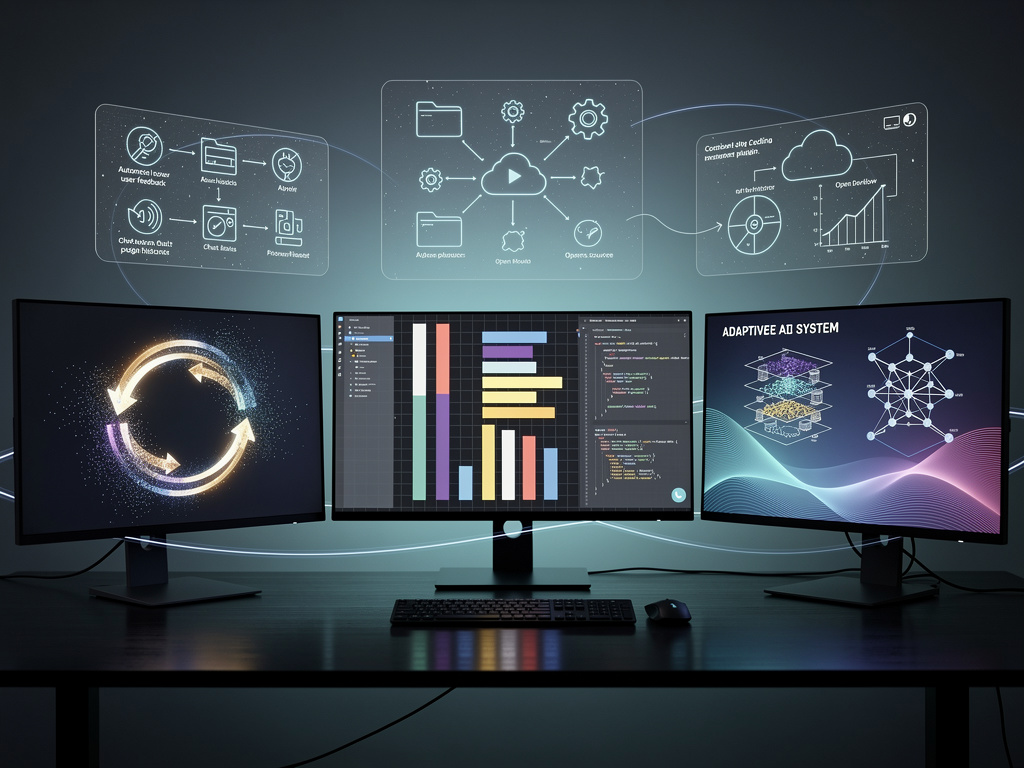
In the rapidly evolving world of AI-assisted coding, a new tool is quietly reshaping how developers interact with large language models. Bayram Annakov’s Claude Reflect, hosted on GitHub, represents a clever extension of Anthropic’s Claude Code, turning fleeting user corrections into persistent project configurations. Launched in early 2026, this open-source plugin automates the extraction of feedback from chat histories, embedding it directly into tools like .claudecodeignore and claude.toml files. Developers no longer need to repeatedly instruct the AI on preferences such as using virtual environments or checking rate limits—Claude Reflect learns and adapts on the fly.
The project’s origins trace back to Annakov’s frustration with redundant explanations in AI interactions. As detailed in the repository’s README, Claude Reflect scans conversation logs for patterns in corrections and positive reinforcements, then syncs them to configuration files. This creates a self-improving loop where the AI refines its behavior without manual intervention. Early adopters, including those posting on X, have praised its potential to streamline workflows in complex codebases, where repetitive guidance can bog down productivity.
Integration with Claude Code is seamless, requiring minimal setup. Users install the plugin via pip, configure it with their API keys, and let it monitor interactions. The tool’s architecture leverages Claude’s existing agentic capabilities, but adds a layer of reflection—hence the name—allowing the model to “remember” user preferences across sessions. This isn’t just about convenience; it’s a step toward more autonomous AI assistants in software development.
Emerging Innovations in AI Feedback Loops
Anthropic’s broader ecosystem provides fertile ground for such innovations. According to a post on the DEV Community, Claude Code has seen significant updates in 2025, including browser and Slack integrations that enhance its terminal-based operations. Claude Reflect builds on this by addressing a key pain point: the forgetfulness of session-based AI tools. By persisting user feedback, it effectively creates a customized knowledge base tailored to individual projects.
Industry observers note that this plugin aligns with a trend toward “agentic” AI, where models don’t just respond but evolve based on interactions. A recent article in WebProNews highlights how Claude Code’s changelog includes performance boosts and new integrations, which Claude Reflect exploits to automate preference syncing. Developers can now focus on high-level tasks, delegating routine enforcements to the tool.
Feedback from the developer community has been enthusiastic. Posts on X describe experiments where Claude Reflect reduced setup time in GitHub Actions workflows, allowing for faster iterations. One user recounted integrating it with visual UI rendering in CI pipelines, enabling the AI to self-assess outputs—a capability that echoes Anthropic’s research on model introspection shared in their October 2025 announcement.
From Concept to Community Adoption
The project’s GitHub repository, at github.com/BayramAnnakov/claude-reflect, has garnered attention for its simplicity and extensibility. Annakov, known for his work in tech entrepreneurship, designed it as a plugin for Claude Code, which itself is an open-source tool from Anthropic that handles codebase understanding and git workflows. The repository includes detailed installation guides, example configurations, and contribution guidelines, encouraging community input.
Comparisons to similar tools are inevitable. GitHub’s Copilot, now supporting Claude Opus 4.5 as per a December 2025 update on the GitHub Changelog, offers multi-model support, but lacks the reflective persistence of Annakov’s creation. Claude Reflect fills this gap by turning one-off corrections into systemic improvements, potentially reducing errors in long-term projects.
Real-world applications are emerging quickly. In DevOps environments, where AI agents manage infrastructure as code, the tool’s ability to enforce preferences like security checks or environment isolation proves invaluable. A discussion on Hacker News, linked from a January 2026 thread on news.ycombinator.com, explores how such reflections could integrate with CI/CD pipelines, amplifying developer efficiency.
Technical Underpinnings and Challenges
Diving deeper into the mechanics, Claude Reflect uses natural language processing to parse chat histories, identifying keywords and patterns in user feedback. It then generates updates to configuration files, ensuring Claude Code adheres to them in future interactions. This process draws from Anthropic’s advancements in tool use, as outlined in their November 2025 developer platform update, which introduced programmatic tool calling and context compaction.
However, challenges remain. Privacy concerns arise when scanning chat logs, though the repository emphasizes local processing to mitigate risks. Performance overhead is another consideration; in large histories, extraction can be computationally intensive, prompting suggestions for optimization in community issues on GitHub.
Anthropic’s own research bolsters the tool’s foundation. Their March 2025 paper on tracing LLM thoughts, shared via X, reveals internal mechanisms that Claude Reflect indirectly leverages for better self-correction. This synergy positions the plugin as more than a mere add-on—it’s a practical application of cutting-edge AI research.
Broader Implications for Developer Tools
As AI tools proliferate, Claude Reflect exemplifies a shift toward personalized, adaptive systems. A collection of over 50 customizable Claude Skills on GitHub, reported by The Decoder two weeks ago, underscores this trend, with workflows that standardize repetitive tasks. Annakov’s project takes it further by automating the learning process, potentially inspiring similar features in competitors like OpenAI’s offerings.
Industry insiders see potential ripple effects. In collaborative settings, shared configurations could harmonize team preferences, reducing friction in code reviews. Posts on X highlight integrations with Slack, where reflected preferences streamline bot responses, aligning with updates noted in WebProNews.
Moreover, the tool’s open-source nature invites experimentation. Developers are already forking the repository to add features like multi-model support or integration with other AI frameworks, fostering a vibrant ecosystem around Claude Code.
Pushing Boundaries in AI-Assisted Coding
Looking ahead, Claude Reflect could influence how AI handles long-term memory. Anthropic’s October 2025 research on LLM introspection, announced on X, suggests models like Claude are developing genuine self-awareness, which this plugin operationalizes in coding contexts. By capturing and applying feedback loops, it bridges the gap between human intuition and machine execution.
Critics, however, caution against over-reliance. If configurations become too rigid, they might stifle creativity or introduce biases from initial corrections. Balancing adaptability with persistence will be key, as discussed in developer forums.
Nevertheless, early metrics are promising. Users report up to 30% reductions in repetitive instructions, based on anecdotal evidence from X posts and GitHub discussions. This efficiency gain could scale across enterprises, where AI integration is accelerating.
Evolving Workflows and Future Directions
The intersection with GitHub Actions amplifies Claude Reflect’s utility. Anthropic’s dedicated documentation on code.claude.com details how Claude Code integrates into workflows, and Reflect enhances this by ensuring consistent behavior. For instance, in automated testing, reflected preferences can enforce best practices without manual oversight.
Community-driven enhancements are accelerating. Forks of the repository experiment with visual feedback loops, where Claude assesses its own outputs—a nod to posts on X about simulating UI in containers. This could extend to non-coding domains, like data analysis or content generation.
Anthropic’s 2025 updates, including the Claude 4 models covered in SD Times, provide a robust backbone. These models’ improved reasoning capabilities make tools like Reflect more effective, handling complex preferences with nuance.
Strategic Advantages for Modern Development
In competitive tech environments, tools that minimize cognitive load offer a strategic edge. Claude Reflect’s approach to feedback persistence could set a standard, influencing how platforms like GitHub Copilot evolve. A DevOps.com article from last week, at devops.com, discusses agent mode in Copilot, paralleling Reflect’s self-learning features.
For industry insiders, the plugin’s value lies in its extensibility. Custom scripts in the repository allow tailoring to specific languages or frameworks, from Python’s venv mandates to JavaScript’s rate-limiting checks.
Ultimately, as AI reshapes software engineering, innovations like Claude Reflect highlight the importance of user-centric design. By automating the mundane, it frees developers to tackle ambitious challenges, potentially accelerating innovation across the field.
Refining the Human-AI Partnership
Reflecting on broader trends, tools like this underscore a maturing partnership between humans and AI. Anthropic’s December 2025 updates, as per WebProNews, emphasize productivity boosts through features like autonomous agents—elements that Claude Reflect amplifies.
Challenges in adoption include ensuring compatibility with evolving Claude versions, but the project’s active maintenance suggests resilience. Community sentiment on X leans positive, with users sharing success stories in diverse workflows.
In essence, Claude Reflect isn’t just a plugin; it’s a harbinger of more intelligent, adaptive AI tools that learn from us as much as we learn from them, paving the way for a new era in development practices.


 WebProNews is an iEntry Publication