
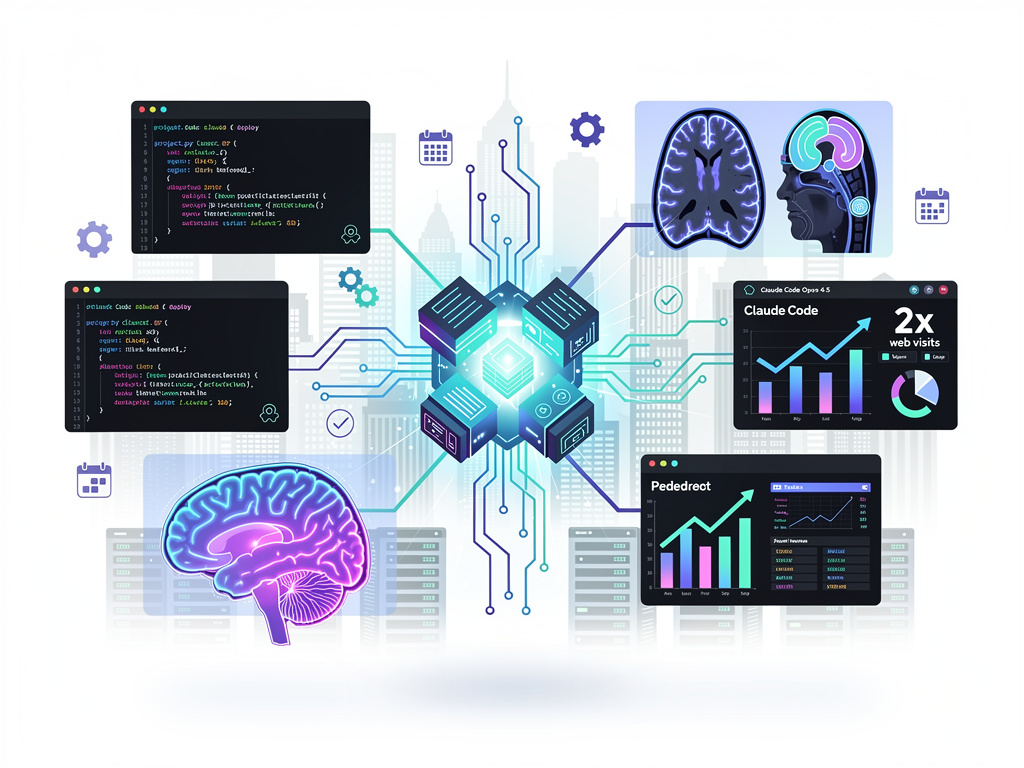
Anthropic’s Claude Opus 4.5, powering the desktop tool Claude Code, has ignited a frenzy among developers and executives, with users reporting productivity surges that upend traditional software development timelines. Engineers liken the experience to a high-stakes gamble, as the AI tackles complex projects in hours that once demanded months of human labor. This surge coincides with explosive growth in Claude’s user base, signaling a pivot toward autonomous AI agents capable of navigating files, browsers, and apps with minimal oversight.
Malte Ubl, chief technology officer at Vercel, described completing a year-long project in just one week using Claude Code during his holiday break. “I spent 10 hours a day on my vacation building new software and said each run gave me an endorphin rush akin to playing a Vegas slot machine,” Ubl said, highlighting the addictive efficiency of the tool. Vercel, which develops and hosts websites and apps, counts Claude Code among its key integrations.
The phenomenon, dubbed “Claude-pilled” on social platforms, extends beyond coders. Non-engineers are harnessing it for tasks like health-data analysis and expense reports, building their first programs without prior coding knowledge. Web traffic data underscores the momentum: Claude’s total audience more than doubled in December from the prior year, with daily unique desktop visitors up 12% globally year-to-date, per Similarweb and Sensor Tower.
From Holiday Experiments to Enterprise Shifts
Andrew Duca, CEO of cryptocurrency tax platform Awaken Tax, who has coded since middle school, called the tool both thrilling and terrifying. “I spent my whole life developing this skill, and it’s literally one-shotted by Claude Code,” Duca said. He scrapped plans to hire new engineers, estimating Claude Code boosts his productivity fivefold. This mirrors broader sentiment, as Anthropic’s focus on enterprise clients yields results: as of mid-2025, it held the largest market share among enterprise users, according to Menlo Ventures.
Unlike chatbots confined to web interfaces, Claude Code operates autonomously across user files, browsers, and applications, offering a glimpse of advanced AI agents. Shopify CEO Tobias Lütke shared on X that he used it to analyze his recent MRI scan, while others applied it to federal economic data, corrupted hard drives, and even webcam-monitored tomato plants. Boris Cherny, head of Claude Code, noted: “It’s just so different than the AI that came before.”
Anthropic launched Cowork, a user-friendly variant with a graphical interface instead of a command-line setup, built in about 10 days using Claude Code itself. This desktop agent accesses local files and browses the web without coding, as detailed in VentureBeat. Recent updates include Model Context Protocol integration, enabling structured connections to external tools, per another VentureBeat report.
Opus 4.5 Powers Coding Supremacy
Claude Opus 4.5, released in November 2025, excels in coding, agentic tasks, and enterprise workflows like spreadsheets and financial analysis, as announced by Anthropic and covered by Reuters, Business Insider, CNBC, and AI Business. Priced at $5/$25 per million tokens, it tops benchmarks for real-world software engineering and computer use.
Anthropic CEO confirmed that 90% of Claude’s code is now AI-generated, marking a historic shift, according to FinancialContent. Claude Code matched a year-long Google project in one hour, per another FinancialContent piece. India ranks second globally in Claude.ai usage, driven by software and web development, as reported by Moneycontrol.
Hands-on reviews praise Cowork’s effectiveness for file management and basic computing, as in WIRED. Cryptopolitan notes Claude Code as the hottest AI tool, stunning programmers over the holidays. Despite a recent outage affecting Opus 4.5 and Sonnet 4.5, per IT Pro, demand persists.
Benchmarks and Broader Implications
Anthropic leads coding and tooling benchmarks from UC Berkeley researchers. David Hsu, CEO of Retool, questioned: “The bigger story here is going to be when this goes beyond software engineering. Software engineers make up a tiny fraction of the U.S. labor force. How far does it go?” The Wall Street Journal details this zeal, from coders’ benders to noncoders’ awe.
Posts on X amplify excitement, with executives like Lütke and Ubl sharing breakthroughs. Anthropic, eyeing a 2026 public listing, prioritizes coding mastery then agentic expansion. Global traction, including Japan, UK, and South Korea, bolsters its enterprise edge over OpenAI’s consumer focus, even as Google advances.
Claude Code’s command-line roots and Cowork’s accessibility democratize agentic AI, raising security concerns amid productivity gains. As users from developers to tomato farmers experiment, the tool foreshadows AI’s permeation across professions, challenging hiring norms and skill valuations industrywide.


 WebProNews is an iEntry Publication