
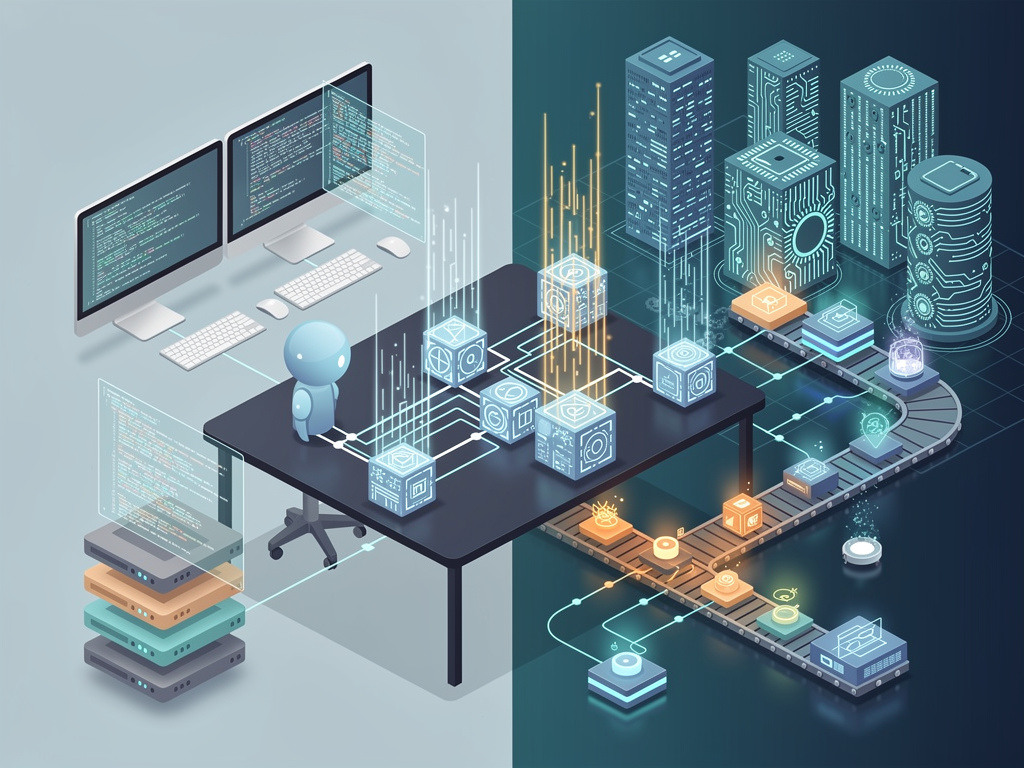
Anthropic’s Claude Code is forcing a reckoning in software development. Not a quiet one. On a recent episode of The Vergecast, the hosts dug into what AI coding agents actually mean for the people who write software for a living — and the picture that emerged is more nuanced, more unsettling, and more promising than the typical hype cycle suggests.
The core argument is straightforward: tools like Claude Code aren’t autocomplete on steroids. They’re autonomous agents that can take a high-level instruction, break it into subtasks, write code across multiple files, run tests, debug failures, and iterate — all without a human touching the keyboard. That’s a fundamentally different relationship between programmer and machine than what GitHub Copilot introduced just a few years ago.
Anthropic has been aggressive about positioning Claude Code as the flagship product for this new era. The tool operates directly in the terminal, reads your codebase, and executes multi-step coding tasks with minimal hand-holding. According to Anthropic’s own documentation, Claude Code is designed to handle “real-world software engineering tasks” end to end — from planning architecture to writing implementation to fixing bugs that crop up during testing. The company reports that internal teams have been using it to build portions of Claude itself, a recursive flex that says something about confidence levels.
But here’s the tension The Vergecast captures well. The question isn’t whether these tools work. They do, often impressively. The question is what happens to the craft of programming when the most common tasks — scaffolding a new feature, writing boilerplate, debugging routine errors — get automated away.
Several developers interviewed across tech media in recent weeks have described a shifting role. Less typing, more reviewing. Less building from scratch, more directing and evaluating. Casey Newton and the Vergecast team frame this as a transition from “writing code” to “managing code production,” and that framing resonates with what’s happening on the ground. Senior engineers at companies using Claude Code and competing tools like Cursor and Devin report spending more time on architecture decisions, code review, and prompt refinement than on actual implementation.
That sounds like a promotion. For some, it is.
For junior developers, though, the math is different. The traditional on-ramp into software engineering — fixing small bugs, writing tests, building simple features — is exactly the work these agents handle best. If those entry-level tasks disappear into an AI agent’s workflow, how do new developers build the intuition they need to eventually become senior engineers? The Vergecast doesn’t fully resolve this question, but it asks it directly, which matters.
And the market is responding fast. According to Bloomberg reporting from May 2025, Anthropic’s revenue has surged past a $2 billion annualized run rate, with Claude Code and API usage driving significant growth. The company raised $3.5 billion in its latest funding round, valuing it at $61.5 billion. These aren’t research-lab numbers anymore. This is a business scaling on the premise that AI agents will become the default way software gets built.
Competition is fierce. OpenAI’s Codex agent, launched in late April 2025, operates in a similar space — running asynchronously in a cloud sandbox, handling pull requests, and writing code from natural language specs. The Verge has covered the Codex launch extensively, noting that OpenAI is targeting the same professional developer audience Anthropic is chasing. Google’s Jules, built on Gemini, is also in the mix. So is Microsoft-backed GitHub Copilot Workspace. The race isn’t to build the best autocomplete anymore. It’s to build the best autonomous software engineer.
The Vergecast episode makes a subtle but important point about trust. Developers don’t just need these tools to write correct code — they need to trust that the code is correct without reading every line. That’s a hard problem. Current AI coding agents still hallucinate, still introduce subtle bugs, still make architectural choices that look reasonable in isolation but create technical debt at scale. The debugging-an-AI’s-work problem is real, and it’s not solved by making the AI faster.
Some practitioners are already adapting their workflows around this limitation. Test-driven development, where you write tests before implementation, turns out to pair well with AI agents. You define what correct behavior looks like, let the agent write the implementation, and the test suite acts as an automated quality gate. It’s a pattern that predates AI coding tools by decades, but it’s finding new relevance.
There’s also a class dimension worth noting. Access to the best AI coding tools isn’t free. Claude Code requires an Anthropic Max subscription at $100 or $200 per month depending on usage tier. OpenAI’s Codex is available through ChatGPT Pro at $200/month. For well-funded startups and enterprise teams, that’s trivial. For independent developers, students, and engineers in lower-income markets, it’s a real barrier. The productivity gap between developers with and without access to these tools could widen quickly.
The Vergecast’s discussion also touches on something less tangible but equally significant: identity. Many software engineers don’t just write code for a paycheck. They identify as builders, as craftspeople. When the building gets delegated to an agent, what remains? Direction. Taste. Judgment. Those are real skills, and they matter enormously. But they feel different from the hands-on act of construction that drew many people to programming in the first place.
Not everyone is mourning, of course. Plenty of developers are thrilled to offload tedious work and focus on harder problems. The productivity gains are genuine — multiple reports from teams using Claude Code suggest 2x to 5x speedups on certain categories of tasks. And for non-engineers who can now build functional software through natural language instructions, the door is opening wider than ever.
So where does this land? The honest answer: nobody knows yet. The tools are improving monthly. The workflows are still being invented. The economic and cultural effects on the profession are just beginning to register. What The Vergecast gets right is refusing to flatten this into a simple narrative of either doom or utopia. The reality is messier. It involves tradeoffs, uneven distribution of benefits, and genuine uncertainty about what programming looks like in five years.
What’s clear is that ignoring these tools isn’t a viable strategy for working developers. Claude Code, Codex, and their competitors are already shaping hiring decisions, project timelines, and team structures at companies that ship software. The transition is happening now. The only question is whether you’re directing it or being directed by it.


 WebProNews is an iEntry Publication