
Billionaire’s Lament: Ken Griffin’s Stark Critique of Trump’s Tariff Regime
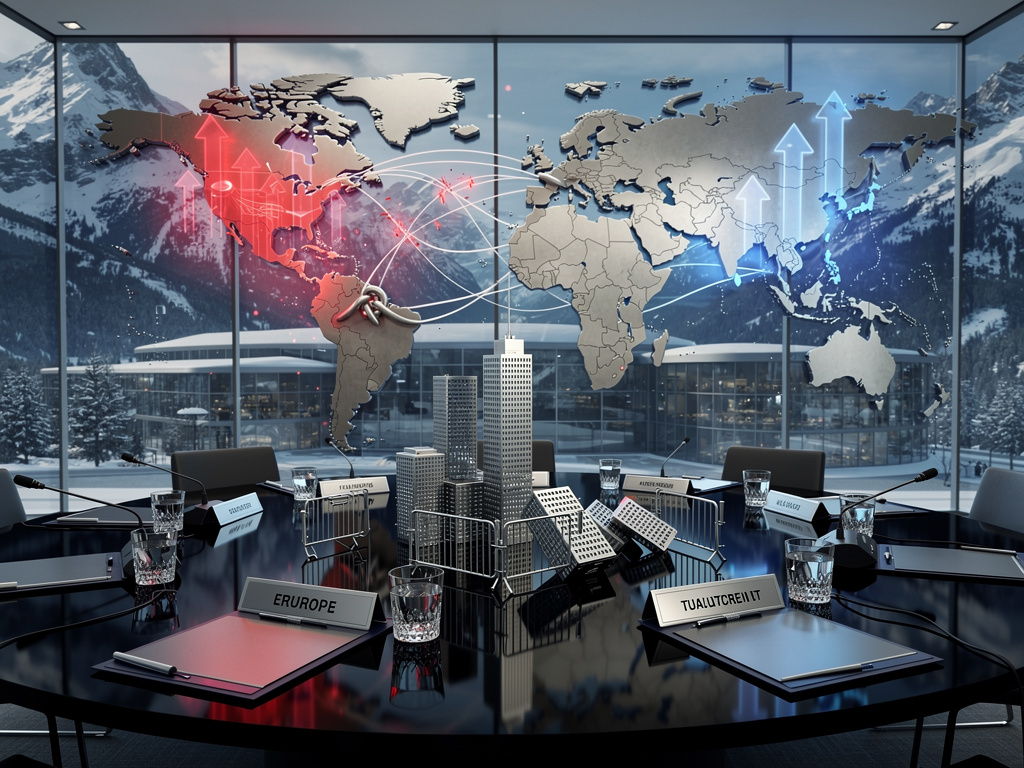
In the gilded halls of the World Economic Forum in Davos, Citadel CEO Ken Griffin didn’t mince words. Speaking amid a backdrop of global economic uncertainty, Griffin lambasted President Donald Trump’s tariff policies, attributing surging U.S. inflation directly to these trade barriers. “The tariffs have put us in a pretty unfortunate position,” Griffin stated, highlighting how they’ve disrupted longstanding trade relationships and fueled price pressures across the American economy. This isn’t the first time the hedge fund titan has voiced concerns, but his latest remarks underscore a growing rift between Wall Street’s elite and the White House’s protectionist agenda.
Griffin’s commentary comes at a pivotal moment. As of January 2026, inflation has climbed to levels not seen since the early 2020s, with tariffs on imports from key trading partners like China and Europe exacerbating costs for consumers and businesses alike. Drawing from recent data, economists point to these levies as a primary driver, with some estimates suggesting they’ve added up to 0.8 percentage points to inflation in the past year alone. Griffin’s perspective, informed by his firm’s vast market insights, paints a picture of an economy strained by policies meant to bolster domestic industry but instead sowing seeds of inefficiency.
Beyond inflation, Griffin warned of broader repercussions, including frayed alliances with European partners. “We’ve frayed our relationship with our European allies in a way that I don’t understand or appreciate,” he said during a panel discussion. This sentiment echoes concerns from international bodies, as the International Monetary Fund has cautioned that escalating trade tensions could shave significant growth from global output, with the U.S. bearing much of the brunt.
Inflation’s Tariff-Fueled Surge
Delving deeper into the mechanics, tariffs act as a tax on imported goods, often passed along to American buyers. According to a report from Devdiscourse, Griffin specifically tied higher U.S. inflation to Trump’s imposition of these duties, noting disruptions in supply chains that have long underpinned efficient global trade. For instance, tariffs on steel and aluminum have rippled through manufacturing sectors, increasing costs for everything from automobiles to consumer electronics.
Industry insiders observe that while tariffs aim to protect American jobs, the reality is more nuanced. Data from the Bureau of Labor Statistics indicates that while some sectors like domestic steel production have seen modest gains, overall employment in trade-sensitive industries has stagnated. Moreover, retaliatory measures from trading partners have hit U.S. exports hard, with agricultural products facing steep barriers in markets like China and the EU.
Griffin’s anxiety isn’t isolated. Posts on X from economic analysts highlight a consensus that tariffs could reduce GDP growth by 0.4% to 0.8% in 2026, based on models projecting margin compression for importers and higher input costs. One such post noted the risk of a “spiral of escalation” in world trade, aligning with warnings from global watchdogs about the perils of protectionism.
Allied Relations Under Strain
The diplomatic fallout is equally concerning. In a Reuters article, Griffin elaborated on how U.S. policies have strained ties with European allies, potentially undermining collaborative efforts on issues like climate change and technology standards. This fraying comes at a time when unity is crucial, with geopolitical tensions already high due to conflicts in Eastern Europe and the Middle East.
Executives across sectors share Griffin’s unease. At a recent conference covered by Fortune, the Citadel founder revealed that business leaders are more anxious about tariffs than during the 2008 financial crisis. “The last few months have been the most challenging period they have faced in their entire careers,” he said, underscoring the psychological toll on corporate America.
Furthermore, Griffin’s critique extends to the administration’s approach to exemptions. In another Fortune piece, he described the spectacle of CEOs lobbying for tariff waivers as “nauseating,” warning that such favoritism could lead to crony capitalism and distort market dynamics. This practice, he argues, picks winners and losers, eroding the principles of free enterprise.
Economic Toll and Market Reactions
Quantifying the impact, analyses from organizations like the Tax Foundation project that broad tariffs could shrink long-run GDP by up to 0.8%, eliminate hundreds of thousands of jobs, and reduce the capital stock. A post on X referenced similar estimates, suggesting a potential 0.5% to 6% GDP reduction over time, though such figures remain debated among economists.
Market reactions have been telling. Stock indices have shown volatility, with sectors exposed to international trade—such as technology and manufacturing—experiencing sharper fluctuations. Citadel, under Griffin’s stewardship, has navigated these waters by adjusting portfolios to hedge against tariff-induced risks, a strategy that has bolstered the firm’s performance amid broader market unease.
Griffin also touched on monetary policy interplay. In remarks reported by Yahoo Finance, he cautioned that tariffs compound inflation risks from the administration’s fiscal stance, potentially forcing the Federal Reserve into a tighter policy regime that could stifle growth.
Corporate Lobbying and Policy Pitfalls
The lobbying frenzy for exemptions highlights a deeper issue: the politicization of trade policy. Griffin, in a Politico report, slammed this as “crony capitalism,” reflecting frustration among executives who fear arbitrary decisions could backfire under future administrations. This system, he contends, undermines predictability essential for long-term investment.
On a positive note, Griffin acknowledged some regulatory relief under Trump. As detailed in a Fox Business article, he praised the rollback of Biden-era regulations, which he said had exhausted businesses and cost the economy dearly. This shift, Griffin noted, has freed up energy for innovation and expansion.
However, this silver lining doesn’t offset the tariff drawbacks. Posts on X from users tracking economic indicators point to tariff revenues hitting $200 billion in 2025, yet inflation dropping only marginally to 2.7% amid GDP surges—figures that mask underlying strains like reduced after-tax incomes by 0.3% to 0.9%.
Global Repercussions and Future Outlook
Internationally, the IMF’s warnings, as covered in The Guardian, suggest that Trump’s tariff threats risk a “spiral of escalation” with material impacts on global growth. Griffin echoed this, emphasizing in Davos how U.S. actions have isolated the country from allies, complicating efforts to address shared challenges.
Domestically, the policies have mixed outcomes. While some industries benefit from protection, broader analyses indicate net losses. For example, a Forbes piece quoted Griffin quipping, “Why are we aspiring to be the nation of the lowest cost and lowest paid workforce in the world? That makes no sense to me,” critiquing the race-to-the-bottom mentality.
Looking ahead, Griffin’s voice adds to a chorus urging recalibration. Industry insiders speculate that sustained pressure from figures like him could influence policy tweaks, especially if economic data continues to show tariffs’ downsides outweighing benefits.
Balancing Protectionism with Prosperity
Yet, not all feedback is negative. Some X posts celebrate tariff revenues and GDP gains, portraying them as victories for American resurgence. One highlighted a 4.3% GDP surge and inflation at 2.7%, attributing these to Trump’s bold moves. Griffin, however, remains skeptical, arguing in various forums that short-term gains mask long-term harms.
In his Davos appearance, as reported by TipRanks, Griffin asserted that tariffs “have come at the expense of the American people,” with consumers bearing the brunt through higher prices.
Ultimately, Griffin’s critique serves as a bellwether for Wall Street’s sentiment. As a GOP megadonor who has historically supported conservative causes, his willingness to publicly challenge Trump signals deep concerns about the trajectory of U.S. economic policy in this protectionist era.
Voices from the Ground and Strategic Shifts
Ground-level impacts are evident in sectors like agriculture and manufacturing. Farmers, hit by retaliatory tariffs, have seen export volumes plummet, with some X users estimating a 22% drop in China’s trade surplus but at the cost of U.S. market share.
Citadel’s own expansions, such as Griffin’s $180 million Miami real estate purchase noted in Fox Business, reflect confidence in domestic opportunities amid global turmoil. Yet, this doesn’t negate his warnings.
Economists like Olivier Blanchard, via X, have quantified the global cost, estimating an $800 billion loss over two years due to U.S. tariff policies, per IMF revisions.
Navigating Uncertainty in Trade Wars
As 2026 progresses, the debate intensifies. Griffin’s earlier reservations, from a Fortune article in late 2024, about tariffs and immigration policies have only amplified.
Industry calls for balanced approaches grow louder, with Griffin advocating against policies that isolate the U.S. economically.
In essence, his Davos remarks encapsulate a pivotal tension: the allure of protectionism versus the imperatives of global integration, a dilemma shaping America’s economic future.


 WebProNews is an iEntry Publication