
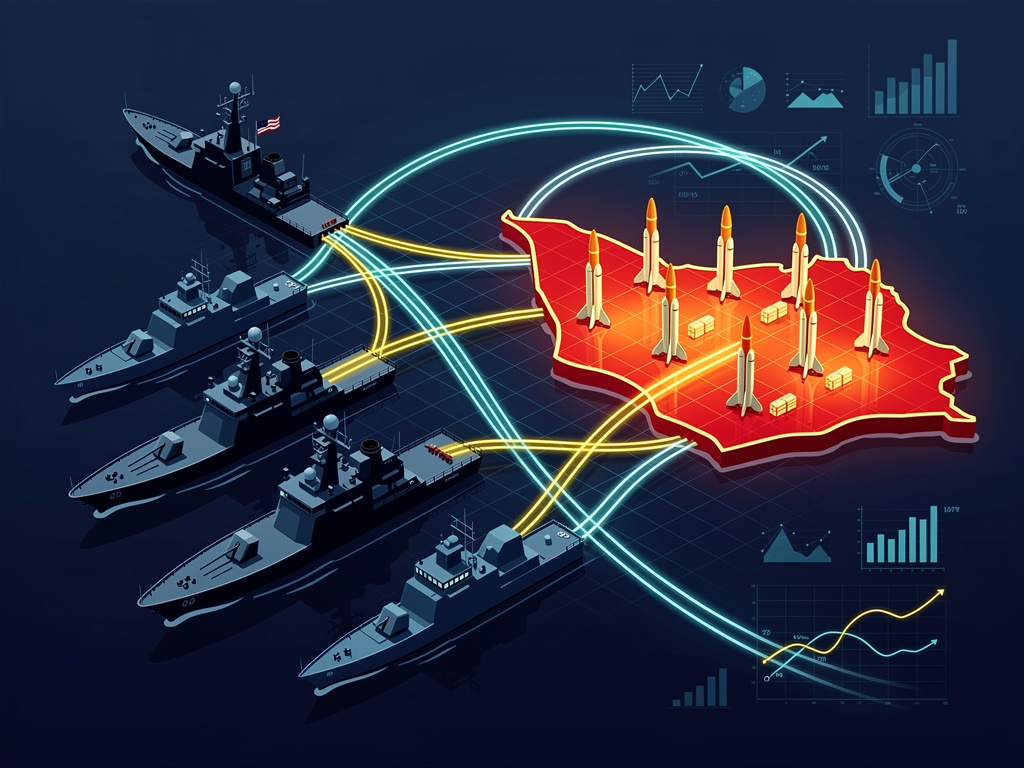
President Donald Trump has projected confidence that his naval blockade of Iranian ports will force Tehran to bend quickly. Yet a confidential CIA analysis delivered to policymakers this week paints a different picture. Iran can endure the restrictions for at least three to four months before severe economic pain sets in. The finding comes as the Trump administration presses for concessions following months of conflict.
The assessment, first reported by The Washington Post, draws on intelligence that highlights Tehran’s retained military capabilities and economic buffers. Iran still holds about 75 percent of its prewar inventories of mobile missile launchers. It retains roughly 70 percent of its prewar missile stockpiles. Evidence shows the regime has recovered access to nearly all underground storage facilities, repaired damaged weapons, and even assembled new missiles that were in production when fighting began.
These details challenge public statements from the White House. Trump claimed Iran’s missiles were “mostly decimated” and that it retained perhaps 18 or 19 percent of its arsenal. He has described Iranian leaders as largely eliminated and suggested victory was at hand. The CIA assessment indicates otherwise. Iranian leadership has grown more radical, more determined, and increasingly convinced it can outlast American political will while maintaining domestic control.
The blockade centers on the Strait of Hormuz. After Iran closed the waterway in response to U.S. and Israeli strikes that began Feb. 28, a fragile ceasefire took hold on April 7. Yet the administration kept naval forces in place to prevent Iranian oil exports. Officials estimated the move was costing Tehran half a billion dollars daily. The goal was to fill storage tanks, halt pumping, and inflict lasting damage on oil infrastructure. But the intelligence community sees limits to that pressure.
Iran has adapted before. Decades of sanctions taught it to stockpile supplies, build parallel trade networks, and develop workarounds. Recent reporting from The New York Times details how the Treasury Department intensified “Operation Economic Fury” in late April. New sanctions targeted Iran’s shadow banking system. They hit Chinese “teapot” refineries that buy most of Tehran’s crude. Treasury Secretary Scott Bessent described the shadow network as a “critical financial lifeline” for Iranian forces. He warned any institution facilitating it faced “severe consequences.”
Those measures build on earlier actions. The U.S. has sanctioned over 1,000 Iran-linked entities since early 2025. Shadow fleet vessels, ship managers, and intermediaries have come under fire. Still, evasion persists. Iran routes some oil overland. It relies on ship-to-ship transfers and vessels that disable tracking. A HuffPost report noted the CIA believes Tehran could extend its endurance further through such smuggling.
And the economic picture is mixed. Prewar sanctions had already strained Iran’s rial and driven inflation above 40 percent. The conflict worsened food prices and contracted output. Yet Iranian businesses long ago learned to hold three months of inventory. Alternative routes through the Caspian Sea and land borders with neighbors provide outlets. China remains the dominant buyer, often paying discounted rates via complex financial channels.
A senior U.S. intelligence official, speaking anonymously, acknowledged the blockade’s bite. “The President’s blockade is inflicting real, compounding damage — severing trade, crushing revenue, and accelerating systemic economic collapse,” the official told reporters. Iran’s military has suffered heavy losses. Its navy lies in ruins. Leaders have gone into hiding. Even so, the regime shows willingness to impose hardship on its population to prolong the fight.
That calculus matters. Pentagon spokesman Sean Parnell pushed back against the leaked assessment. He called such anonymously sourced reports biased attempts to undermine the world’s strongest military. The contrast between public optimism and classified caution raises questions about policy assumptions. How long will the blockade hold before political or economic costs at home mount?
Iran’s missile force, though degraded, still poses risks. Retained launchers and repaired weapons allow sporadic strikes. The regime has rebuilt production lines under bombardment. This resilience echoes patterns seen in past confrontations. Sanctions never fully isolated Tehran. Trade with Asia, especially China, provided oxygen. Russia has offered technical support. Those ties have only deepened.
Recent analysis from the Atlantic Council highlighted how shadow fleets now account for a growing share of global tanker capacity. Iran, Russia, and others exploit gaps in enforcement, insurance, and port access. U.S. seizures of vessels send signals but have not halted flows entirely. One estimate suggested Iran moved millions of barrels despite the blockade through dark operations and evasion tactics refined over years.
So the CIA’s timeline of 90 to 120 days carries weight. It assumes continued naval enforcement without major escalation. It factors in Iran’s ability to ration, substitute, and repress internal dissent. Longer endurance becomes possible if land routes expand or if China increases purchases despite sanctions threats. The assessment was shared with administration officials this week. It appears to temper expectations of imminent collapse.
Trump has insisted the pressure campaign will deliver results. “If we don’t do that, we’ll have to go a big step further,” he said of securing desired concessions. Yet the intelligence suggests time favors patience from Tehran. Its leaders calculate that American attention may shift. Domestic U.S. concerns over oil prices, inflation, and prolonged deployment could erode support for the blockade.
Events on the ground evolve daily. A recent Straits Times piece examined Iran’s hardened economy. It noted adaptation through stockpiling, diversified industries, and multiple border crossings. Food inflation has soared. The rial has plunged. But full breakdown has not arrived. Businesses anticipate disruptions. They prepare accordingly.
This gap between rhetoric and reality complicates strategy. Policymakers must weigh the CIA’s estimates against military gains already achieved. Iran’s nuclear sites and proxy networks suffered blows. Yet core regime survival mechanisms remain intact. Missile reserves allow deterrence. Economic buffers delay capitulation.
Critics inside and outside government worry the blockade could become open-ended. Others argue sustained pressure, paired with targeted sanctions on enablers like Chinese buyers, will eventually prevail. Treasury actions in April signaled no letup. Designations of shadow banking actors and refineries aim to close loopholes.
But leaks of the CIA document have fueled debate. On social media and in Congress, questions arise about alignment between intelligence and public messaging. One anonymous official noted Iranian leadership’s growing confidence. That sentiment could harden negotiating positions.
The coming weeks will test these assessments. Naval forces maintain their positions. Sanctions lists expand. Iran, for its part, signals defiance. It has created new administrative bodies to manage Gulf traffic and collect fees, moves that test international norms. The standoff continues. Endurance, it seems, has become the decisive factor.


 WebProNews is an iEntry Publication