
Decades of work have failed to deliver commercial fusion power. The sun does it effortlessly. On Earth the obstacles stack up fast. Temperatures hotter than the sun’s core. Plasma that refuses to stay put. Machines that cost hundreds of millions or billions to build and test. Every tweak triggers another round of physical experiments. The cycle eats time and capital.
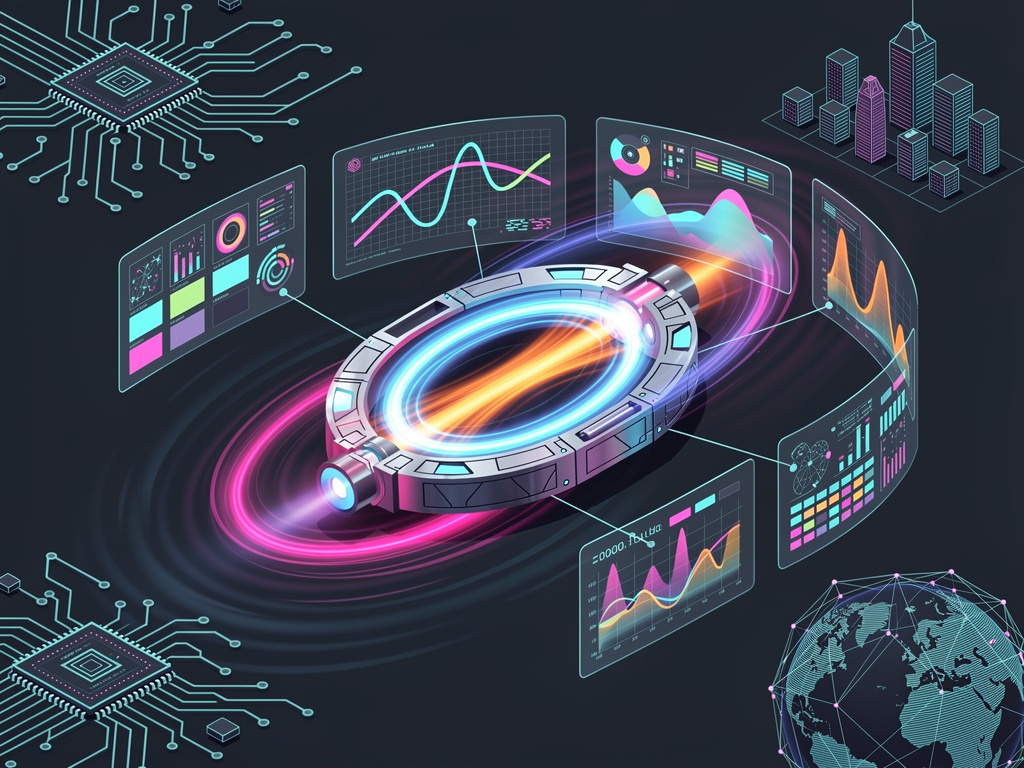
Now a Beijing startup founded just months ago claims it has a better way. VeloAlpha wants researchers to run thousands of reactor designs in software first. Its FusionAlpha platform uses artificial intelligence to speed up key calculations by factors of 100 to 10,000 while keeping errors below 5 percent. The numbers sound striking. Independent checks have yet to confirm them. Still the approach targets one of the sector’s most stubborn expenses: the endless loop of build, measure, revise.
The High Price of Plasma Modeling
Fusion scientists face an uncomfortable choice in their tools. Traditional codes model plasma behavior with high fidelity yet demand heavy computing power and long runtimes. Faster AI models sacrifice reliability especially when asked to predict outside their training data. Simplified physics approximations run quickly but lack the detail needed for next-generation machines. Xie Huasheng founder of VeloAlpha and a fusion scientist calls this the impossible triangle of speed accuracy and predictive power. His company built its business on the bet that new AI methods combined with fresh mathematical techniques can resolve all three at once. According to Xie. Some parts of FusionAlpha run 100 to 10,000 times faster than today’s state-of-the-art fusion codes. Benchmark errors stay under 5 percent.
Those gains matter because hardware tests remain punishingly expensive. A single experimental facility can run into the hundreds of millions or billions of dollars. Tokamaks the doughnut-shaped magnetic confinement devices favored by most teams require precise control of superheated electrically charged gas. One wrong parameter and the plasma becomes unstable. Radiation heat loads and material fatigue add further complications. Every dead-end design burns cash that could have gone elsewhere. Accurate simulations cut that waste. They let teams explore variations virtually before any steel gets cut.
Xie draws a direct parallel to the semiconductor industry. Chip designers once prototyped each idea in silicon. Electronic design automation software changed the equation. It allowed modeling simulation and optimization long before fabrication. Development cycles shortened costs fell and innovation accelerated. VeloAlpha sees the same opportunity in fusion. Build the reactor first in software then in steel. The next generation of machines could emerge from digital iteration rather than pure physical trial and error.
But can the software deliver? Plasma physics involves chaotic nonlinear behavior. Magnetic fields turbulence and heat transport interact in ways that resist simple approximation. Critics note that even the best models today require validation against real machines. Over-reliance on simulation without enough grounding data risks compounding errors. Xie acknowledges the challenge. His team pairs AI with techniques that preserve core physics constraints. The result he says breaks the old trade-offs.
The timing aligns with broader shifts. China’s government lists nuclear fusion among strategic future industries alongside quantum computing and advanced AI. Private capital has followed. Fusion startups component makers and software providers all draw funding. VeloAlpha itself secured seed money from backers convinced that software will prove as decisive as magnets or materials. And the global picture adds pressure. AI data centers consume ever more electricity. Projections show demand climbing sharply. Tech giants hunt stable carbon-free sources. Fusion fits the bill if it arrives in time.
Recent coverage highlights the same dynamics. A South China Morning Post article from June 21 2026 details VeloAlpha’s April founding and FusionAlpha’s digital testing focus. It echoes the speed and accuracy claims while noting Beijing’s strategic push. Meanwhile fusion funding worldwide jumped from $1.7 billion in 2020 to $15 billion by late 2025 according to a Time report published October 29 2025. Investors tied to OpenAI Google and Nvidia back multiple players. Energy has become the primary constraint on AI growth. That reality sharpens interest in any technology that can shorten fusion timelines.
China’s edge appears in both public and private efforts. Its EAST tokamak set records sustaining high-temperature plasma for over 1,000 seconds. State spending on fusion infrastructure dwarfs recent U.S. levels in some estimates. Private firms like Energy Singularity achieved long-pulse operation in a high-temperature superconducting tokamak. AI already helps there too controlling systems in real time and speeding up measurements. VeloAlpha sits at the intersection. It doesn’t build reactors. It aims to make those who do far more efficient.
Obstacles remain. Commercial fusion still lies years or decades away depending on whom you ask. Plasma stability materials that survive neutron bombardment and net electricity production at competitive cost all demand solutions. No simulation replaces every physical test. Regulators investors and utilities will want empirical proof. Yet faster accurate modeling could let teams discard poor concepts early and refine promising ones quickly. That compounds over time.
So the real test for FusionAlpha will come in adoption. Will major labs and private reactor developers integrate it into their workflows? Will its predictions match results when hardware finally spins up? Early backing suggests some believe the answer is yes. The fusion community has heard bold claims before. This one centers not on a new magnet or laser scheme but on something more prosaic: better software. In an industry defined by astronomical hardware costs that may prove the most practical advance of all.
Progress in the field increasingly blends physics engineering and computation. AI does not replace human insight. It amplifies it. It sifts vast parameter spaces that no team could explore manually. When paired with solid physics it compresses decades of iteration into shorter windows. For a technology long mocked as always 30 years away such compression carries weight. VeloAlpha’s work forms one piece of that larger picture. Its success or failure will help decide whether software finally tilts the economics of fusion in favor of speed.


 WebProNews is an iEntry Publication