
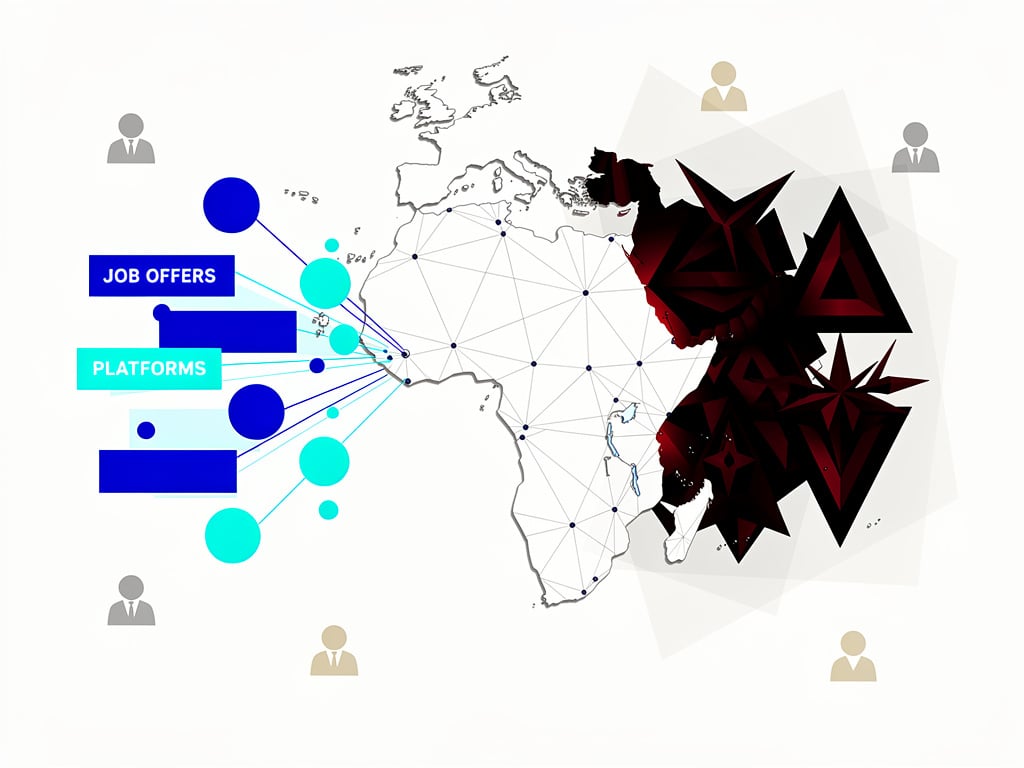
Chinese intelligence operatives have turned professional networking platforms into hunting grounds. They pose as recruiters. They dangle high-paying consulting gigs. And they zero in on government workers suddenly cast aside by federal downsizing.
The tactic isn’t new. But its scale and sophistication have sharpened. What began as scattered LinkedIn approaches has evolved into coordinated campaigns using networks of sham companies. These fronts list phantom addresses and promise flexible remote work to those holding security clearances or policy expertise. Targets hand over resumes. They complete questionnaires. Sometimes they produce reports on niche topics. Each step yields fragments of intelligence that Beijing’s agencies stitch together.
Gizmodo first highlighted the pattern in detail. (https://gizmodo.com/china-linked-spies-are-reportedly-using-job-platform-scams-to-harvest-intel-2000767274) The report described China-linked actors crafting deceptive job listings on major platforms. Their goal: extract sensitive data from professionals in defense, technology and foreign policy. The article drew on security researchers who spotted consistent tradecraft. Flattering messages. Vague company backgrounds. Requests that escalated from basic biographical details to policy assessments.
Events accelerated in 2025. Widespread federal layoffs created a fresh pool of anxious talent. Many cleared professionals updated profiles on LinkedIn and similar sites, advertising availability. Chinese operators noticed. They moved quickly.
Reuters uncovered a secretive Chinese tech firm behind dozens of fake consulting and headhunting outfits. (https://www.reuters.com/world/china/secretive-chinese-network-tries-lure-fired-federal-workers-research-shows-2025-03-25/) The network targeted recently dismissed U.S. government employees. Job ads appeared for analyst and research roles. Companies listed empty lots or shell addresses as headquarters. Max Lesser, senior analyst at the Foundation for Defense of Democracies, led the investigation. He described the effort as “part of a broader network of fake consulting and headhunting firms targeting former government employees and AI researchers.”
Lesser’s team identified specific fronts such as RiverMerge Strategies and Tsubasa Insight. These entities posted openings that seemed tailored to former federal staffers’ exact experience. Once contact began, handlers requested writing samples on specialized subjects. One former State Department official received a pitch to draft an assessment of U.S. policy priorities in Venezuela. Payment was offered. The request came from a sham company previously flagged in reporting. Nextgov/FCW detailed that case. (https://www.nextgov.com/people/2026/01/suspected-chinese-spies-targeted-former-state-official-venezuela-research/410943/)
But the operation stretches far beyond American shores. On June 4, 2026, intelligence agencies from the Five Eyes alliance issued an unprecedented joint warning. MI5, the FBI, ASIO and partners across Canada and New Zealand spoke with one voice. China’s military intelligence services, they said, are flooding professional networking sites and online job platforms. The targets include government and military personnel across the alliance with access to classified material.
The BBC reported the alert in real time. (https://www.bbc.com/news/articles/cq6peqrnzpro) Chinese spies pose as recruitment agents. They advertise fake analyst positions on LinkedIn, Indeed and Upwork. They use aggressive online recruitment strategies. Successful applicants face pressure to deliver confidential information for clients tied to the Chinese government. The bulletin described red flags: excessive flattery, overly personal knowledge of a target’s background, offers to cover travel or visas, and communication that shifts to personal email or encrypted apps.
The Guardian covered the UK angle simultaneously. (https://www.theguardian.com/uk-news/2026/jun/03/chinese-spies-linkedin-uk-officials) MI5 warned lawmakers that operatives linked to China’s Ministry of State Security have approached officials and military staff. Some profiles impersonate legitimate HR consultants for firms that appear based overseas. The focus falls on anyone with direct or indirect access to British secrets.
Bloomberg noted the warning’s rarity. (https://www.bloomberg.com/news/articles/2026-06-03/us-and-five-eyes-allies-warn-of-linkedin-china-spying-threat) Five Eyes partners seldom coordinate public statements of this nature. The move signals growing alarm over how easily digital platforms lower the barriers for espionage. No longer must handlers risk in-person meetings. A few crafted messages suffice to open doors.
This approach fits a wider pattern documented for years. The FBI has repeatedly cautioned that China and other adversaries target current and former U.S. government employees on social and professional networks. One public service announcement stressed the risk to those with clearances. Operatives offer high salaries and flexible hours. They probe for details. They build rapport. Then they request favors that start small and grow.
The Foundation for Defense of Democracies report from May 2025 crystallized the threat to laid-off workers. Cybersecurity Dive summarized its findings. (https://www.cybersecuritydive.com/news/china-espionage-campaign-laid-off-workers/748607/) The campaign exploits economic uncertainty. It uses front companies and direct LinkedIn outreach. The information sought ranges from unclassified policy insights to details that could expose sources and methods. ClearanceJobs amplified the warning. (https://news.clearancejobs.com/2025/08/24/when-the-job-offer-is-a-trap-chinese-espionage-campaign-targets-laid-off-feds/) It reminded readers that simply updating a profile can invite contact.
Analysts see multiple benefits for Beijing. Information arrives cheaply. Risk stays low. Compromised individuals rarely realize they have crossed a line until too late. Some provide data unwittingly. Others face subtle coercion once initial material is shared. The approach also maps networks. One target’s recommendations lead to new prospects.
China denies systematic espionage of this kind. Its embassy has stated that Beijing respects data privacy and security. Yet the volume of cases tracked by Western agencies continues to climb. CSIS maintains a database of Chinese espionage incidents in the United States. It lists hundreds of examples since 2000, many involving recruitment through professional channels. The FBI’s own China threat page highlights talent plans and online approaches as persistent vectors.
Private sector platforms face pressure to respond. LinkedIn has removed profiles flagged by intelligence agencies. Yet new ones appear. The speed of account creation outpaces moderation. Job boards struggle to verify every posting, especially those from small consultancies claiming overseas bases.
Experts urge individuals to adopt basic precautions. Verify the recruiter’s background. Check company registration. Avoid sharing sensitive information in early conversations. Report suspicious contact to security offices or the FBI. Former officials with clearances receive specific briefings on these risks. Many still slip through because the pitches sound legitimate. Who wouldn’t explore opportunities after sudden job loss?
The convergence of mass federal layoffs and sophisticated digital deception has created a target-rich environment. Chinese operators are not simply fishing. They deploy tailored campaigns that exploit timing, psychology and platform algorithms. A single well-placed query on a policy issue can reveal priorities, gaps or even classified details when paired with other data.
And the campaign shows no sign of slowing. Today’s joint Five Eyes alert marks an escalation in public acknowledgment. It also signals that allied governments view the threat as immediate and shared. Platforms, recruiters and job seekers now operate in an arena where every connection request carries potential risk.
Security officials expect the tactic to adapt. Operators may incorporate artificial intelligence to generate more convincing profiles and messages. They could blend job offers with invitations to conferences or speaking opportunities. The core remains constant. Offer opportunity. Collect information. Build leverage. Beijing’s intelligence apparatus has refined this formula over years. Western defenses are catching up. But the asymmetry favors the aggressor. One success pays for dozens of failures.
Professionals across government, military and critical industries must treat every unsolicited job approach with skepticism. The offer that seems too good, or too perfectly matched, often is. In an era of remote work and digital recruitment, the front line of counterintelligence runs straight through the inbox.


 WebProNews is an iEntry Publication