
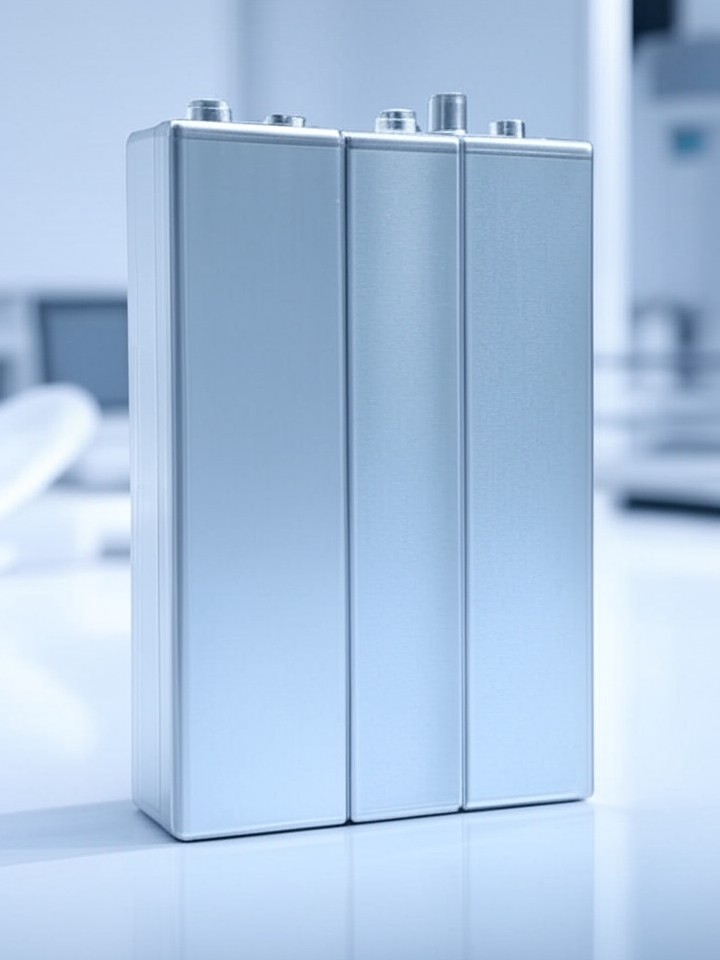
Sulfur’s Electrifying Leap: China’s Bold Sodium Battery Bet Against Lithium Giants
In the relentless pursuit of better energy storage, a team of Chinese researchers has unveiled a sodium-sulfur battery that promises to shake up the established order dominated by lithium-ion technology. This innovation, detailed in a recent study, leverages an unconventional sulfur chemistry to achieve remarkable energy density and voltage levels, potentially offering a safer and more cost-effective alternative. As global demand for batteries surges with the rise of electric vehicles and renewable energy grids, this development arrives at a pivotal moment, highlighting sodium’s abundant availability compared to lithium’s scarcer reserves.
The breakthrough centers on a high-voltage design that sidesteps traditional limitations of sodium-sulfur systems, which historically operated at elevated temperatures and posed safety risks. By rethinking the redox reactions involved—specifically shifting to a high-valent sulfur pathway—the researchers have crafted a battery that delivers a discharge voltage of 3.6 volts, far surpassing previous iterations. This isn’t just incremental progress; it’s a fundamental reimagining of how sulfur can contribute to energy storage, turning what was once a problematic element into a powerhouse.
According to reports from Digital Trends, the team at Shanghai Jiao Tong University has managed to pack an energy density of 2,021 watt-hours per kilogram into their prototype. That’s a figure that rivals or exceeds many lithium-based cells, but with materials that are dramatically cheaper and more plentiful. Sodium, derived from common salt, and sulfur, a byproduct of industrial processes, could slash production costs significantly, addressing one of the biggest pain points in the battery sector.
Unlocking Sulfur’s Hidden Potential
The core innovation lies in the battery’s anode-free architecture, which eliminates the need for traditional anode materials and relies instead on in-situ formation during operation. This design choice not only reduces weight but also mitigates issues like dendrite formation that plague other metal-based batteries. The researchers incorporated a non-flammable electrolyte to enhance safety, a critical factor given the fire hazards associated with lithium-ion packs.
Comparisons to lithium batteries reveal stark contrasts. Lithium-ion cells, while mature and widely deployed, suffer from supply chain vulnerabilities, with lithium mining concentrated in a few regions and prone to price volatility. Sodium-sulfur batteries, as explored in a 2022 review by National Science Review, have long been eyed for their theoretical advantages, but practical challenges like low voltage and polysulfide shuttling have hindered commercialization. The new Chinese design tackles these head-on by optimizing the sulfur redox to S0/S4+ chemistry, boosting efficiency and cycle life.
Industry insiders note that this could be a game-changer for large-scale applications. For instance, grid storage, where energy density is less critical than cost and safety, stands to benefit immensely. A post on X from Shanghai Jiao Tong University highlighted the study’s publication in Nature, emphasizing how this high-valent path addresses voltage and safety limitations, paving the way for practical deployment.
Navigating Technical Hurdles in Sodium Systems
Yet, no breakthrough is without its obstacles. Sodium-sulfur batteries have historically required high operating temperatures—around 300°C—to maintain molten states for sodium and sulfur, complicating designs and raising energy overheads. The room-temperature variant developed here, as described in a 2018 paper from Nature Communications, builds on earlier efforts but pushes boundaries further with additives like indium triiodide to stabilize reactions.
Challenges persist in scaling up. Polysulfide dissolution remains a concern, potentially leading to capacity fade over cycles. The Chinese team mitigated this through electrolyte engineering, but long-term stability in real-world conditions will need rigorous testing. Compared to lithium-sulfur batteries, which Argonne National Laboratory has advanced with interlayers to prevent sulfur dissolution—as reported in their 2023 article—sodium variants must contend with sodium’s higher reactivity, demanding robust solid-electrolyte interfaces.
Market trends underscore the urgency. A 2025 overview in Current Opinion in Green and Sustainable Chemistry positions sodium-ion batteries as a sustainable alternative, with recycling advantages and reduced environmental impact. Posts on X from users like S.L. Kanthan celebrate China’s lead in sodium tech, noting patents and production milestones, such as CATL’s mass-produced cells that match lithium capacity at a fraction of the cost.
Cost and Supply Chain Advantages Over Lithium
Economically, the allure is undeniable. Lithium prices have fluctuated wildly, driven by demand from electric vehicles. Sodium, abundant in seawater and earth’s crust, offers insulation from such volatility. Sulfur, often a waste product from oil refining, adds to the low-cost appeal. As per a recent piece in Interesting Engineering, this new battery’s 2,021 Wh/kg density comes from a clever redox shift, making it competitive without rare metals.
In contrast, lithium batteries rely on cobalt and nickel, elements tied to ethical mining concerns in regions like the Democratic Republic of Congo. Sodium-sulfur’s simplicity could democratize battery production, enabling more countries to enter the fray. A 2017 review in Journal of Power Sources on sodium-sulfur progress foresaw applications in load leveling, but the high-voltage twist amplifies potential for electric vehicles, where range anxiety demands high performance.
X discussions amplify this buzz, with users like Kai Wong pointing to CATL’s sodium batteries lasting 25 years and operating in extreme cold, outpacing lithium in durability. Such sentiments reflect growing confidence in sodium’s viability, challenging the notion that innovation is lithium’s exclusive domain.
Safety Innovations and Real-World Testing
Safety emerges as a standout feature. Lithium-ion fires have made headlines, from smartphone explosions to electric bus infernos. The sodium-sulfur design’s non-flammable electrolyte and stable chemistry reduce these risks, as noted in a TechXplore article from just days ago, which praises the battery’s potential to address overheating and sourcing woes.
However, experts caution that while promising, the technology is in early stages. Cycle life, though improved to hundreds of cycles in lab tests, must scale to thousands for commercial viability. Comparisons to all-solid-state lithium-sulfur batteries, detailed in a 2024 review from Nano-Micro Letters, show sodium’s edge in cost but highlight lithium’s maturity in energy density for portable devices.
Infrastructure adaptation poses another layer. Existing manufacturing lines geared for lithium may resist transition, but China’s dominance in battery production—evident in BYD’s 2024 sodium-ion factory groundbreaking, as shared on X by Dave Jones—could accelerate adoption. This positions Asia as a hub for next-gen storage, potentially reshaping global supply dynamics.
Global Implications for Energy Storage
Looking ahead, the ripple effects could transform renewable integration. Wind and solar intermittency demands affordable storage, and sodium-sulfur’s economics fit the bill. A ScienceDaily report on solid-state advancements echoes this, though focused on lithium, by stressing structural tweaks for ion mobility—principles applicable here.
Challenges in commercialization include regulatory hurdles and standardization. While lithium benefits from established safety protocols, sodium-sulfur must prove itself. Yet, with China’s push, as seen in X posts about the first grid-connected sodium-ion battery in Guangxi, momentum is building.
For industry players, this signals a diversification imperative. Tesla and Panasonic, lithium stalwarts, may need to pivot. As Henry Sanderson noted on X years ago about CATL’s early sodium work targeting 200 Wh/kg, the trajectory has exceeded expectations, now hitting over ten times that in specialized designs.
Strategic Shifts in Battery Innovation
The broader context reveals a race for supremacy. Western firms invest in lithium refinements, but China’s sodium strides, backed by state support, could erode that lead. A piece from Ars Technica describes how sulfur, rather than storing energy, donates electrons in this setup, unlocking high power.
Environmental benefits add appeal. Lower mining impacts and easier recycling, as per the Current Opinion overview, align with sustainability goals. X user Megatron’s post on CATL’s production underscores cost savings, potentially halving electric vehicle prices.
Ultimately, this sodium-sulfur advance isn’t just a technical feat; it’s a strategic maneuver in the global energy shift. By harnessing cheap elements with clever chemistry, it challenges lithium’s reign, promising a more equitable and resilient future for power storage. As trials progress, the world watches to see if this high-voltage contender can deliver on its bold promises.


 WebProNews is an iEntry Publication