
Orbital Brinkmanship: When Satellites Dodge Disaster in Crowded Skies
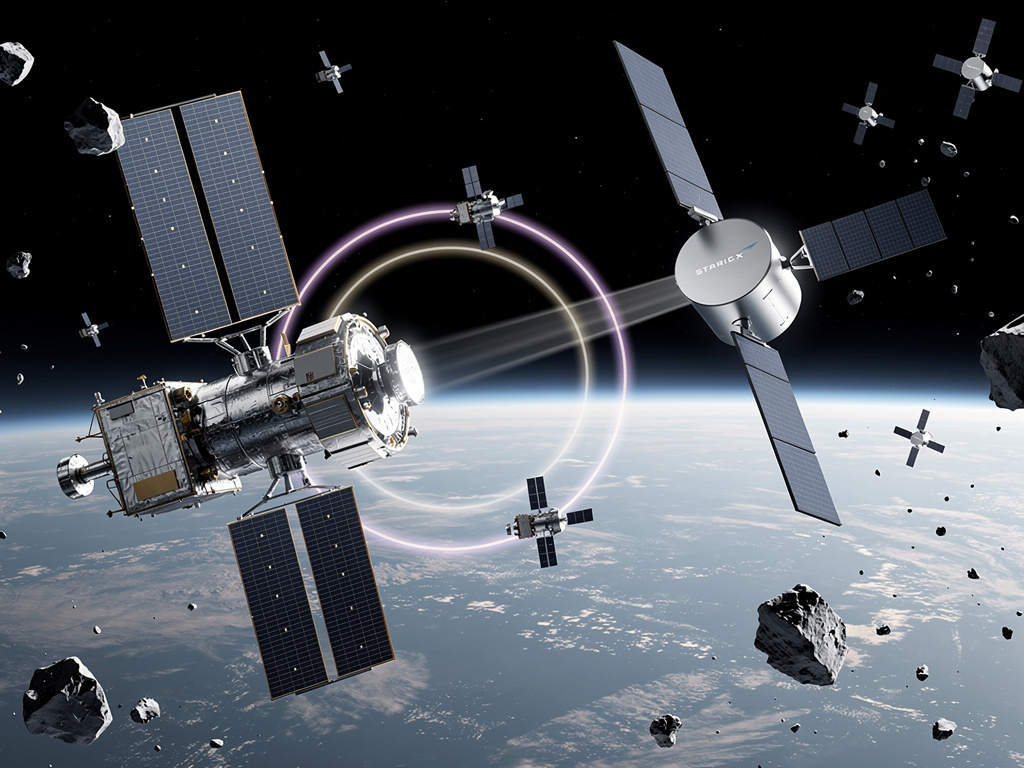
In the vast expanse of low Earth orbit, where thousands of satellites zip around the planet at breakneck speeds, a recent close call has thrust the perils of unregulated space traffic into sharp relief. On December 9, a Chinese rocket launched from the Taiyuan Satellite Launch Center deployed nine satellites, one of which came perilously close to colliding with a SpaceX Starlink spacecraft just three days later. According to SpaceX, the incident forced its satellite to execute an emergency maneuver, firing thrusters to avoid a potential catastrophe. This event, detailed in a Futurism report, underscores the growing tensions between major spacefaring nations and the urgent need for better coordination amid an increasingly congested orbital environment.
The specifics of the encounter are alarming. SpaceX reported that the Chinese satellite, part of a payload from commercial provider CAS Space, approached within 200 meters of Starlink-6079—a distance that’s razor-thin in orbital terms, where objects travel at velocities exceeding 17,000 miles per hour. Without intervention, a collision could have generated a cascade of debris, potentially endangering other assets in orbit. SpaceX’s automated systems detected the risk and initiated the avoidance burn, but company executives expressed frustration over the lack of prior data sharing from the Chinese side. This isn’t an isolated gripe; it echoes broader concerns about transparency in space operations, particularly as constellations like Starlink expand rapidly.
Elon Musk’s company has been vocal about such risks, positioning itself as a leader in orbital safety. With over 6,000 Starlink satellites already in operation, SpaceX performs thousands of collision-avoidance maneuvers annually. Yet, this incident highlights a asymmetry: while Western operators routinely publish ephemeris data—precise orbital paths—for deconfliction, not all players follow suit. CAS Space, in response, stated it was investigating the matter and emphasized its commitment to sustainable space use, but the episode has fueled accusations of irresponsibility.
Escalating Rivalries in the New Space Race
The backdrop to this near-miss is a intensifying competition between the U.S. and China in space technology. China’s ambitious plans include building its own megaconstellation, akin to Starlink, with thousands of satellites aimed at providing global broadband. The December 9 launch was part of this push, deploying assets for various international clients, including Earth-observation satellites for the UAE and educational ones for Nepal. As noted in a Space.com article, the Kinetica 1 rocket’s payload included multifunctional Chinese satellites, marking another step in Beijing’s drive to challenge American dominance.
SpaceX, meanwhile, continues its relentless deployment schedule. Just days after the incident, on December 14, a Falcon 9 rocket lofted 27 more Starlink satellites from Vandenberg Space Force Base, achieving the company’s 550th booster landing—a testament to its operational prowess. This rapid scaling has drawn scrutiny, with critics arguing that Starlink’s sheer volume contributes to orbital clutter. However, SpaceX counters that its satellites are designed for low-altitude operations and controlled deorbiting, minimizing long-term debris risks.
The friction isn’t new. Historical precedents abound, such as China’s 2021 complaints to the United Nations about Starlink satellites endangering its space station. In a twist of irony, that episode involved SpaceX satellites maneuvering close to the Tiangong station, prompting Beijing to invoke the 1967 Outer Space Treaty, which holds nations responsible for their entities’ activities in space. Now, the tables have turned, with SpaceX alleging similar negligence from China.
The Perils of Space Debris and Collision Risks
At the heart of these disputes lies the specter of space debris—a growing hazard that could render orbits unusable. Experts warn of the Kessler Syndrome, a scenario where collisions create self-sustaining chains of fragmentation, as described in a PCMag analysis. The recent incident came amid reports of over 50 debris pieces from a prior Chinese launch posing threats to low Earth orbit constellations. Posts on X from space tracking firms like Slingshot Aerospace highlight how such fragments, often from rocket breakups, drift through critical altitudes, endangering assets like the International Space Station.
Data from organizations such as LeoLabs reveal that China’s Long March 6A rocket, used in an August launch, generated over 700 debris fragments, which are slowly descending through busy orbital bands. This isn’t anomalous; China’s space program has a track record of contributing to debris fields, including a 2007 anti-satellite test that created thousands of trackable pieces. In contrast, SpaceX’s Starlink satellites operate at 210 to 340 miles altitude, below many debris-heavy zones, and are equipped with autonomous avoidance capabilities.
Industry insiders point to the need for global standards. A Verge piece notes that the Chinese operator failed to share location data pre-launch, a standard practice among Western firms. This opacity complicates efforts by bodies like the U.S. Space Force’s Space-Track.org, which relies on voluntary data sharing to predict conjunctions—potential close approaches.
Policy Gaps and International Responses
The regulatory framework governing space remains outdated, rooted in Cold War-era treaties that don’t fully address commercial megaconstellations. The Outer Space Treaty mandates that states bear international responsibility for national activities, including those by private companies, but enforcement is lax. Recent developments show glimmers of cooperation; for instance, China reached out to NASA in November to coordinate a maneuver and avoid a collision, as reported in another Space.com story. This marked a rare instance of direct U.S.-China space dialogue, hinting at potential for bilateral agreements.
Yet, tensions persist. On X, figures like former astronaut Ed Lu have criticized Chinese launches for debris generation, while entrepreneurs such as Jared Isaacman, who has flown SpaceX missions, emphasize the undetectable risks in dense debris fields. Calls for updating the Outer Space Treaty are mounting, with suggestions to include mandatory debris mitigation and data-sharing protocols. One X post from a space policy analyst advocated for rapid deorbiting of spent assets and a “space bank” for recycling orbital junk, reflecting innovative ideas bubbling in the community.
Geopolitically, this incident amplifies U.S.-China rivalries. Beijing’s state-backed space efforts contrast with America’s commercial-led model, led by SpaceX. Analysts argue that without binding rules, such near-misses could escalate into diplomatic incidents or worse—deliberate interference. The U.S. Federal Communications Commission has imposed stricter debris rules on domestic operators, but international buy-in is crucial.
Technological Solutions and Future Safeguards
Innovation is key to mitigating these risks. SpaceX’s Starlink fleet incorporates ion thrusters for precise maneuvering and is programmed to deorbit at end-of-life, burning up in the atmosphere. Emerging technologies, like laser-based debris removal proposed by startups, could help clear orbits. A Daily Galaxy article on the recent dodge highlights how AI-driven prediction systems are becoming essential for operators managing vast constellations.
China, too, is advancing its capabilities. Its G60 constellation aims to rival Starlink, with plans for thousands of satellites. However, incidents like the Shenzhou-20 spacecraft’s debris strike, which delayed its return as noted in X discussions, underscore shared vulnerabilities. Collaborative platforms, such as the United Nations’ Committee on the Peaceful Uses of Outer Space, are pushing for guidelines, but progress is slow.
Looking ahead, experts foresee a multipolar space domain where private firms and nations must navigate shared orbits. SpaceX’s push for greater coordination, as voiced by executives, could catalyze industry-wide standards. A TechSpot report warns that as orbits crowd, the frequency of such events will rise, potentially leading to insurance hikes and operational costs.
Voices from the Front Lines and Broader Implications
Industry veterans are sounding alarms. In X threads, commentators decry China’s lack of pre-launch data sharing, contrasting it with Western norms. One post likened the situation to “aggression in space,” accusing Beijing of gambling with global assets. SpaceX, for its part, has leveraged the incident to advocate for transparency, urging operators worldwide to adopt open data practices.
The economic stakes are immense. Starlink generates billions in revenue, serving remote areas and even military applications, while China’s constellations could disrupt that market. A collision could not only destroy hardware but trigger cascading failures, affecting GPS, weather forecasting, and communications reliant on satellites.
Ultimately, this near-miss serves as a wake-up call. As space becomes a critical infrastructure domain, fostering international norms is imperative. Initiatives like NASA’s recent coordination with China offer hope, but sustained dialogue is needed to prevent orbital mishaps from becoming flashpoints. With constellations set to multiply, the focus must shift to proactive measures—ensuring that the final frontier remains accessible, not a debris-strewn graveyard.


 WebProNews is an iEntry Publication