
China’s Battery Behemoth: Dominating the Electric Future Worldwide
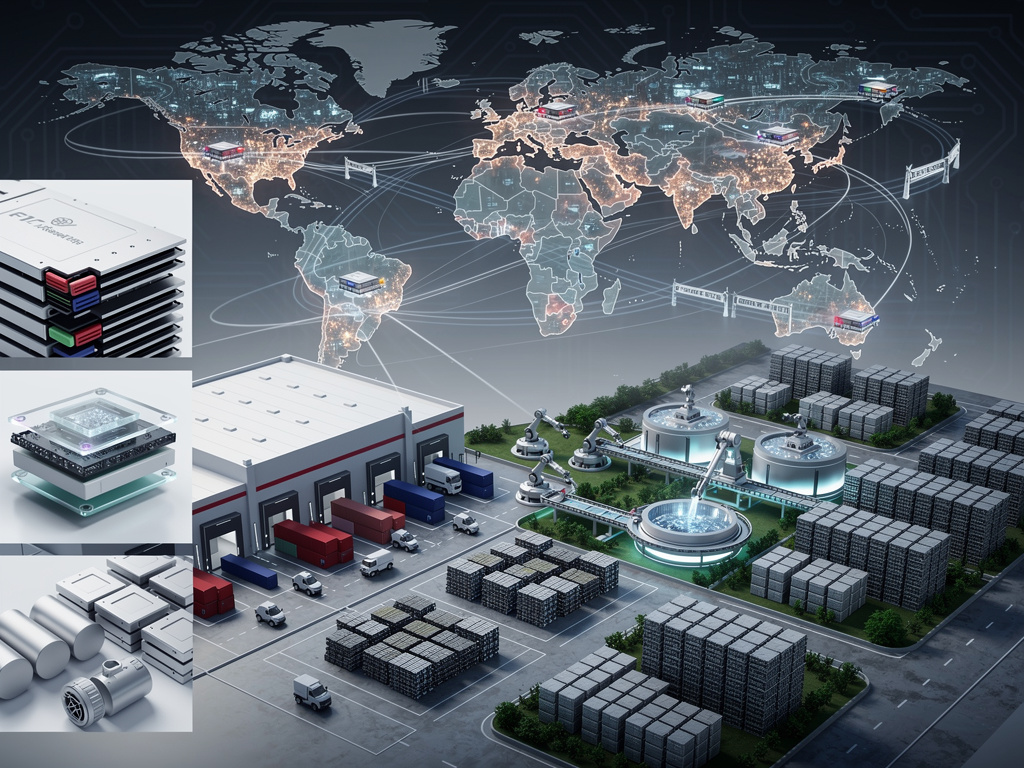
In the heart of the global shift toward electric mobility, Chinese companies are not just participating—they’re leading the charge. Firms like Contemporary Amperex Technology Co. Limited (CATL) and BYD are extending their reach far beyond Asia, establishing manufacturing footprints across continents. This expansion isn’t merely about exporting products; it’s a strategic push to embed Chinese technology into the core of international supply chains. As electric vehicles (EVs) become ubiquitous, the batteries powering them are increasingly sourced from these giants, reshaping industries and economies alike.
Recent developments underscore this trend. According to a report from Wired, Chinese lithium batteries aren’t always stamped “made in China” anymore, as companies build factories globally. This move helps navigate trade barriers and local content requirements, ensuring a steady flow of advanced battery tech to markets hungry for affordable EVs. For instance, CATL has announced plans for plants in Europe and North America, while BYD eyes expansions in Southeast Asia and beyond.
The implications are profound for automakers worldwide. Traditional players like Ford and General Motors are forging partnerships with these Chinese firms to secure battery supplies, recognizing that self-reliance in this arena is increasingly elusive. This interdependence highlights how China’s dominance in battery production—controlling over 70% of the global market—forces even competitors to collaborate.
Expanding Footprints and Strategic Alliances
Yet, this global march isn’t without challenges. Trade tensions, particularly with the U.S. and Europe, cast shadows over these ambitions. Tariffs and subsidies aimed at bolstering domestic industries have prompted Chinese companies to localize production. A piece from Bloomberg details how CATL’s overseas plans face pushback from figures like Donald Trump and European politicians, who view this influx as a threat to local jobs and technological sovereignty.
On the innovation front, China is pioneering advancements that could redefine battery performance. Solid-state batteries, often dubbed the “holy grail” of EV tech, are progressing rapidly. An article on Electrek notes that China has introduced its first national standard for these batteries, paving the way for safer, more energy-dense options that could extend vehicle ranges significantly.
Market data reinforces this momentum. The International Energy Agency’s Global EV Outlook 2025 highlights surging demand for batteries, with China at the forefront. However, not all is smooth sailing; a Reuters report warns of a potential slump in early 2026 due to softening domestic EV sales and export slowdowns, as mentioned in Reuters.
Recycling Challenges and Sustainability Efforts
As the EV boom matures, another critical issue emerges: battery recycling. With hundreds of thousands of used batteries entering the market, China is grappling with a burgeoning gray economy. MIT Technology Review explores how Beijing and major manufacturers are racing to establish orderly recycling systems, turning waste into valuable resources like lithium and cobalt.
This recycling push is vital for sustainability, reducing reliance on raw material mining and mitigating environmental impacts. Chinese firms are investing heavily in closed-loop systems, where old batteries are refurbished or broken down for reuse in new ones. Such initiatives not only address ecological concerns but also secure supply chains against geopolitical disruptions in mineral sourcing.
Globally, this expertise is exporting itself. As Chinese companies set up shop abroad, they’re bringing recycling know-how, potentially standardizing practices worldwide. However, critics argue that without stringent regulations, informal recycling could lead to pollution and health risks, echoing challenges seen in electronics waste management.
Market Growth Amid Policy Shifts
Turning to market dynamics, China’s EV battery sector saw remarkable growth in 2025, with total capacity reaching 769.7 GWh—a 40.4% increase year-over-year, as reported by Electrive. This surge reflects robust domestic demand and export prowess, though headwinds like policy changes loom. For example, Beijing’s reduction in export tax rebates on lithium-ion batteries could ripple to markets like India, potentially hiking EV prices there, according to Electronics For You.
Policy shifts elsewhere add layers of complexity. Canada’s recent decision to slash tariffs on Chinese EVs from 100% to 6.1% allows capped imports, aiming to enhance affordability and competition, per Battery Tech Online. This contrasts with protectionist stances in the U.S. and EU, illustrating a fragmented global response to China’s battery dominance.
Social media sentiment on platforms like X echoes these developments. Posts from industry observers highlight overcapacity concerns, with some noting that Chinese production runs three times demand, pressuring startups in the West. Others point to China’s 69% share in global EV battery production in 2025, underscoring supply chain vulnerabilities and the need for diversification.
Technological Innovations Driving Change
Delving deeper into technology, advancements in battery chemistry are key to China’s edge. Lithium-iron-phosphate (LFP) batteries, cheaper and safer than nickel-based alternatives, have become a staple, thanks to innovations from CATL and BYD. These batteries are now powering models from Tesla to European brands, reducing costs and improving accessibility.
Emerging tech like sodium-ion batteries promises even greater affordability, potentially disrupting lithium dependency. Chinese researchers are at the vanguard, with pilot projects demonstrating viability for mass-market EVs. This could democratize electric transport in developing regions, where cost barriers remain high.
However, intellectual property and technology transfer issues arise as Chinese firms expand. Partnerships often involve sharing know-how, raising concerns about long-term competitiveness for host countries. The Wired report emphasizes how these factories aren’t just assembly lines but hubs for R&D, fostering local talent while anchoring Chinese influence.
Global Supply Chain Reshaping
The broader impact on global supply chains is transformative. China’s control over lithium refining—around 70% worldwide—forces automakers to rethink sourcing strategies. Tesla’s push for domestic batteries by 2026, as noted in X discussions, signals a race to localize, yet reliance on Chinese-processed materials persists.
In Europe, gigafactories backed by subsidies aim to counter this, but scale and efficiency gaps remain. The IEA’s outlook projects that by 2030, battery demand could quadruple, with China poised to capture the lion’s share unless alternatives emerge.
Geopolitical tensions amplify risks. Disruptions in rare earth supplies or trade wars could spike prices, affecting EV adoption rates. Industry insiders stress the need for resilient chains, perhaps through alliances that blend Chinese tech with Western manufacturing.
Future Horizons and Industry Adaptation
Looking ahead, the sector’s trajectory hinges on balancing growth with stability. While a 2026 demand slump looms per the Reuters analysis, long-term prospects are buoyant, driven by global electrification goals. Chinese firms are diversifying into energy storage, applying EV battery tech to grid solutions and renewables.
Adaptation strategies include vertical integration, where companies like BYD control everything from mining to vehicle assembly. This model enhances efficiency but raises monopoly concerns, prompting antitrust scrutiny in some markets.
For insiders, the message is clear: engaging with China’s battery ecosystem is inevitable. Whether through joint ventures or technology licensing, the path forward involves collaboration amid competition, ensuring the electric revolution benefits all stakeholders.
Navigating Overcapacity and Innovation Pressures
Overcapacity remains a double-edged sword. As X posts from experts like Michael Dunne illustrate, Western startups face daunting odds against Chinese giants continuously expanding. Yet, this glut drives down prices, accelerating EV penetration globally.
Innovation pressures are intensifying. China’s national standards for solid-state batteries, as per Electrek, set benchmarks that others must match. This could lead to a new wave of patents and breakthroughs, further entrenching leadership.
In response, governments are ramping up investments. The U.S. Inflation Reduction Act funnels billions into domestic battery production, aiming to erode China’s market share. Similar efforts in Europe seek to build sovereign capabilities, though timelines lag behind immediate needs.
Sustainability as a Competitive Edge
Sustainability is emerging as a differentiator. China’s recycling initiatives, detailed in the MIT Technology Review piece, position it as a leader in circular economies. By reclaiming materials, firms reduce costs and environmental footprints, appealing to eco-conscious consumers and regulators.
Challenges persist in raw material ethics. Mining controversies in Africa and South America highlight the need for transparent sourcing. Chinese companies are increasingly adopting standards like those from the Responsible Minerals Initiative to mitigate backlash.
Ultimately, the global battery arena is a testament to China’s industrial might, blending scale, innovation, and adaptability. As the world electrifies, these developments will dictate the pace and direction of mobility’s future, with profound economic and environmental ramifications.


 WebProNews is an iEntry Publication