
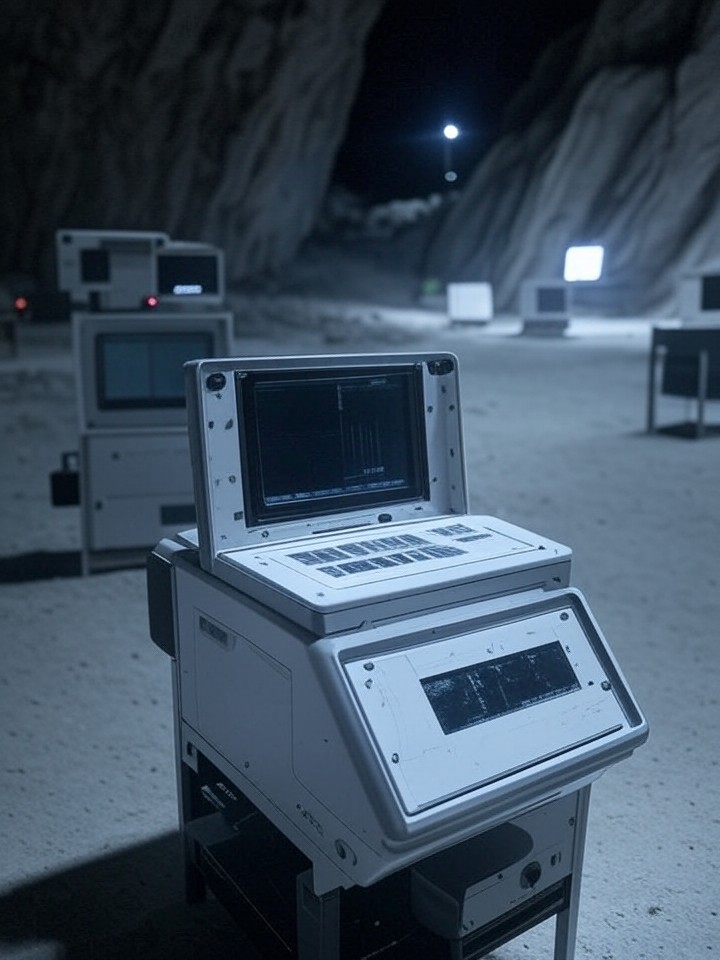
In the dimly lit depths of a Chongqing cave, a group of Chinese astronauts recently pushed the boundaries of human endurance, emerging after nearly a month of isolation that mirrors the harsh realities of lunar exploration. This intensive training exercise, orchestrated by the China National Space Administration (CNSA), underscores Beijing’s accelerating ambitions in space, where preparation for crewed moon missions demands not just technical prowess but profound psychological resilience. According to reports from Futurism, 28 trainees and veterans from China’s astronaut corps participated in this subterranean regimen, designed to simulate the isolation, darkness, and confined spaces they might encounter on the moon.
The program unfolded in the karst caves of Wulong National Park, a labyrinthine network chosen for its eerie parallels to potential lunar lava tubes—natural shelters that could one day house human habitats. Divided into four rotating groups, the astronauts spent six days and five nights each in these underground environments, contending with perpetual dimness, high humidity, and limited resources. This isn’t mere adventure; it’s a calculated step in CNSA’s roadmap toward landing taikonauts on the lunar surface by 2030, as detailed in updates from SpaceNews. The training emphasizes survival skills, team dynamics, and mental fortitude, elements critical for missions where communication delays and environmental hazards could turn routine tasks into life-or-death challenges.
Beyond the physical rigors, participants faced profound mental strains. “In that kind of darkness, the mental pressure is overwhelming,” one observer noted in coverage by DNYUZ. The exercise included tasks like geological sampling and emergency simulations, all while isolated from the outside world, fostering the self-reliance needed for extended lunar stays. CNSA officials have framed this as part of a broader strategy to prepare for the International Lunar Research Station, a collaborative project with partners like Russia, aimed at establishing a permanent presence on the moon.
Simulating Lunar Extremes Underground
This cave training builds on China’s history of innovative preparation methods, drawing from global precedents while tailoring them to national goals. For instance, similar programs have been used by NASA and ESA astronauts to mimic extraterrestrial conditions, but CNSA’s approach integrates unique elements like prolonged group rotations to test interpersonal dynamics over time. As reported in India Today, the Chongqing caves provided a “dark, damp hole” that replicates the sensory deprivation of space, where astronauts must adapt to irregular sleep cycles and constant vigilance against psychological fatigue.
Industry experts view this as a pivotal evolution in China’s space training paradigm. Unlike orbital simulations aboard the Tiangong space station, cave exercises offer a terrestrial analog for lunar caves, which scientists believe could shield explorers from radiation and micrometeorites. Posts on X from space enthusiasts highlight growing excitement around these developments, with users discussing how such training aligns with CNSA’s plans for robotic surveys to identify moon caves for future bases. This sentiment echoes broader online conversations about China’s edge in the new space race, where practical, hands-on preparation could outpace more theoretical approaches.
The program’s completion on January 5, 2026, marks a milestone amid a flurry of CNSA achievements. Just last year, China achieved record launches and tested reusable rockets, as outlined in a retrospective by Space.com. These advancements, including the Chang’e-6 mission’s successful sample return from the moon’s far side in 2024—captured in animations shared widely on X—lay the groundwork for crewed endeavors. The cave training, therefore, isn’t isolated; it’s intertwined with technological leaps like the Long March rockets and the development of lunar landers.
Psychological and Physiological Challenges
Delving deeper, the psychological toll of such isolation cannot be understated. Astronauts reported heightened stress from the absence of natural light, which disrupts circadian rhythms and can lead to mood disorders—a phenomenon well-documented in space medicine. CNSA incorporated monitoring tools to track vital signs and cognitive performance, ensuring that trainees could handle the monotony and confinement akin to a lunar outpost. Insights from CGTN reveal that groups rotated to maintain freshness, but each stint demanded adaptation to limited air circulation and echoing silence, fostering resilience against the isolation of deep space.
Physiologically, the damp, cool environment tested endurance against humidity levels that could promote mold or respiratory issues, mirroring potential lunar habitat challenges. Trainees practiced resource management, such as water recycling and waste handling, skills vital for sustainable moon bases. This hands-on focus contrasts with simulation-heavy programs elsewhere, positioning China as a leader in pragmatic training. Online discussions on X emphasize how this could accelerate timelines, with posts speculating on underground lunar bases reinforced by inflatable modules, drawing from CNSA’s conceptual animations.
Moreover, the exercise included interdisciplinary elements, blending geology with engineering. Astronauts conducted mock surveys of cave formations, analogous to exploring lunar lava tubes first detected in 2017, as noted in historical coverage from South China Morning Post. These tubes, potentially vast enough for permanent shelters, are a hot topic in space exploration circles, with X users sharing visuals of impactor-launched penetrations to access them. CNSA’s training anticipates using such natural features to minimize construction needs, a cost-effective strategy in the competitive arena of lunar colonization.
Strategic Implications for Global Space Efforts
On a strategic level, this training signals China’s intent to not just reach the moon but to dominate long-term habitation. With plans for taikonauts to walk on the lunar surface before the decade’s end, as debated in articles from Space.com (distinct from prior reference), Beijing is investing heavily in human factors. The cave program, costing undisclosed millions, reflects a holistic approach that integrates with robotic precursors like the Chang’e series, which have already mapped potential sites.
Comparisons to international efforts are inevitable. NASA’s Artemis program aims for similar milestones, but delays in spacesuit development and rocket testing have shifted timelines. In contrast, CNSA’s methodical progress, including this cave initiative, has sparked online buzz on X about a potential “first” in crewed lunar returns since Apollo. Posts from accounts like CNSA Watcher celebrate milestones such as the Tiangong station’s expansions, underscoring China’s momentum.
Yet, challenges remain. Logistical hurdles, from radiation protection to life support, demand ongoing innovation. The cave training exposed gaps in team cohesion under stress, prompting refinements that could influence future missions. As per updates in Ars Technica, 2026 promises key launches, including tests for lunar orbiters, building on this human preparation.
Broader Horizons in Lunar Ambitions
Looking ahead, CNSA envisions lunar bases as stepping stones to Mars and beyond, with cave analogs playing a recurring role. The recent exercise’s success has fueled speculation on X about international collaborations, though geopolitical tensions add complexity. Users point to concepts like robotic cave reinforcements, aligning with China’s 25-year space legacy detailed in South China Morning Post archives.
Economically, these efforts bolster industries from robotics to materials science, creating jobs and spurring innovation. The training’s emphasis on adaptability prepares astronauts for unforeseen scenarios, such as equipment failures in low-gravity environments. Futurism’s coverage highlights how veterans mentored trainees, ensuring knowledge transfer in a program that’s expanding rapidly.
Internationally, this development raises questions about space governance. If China establishes lunar caves as bases, it could influence resource rights under treaties like the Outer Space Treaty. Discussions on X reflect mixed sentiments, from admiration to concern over a new space divide.
Innovations and Future Preparations
Technological integrations in the training included wearable sensors and AI-assisted monitoring, previews of tools for actual missions. CGTN reports detail how groups simulated extravehicular activities within the caves, honing skills for moonwalks. This forward-thinking method positions CNSA at the forefront of hybrid training regimes.
Critics, however, note the environmental impact of such exercises on fragile cave ecosystems, though CNSA claims minimal disturbance. Online posts on X debate sustainability, tying into broader conversations about ethical space exploration.
Ultimately, as China eyes the moon’s south pole for water ice and strategic positioning, this cave training represents a foundational block. With 2026 slated for more breakthroughs per Ars Technica, the program’s insights will likely shape global standards in astronaut preparation, blending human grit with cutting-edge science in the quest for the stars.


 WebProNews is an iEntry Publication